







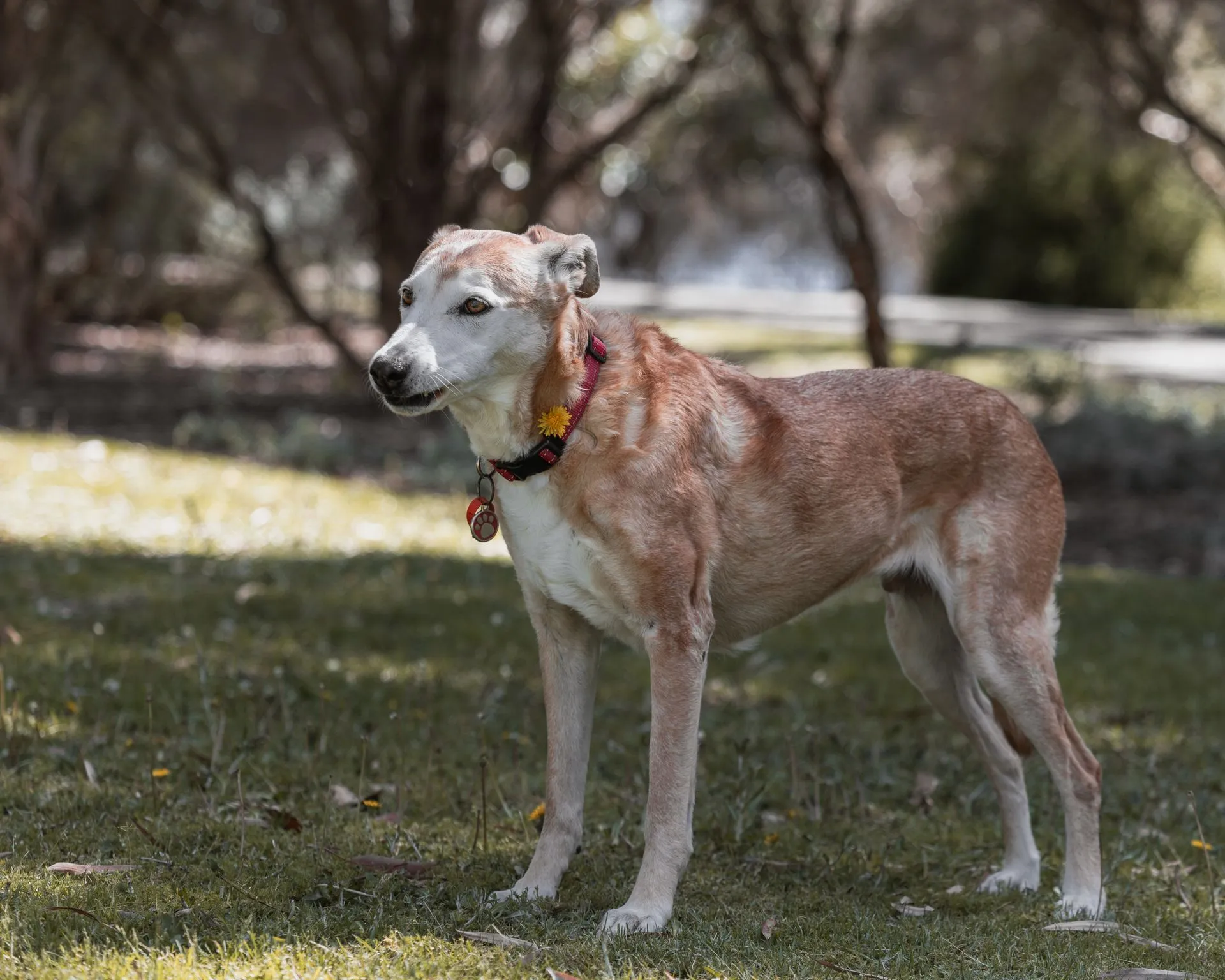
An old dog walking in circles might loop around the same room, pace the same path again and again, or keep turning the same way. Circling can stem from a balance or brain issue, and it can have several possible causes.
If your dog is in hospice or comfort care, or has a seizure plan from a vet, their plan may say what to do if circling comes with a collapse or a seizure. If your dog has already died, we're so sorry, and there's a section for you near the end of this guide. If you have a dog with you now, we start with the signs that mean getting help right away, then the causes.
Dementia, vestibular disease (a problem with the system that keeps a dog balanced), a brain tumor, and a brain injury are among the possible causes of circling. Does circling mean the end? We'd say sometimes. It can come with serious illness, like a brain tumor or advanced dementia. For a dog with you now, it can also come from treatable causes, and an exam helps you find out which. Further down, we cover what else you might notice with each cause, what helps at home, and how families think about quality of life, comfort care, and euthanasia.
Key Takeaways
- A hospice, comfort-care, or seizure plan from a vet, if your dog has one, may cover what to do if circling comes with a collapse or a seizure.
- If your dog has died, we're so sorry. There's a section for you near the end.
- For a dog with you now, Cornell's Dr. Aly Cohen says to have them seen immediately if they suddenly collapse, suddenly seem very weak, or suddenly can't use one or more legs. She says to seek emergency care immediately for more than one seizure in a short time or one lasting more than five minutes. If an emergency clinic is out of reach, we'd suggest calling the closest vet clinic you can reach.
- Circling in older dogs has several possible causes, including dementia, vestibular disease, and a brain tumor. How it started and what comes with it, like a head tilt or restlessness at night, are worth telling a vet.
- Families take different paths with an older dog who circles, from treatment to comfort care to euthanasia, and some dogs die on their own. A vet can talk you through what each would look like at home.
Table of Contents
- 1Is an Old Dog Walking in Circles an Emergency?
- 2Is It Normal for an Old Dog to Walk in Circles?
- 3Why Is My Old Dog Walking in Circles? The Causes Vets Look For
- 4Circling With Confusion or Disorientation
- 5Circling and Pacing at Night in Older Dogs
- 6How Vets Find Out Why an Old Dog Is Circling
- 7How to Help an Old Dog Who Walks in Circles
- 8Do Dogs Walk in Circles Before They Die?
- 9Quality of Life and Euthanasia for an Old Dog Who Circles
- 10If Your Dog Has Died
- 11Old Dog Walking in Circles: What to Do Next
- 12Frequently Asked Questions About an Old Dog Walking in Circles
Is an Old Dog Walking in Circles an Emergency?
If your dog is in hospice or comfort care, or has a seizure plan, their plan may say what to do. If your dog has died, we're so sorry. If your dog is with you now, circling can be an emergency. A sudden collapse, more than one seizure in a short time or one lasting more than five minutes, and signs of pain are among Cornell's top reasons to take a dog to the ER.
Dr. Aly Cohen, an extension veterinarian at Cornell's Riney Canine Health Center, lists some of the top reasons to take your dog to the emergency veterinarian. Here's her advice on the signs we'd watch for in a circling dog:
- Suddenly collapsing, suddenly seeming very weak, or suddenly unable to use one or more legs: have them seen immediately.
- More than one seizure in a short time, or one lasting more than five minutes: seek emergency care immediately.
- A first-time seizure: it should always prompt a veterinary exam.
- Crying out, shaking, being unable to move, or showing any signs of pain: it's best to seek veterinary attention right away.
If your dog is very old or seriously ill, a vet can talk through any change, emergency or not.
Old Dog Walking in Circles After a Fall or Accident
After an accident, Dr. Cohen says it's safest to have your dog checked right away. If the circling started after a fall or a knock to the head, mention it when you call. BluePearl lists circling among the signs of more severe brain injury in pets.
If You're Not Sure, or an Emergency Vet Is Out of Reach
Can't tell whether it's an emergency? Dr. Cohen says to call a vet or a local emergency clinic. Most veterinary hospitals can give guidance during business hours, and emergency clinics can help after hours. She also suggests a telemedicine service: for a fee, it connects you with a licensed veterinarian who can help decide whether your dog needs to be seen now, can wait for urgent care, or is okay to watch at home.
If the nearest emergency clinic is too far, you can't get your dog there, or the cost is more than you can manage, we'd suggest calling the closest vet clinic you can reach, describing what's happening, and asking what they can do, including any lower-cost options. Our guide to deciding between the emergency vet and waiting until morning walks through that choice step by step.
Old Dog Walking in Circles With a Sudden Head Tilt
For a dog with you now, a head tilt is one of the signs VCA lists for vestibular disease, along with falling or circling to one side. VCA says those signs usually develop suddenly, often in less than an hour. Other vestibular signs include sudden loss of balance and coordination, involuntary darting eye movements, disorientation, reluctance to stand or walk, and nausea, vomiting, or reduced appetite. A head tilt can also be a sign of a brain tumor, VCA notes.
Call a vet and tell them when it started. While you wait to be seen, we'd set up a small, soft space on the floor where they can rest, and block stairs with a baby gate or a closed door. If your dog has already fallen, mention it when you call. Our guide to old dog vestibular disease covers what it looks like and what helps in the first hours at home.
Notes That Can Help a Vet
If the circling isn't an emergency, a few notes can help a vet see what you're seeing at home:
- When it started, and whether it came on suddenly or built up over weeks or months.
- Whether your dog circles in one direction or both, how long it goes on, and whether you can easily distract them from it.
- What comes with it, like a head tilt, stumbling, darting eye movements, bumping into things, getting stuck in corners, panting, or restlessness at night.
- Whether your dog knows you and responds to their name while they're circling.
- Any recent fall, or anything else that changed around the same time.
A short phone video of the circling can help too.
Is It Normal for an Old Dog to Walk in Circles?
Turning a few times before lying down is normal. Veterinary neurologist Dr. Christian Woelfel calls it completely normal and says it's thought to be a nesting instinct. Frequent or repetitive circling, especially when it consistently goes in the same direction, is different, and he says it can point to a problem in the brain or the balance system.
For a dog with you now, pain can play a part too. Idaho veterinarian Dr. Chyrle Bonk explains that pain from spinal issues or hip dysplasia can make lying down and getting up hard, and that a dog may circle while trying to lower themselves without it hurting.
Normal Circling vs. Circling That Needs a Vet
Here's how we'd sort what you're seeing in the dog you're caring for now:
- Circling with any of the emergency signs at the top of this page: a reason to get help now.
- A few turns before lying down, the same as always, and then your dog settles: likely the old habit.
- Circling that's new, keeps going, always goes one way, or happens away from the bed, like in the middle of the kitchen or out on a walk: a reason for a vet visit.
- Lots of turning before lying down, groaning, or giving up and standing back up: a reason to ask a vet about pain.
Why Is My Old Dog Walking in Circles? The Causes Vets Look For
The causes vets look for when an older dog circles include dementia, vestibular disease, a brain tumor, a stroke, an inner ear infection, liver disease that affects the brain, and brain inflammation or toxins. Below is how vet sources describe each in dogs in general. For a dog with you now, a vet can sort out the cause.
What comes with the circling helps a vet narrow it down. In brain conditions, Dr. Woelfel says other signs can include disorientation, behavior changes, vision changes, and seizures, while circling from vestibular problems is often accompanied by a head tilt, loss of balance, involuntary eye movements, and nausea.
Dog Dementia (Canine Cognitive Dysfunction)
Circling, along with chewing, licking, and stargazing, is one of the repetitive behaviors on the DISHAA checklist, which Dr. Gary Landsberg created to evaluate dementia in dogs. It also includes aimless pacing or wandering, getting stuck or having trouble getting around objects, and getting lost in the home or yard. Under disorientation, Cornell's Riney Canine Health Center notes that dogs may get stuck in corners and not intuitively know how to back out or go around things.
MSPCA-Angell's neurology and oncology specialists describe canine cognitive dysfunction as typically starting with fairly mild changes, like anxiety, pacing, or restlessness at night, and progressing over months to years. They list circling among its possible later signs.
Cornell says a vet will rule out conditions with similar signs, such as pain, arthritis, seizure disorders, illness elsewhere in the body, and vision or hearing loss. Cornell notes there's no single treatment or cure. Treatment may combine prescription diets made to support the brain, play and enrichment, and selegiline, a medicine approved for dementia in dogs in North America. Our guide to dementia in dogs and cats goes deeper into signs, stages, and what helps.
Vestibular Disease
Vestibular disease affects the system that keeps a dog balanced. Its signs, like a head tilt, falling, or circling to one side, usually come on suddenly, VCA says. Causes VCA names include trauma or injury and tumors.
Brain Tumor
Circling and a head tilt are among the possible signs of a brain tumor that VCA lists, though seizures are the most common sign. NC State's veterinary neurology service explains that a tumor in the forebrain, the part of the brain that handles thinking and behavior, may cause constant pacing or circling. As a general rule, NC State says, brain tumors cause progressive signs in older animals.
Brain tumors usually can't be seen on X-rays, NC State notes, so the brain can be imaged with an MRI or CT scan, which has to be done under general anesthesia. MSPCA-Angell's specialists note that in many cases, families can't or don't want to pursue advanced imaging. Our guide to brain tumors in dogs covers signs, treatment, comfort care, and how families decide.
Stroke
Dogs can have strokes, also called vascular accidents. VIN's Veterinary Partner lists circling toward the side of the brain damage among the possible signs when a stroke affects the cerebrum, along with weakness on the opposite side, a drunken walk, head pressing, and seizures. Signs depend on which part of the brain is involved, and treatment is supportive care, VIN explains.
MSPCA-Angell neurologist Dr. Jennifer Michaels notes that it can be challenging to tell an ischemic stroke apart from idiopathic vestibular disease in older dogs.
Seizures
Seizures and circling can share a cause. NC State calls seizures a classic sign of disease in the forebrain, the same part of the brain where a tumor can cause circling. The time right after a seizure, called the post-ictal phase, can bring confusion, disorientation, drooling, pacing, restlessness, or temporary blindness, VCA explains.
The seizure lines at the top of this page cover when to get help. Our guide to seizures in older dogs covers what they look like, treatment, and the decisions families face.
Inner Ear Infection
An inner ear infection can affect balance. VCA lists signs including head shaking, pawing at the affected ear, and lack of balance, and says a dog may walk in circles toward the side of the infected ear.
Liver Disease That Affects the Brain
When the liver isn't working well, it can affect the brain. The Merck Veterinary Manual calls this hepatic encephalopathy and lists circling, head pressing, aimless wandering, weakness, poor coordination, blindness, drooling, behavior changes, collapse, and seizures among its signs.
Pituitary Tumor
A pituitary macroadenoma is a large tumor of the pituitary gland, a pea-sized organ at the base of the brain. VCA says some of these tumors, called non-functional, may press on nearby brain structures, and it lists walking in circles and seizures among the possible signs. VCA adds that vision problems are common with these tumors too.
Spinning and Compulsive Behavior
Some dogs spin, circling rapidly as though trying to catch their tail. If it causes injury, happens with few or no triggers, or gets in the way of normal behavior, VCA says it would be diagnosed as a compulsive disorder. Painful conditions and neurologic diseases can cause the same signs, VCA notes, so a vet will screen for pain or neurologic disease.
Brain Inflammation, Toxins, and Other Causes
Brain cells can be damaged by brain disease such as stroke, tumor, or inflammation, BluePearl notes, as well as by toxins, nervous system infections, and very low blood sugar.
If your dog is with you now and may have eaten something toxic, like chocolate, grapes, or a medicine, Cornell's Dr. Cohen says you often need to act quickly. For a suspected toxin, she says to contact the ASPCA Animal Poison Control Center (888-426-4435) or the Pet Poison Helpline (855-764-7661), which can help decide whether an emergency visit is needed. Cornell notes that consultation fees may apply.
Circling With Confusion or Disorientation
Circling with confusion has more than one possible cause. Disorientation can come with vestibular disease, with dementia, or in the time right after a seizure, VCA and the DISHAA checklist note. For a dog with you now, if they seem lost in a familiar room, stare at walls, or get stuck in a corner, tell a vet.
For a dog who's losing their sight, PDSA, the UK veterinary charity, lists walking slowly and cautiously, bumping into people, walls, or furniture, and confusion and disorientation among the signs of blindness in dogs. The causes it lists include retinal disease, optic nerve disease, and brain disease, such as a stroke, tumor, or infection.
A few things we'd try in the moment:
- Speak softly and move slowly, so you don't startle them.
- If they're stuck in a corner or behind furniture, we'd guide them out gently by the body or a harness.
- We'd clear the path around them so they have room to move.
Circling and Pacing at Night in Older Dogs
Pacing and roaming can show up at night in older dogs with dementia. Cornell describes a habit it calls the midnight walks, where an aging dog roams the house at night, and notes that changes in sleep and wake cycles are often the first sign families notice. A dog who's up looping the house may also get stuck.
For the dog you're caring for now, these can help at night:
- Night lights. Cornell recommends adding them so your dog can see clearly and is less likely to get stuck.
- A gate or closed doors, so the loop stays in one safe room.
- A last trip outside right before bed.
- An extra walk before bedtime, if your dog is up for one. Cornell notes it can wear some dogs out and lead to longer, deeper sleep.
- Melatonin helps some dogs, Cornell says, but there aren't many studies on its effects yet, and it recommends talking with a vet before using it.
Families sometimes call these restless nights sundowning, a term borrowed from human dementia. Our guide to sundowning in dogs goes much further into nights with an older dog who can't settle.
How Vets Find Out Why an Old Dog Is Circling
If your dog is with you now, a vet will likely want your story and an exam. VCA says vets diagnose vestibular disease from the dog's medical history and physical, neurological, and ear exams, and Cornell says a vet evaluating dementia will recommend blood and urine tests.
Depending on what the exam shows, a vet may suggest:
- A fuller neurological exam, to narrow down where the problem is.
- A close look at the ears.
- Blood work and a urine test.
- A CT or MRI of the brain, which NC State notes has to be done under general anesthesia.
Our notes list, under “Notes That Can Help a Vet,” covers what to tell a vet, including the direction your dog circles.
You can ask what each test would show, how it would change the plan, and what it costs before you decide. Some families go step by step, and some decide against advanced imaging. A vet can talk through what's possible either way.
How to Help an Old Dog Who Walks in Circles
For a dog with you now, the goal at home is a safe space to loop in and a predictable day. None of this treats a cause, but it can make life easier for both of you. A vet can help you pick the changes that fit your dog.
Make the House Safer
A few changes can keep a circling dog from getting hurt or stuck:
- Block stairs with a baby gate or a closed door. For dogs with dementia, Cornell recommends blocking off unsafe areas like stairways and spots behind the couch.
- Keep them away from pools, ponds, and decks without railings. We'd use a gate or keep the door closed.
- Clear a path around the room they loop in, and pad sharp furniture corners.
- Put rugs or yoga mats on slick floors so their feet can grip.
- Keep food, water, and their bed in the same places.
Keep a Steady Routine
Older dogs, and dogs in general, do better with a predictable routine, Cornell notes. A day might look something like this, fitted around your own:
- Breakfast and a short walk or yard time around the same time each morning.
- Quiet time in the safe room when you're out or busy.
- Dinner, then a sniff walk or a food puzzle if they're up for it. Cornell's dementia page says sniff walks and new food puzzles help older dogs.
- A last trip outside, night lights on, and lights out.
Do Dogs Walk in Circles Before They Die?
We'd say some do. If your dog has died, we're so sorry, and we can't know what was happening with them. Circling can come with serious illnesses that get worse over time, like a brain tumor or dementia that has progressed.
If your dog is with you now, circling can have other causes too, so on its own it can't tell you what's going on. If they're very old or already seriously ill, a vet can look at what's causing the circling and what might ease it. These are questions we'd bring:
- Is my dog comfortable, and how can I tell?
- What could ease the circling or the nights?
- Which changes should I call you about?
- What would comfort care at home look like?
Our guide to changes families may see near the end of life is there if you want it, and our section on quality of life and euthanasia covers how families think about what comes next.
Quality of Life and Euthanasia for an Old Dog Who Circles
Families weigh treatment, comfort care, and euthanasia for an old dog walking in circles at different points and for different reasons, and some dogs die on their own. Sometimes circling is one piece of a wider change, alongside confusion, nights that don't settle, or eating less. A vet, including one who offers quality-of-life consultations, can talk you through any of it.
For a dog with you now, some families find a quality-of-life scale helps them see the whole picture. Our guide to the HHHHHMM quality-of-life scale walks through it: hurt, hunger, hydration, hygiene, happiness, mobility, and more good days than bad. For a dog who circles, we'd add whether they can rest, how they respond to your voice and touch, and how the nights are going.
Our guide to when to put your dog down is there if and when you want it. You can search our quality-of-life consultation directory by ZIP code, postal code, or city, including providers who meet virtually, and our pet hospice directory works the same way. Our dog end-of-life guides cover the wider decisions.
If Your Dog Has Died
If your dog has died, we're so sorry. A vet, especially one who saw your dog, may be able to talk through any questions about what was happening.
Our pet loss grief counseling directory lists providers near you and online, whenever you want them.
Old Dog Walking in Circles: What to Do Next
An old dog walking in circles can be showing a problem with balance or with the brain, and dementia, vestibular disease, brain tumors, strokes, and liver disease that affects the brain are among the possible causes. If your dog is with you now and the circling comes with a sudden collapse, more than one seizure close together or one longer than five minutes, an accident, or signs of pain, the emergency section at the top of this page covers when to get help.
If your dog has died, our section for you and our grief counseling directory are there whenever you want them. If your dog is with you now, gates and night lights make the house safer, the notes list gives a vet a head start, and a vet can help with what comes next.
Frequently Asked Questions About an Old Dog Walking in Circles
Why does my senior dog keep walking in circles?
If your dog has died, we're so sorry, and this page has a section for you. For a dog with you now, frequent or repetitive circling can be a sign of trouble in the brain or the balance system, veterinary neurologist Dr. Christian Woelfel says, especially when it keeps going in the same direction. Many dogs turn a few times before lying down, and he calls that completely normal. Possible causes include dementia, vestibular disease, brain tumors, strokes, inner ear infections, and liver problems that affect the brain. Dementia can bring other changes along with circling, like getting stuck in corners, seeming lost at home, or restless nights. With vestibular problems, Dr. Woelfel says a tilted head, poor balance, and eyes that move on their own often accompany the circling. Get help right away if your dog also suddenly collapses, has two or more seizures close together or a single one lasting more than five minutes, or shows signs of pain. A vet can help narrow it down.
Do dogs walk in circles before they die?
We'd say yes, some dogs do. If your dog has already died, we're so sorry, and there's no way for us to know what was happening with your dog. VCA lists circling among the possible signs of a brain tumor, and specialists at MSPCA-Angell list it as something that can appear later in canine dementia. NC State says brain tumors generally cause progressive signs in older animals, and MSPCA-Angell describes dementia signs as typically progressing over months to years. For a dog with you now, other causes can bring circling too, and a vet can help you look into what might be causing it, think through your dog's comfort, and consider what might ease the circling. A quality-of-life consultation is another place to talk it through.
Is a dog walking in circles an emergency?
If your dog is in hospice or comfort care, or has a seizure plan, that plan may say what to do. If your dog has died, we're so sorry. For a dog with you now, whether circling is an emergency depends on what comes with it. Cornell's Dr. Aly Cohen says a dog who suddenly collapses, seems very weak, or can't use one or more legs should be seen immediately. For seizures, she advises emergency care immediately when there are two or more in a short time or a single one goes past five minutes. After an accident, she says it's safest to have a dog checked right away, and she gives crying out, shaking, being unable to move, or any signs of pain as reasons to seek veterinary attention right away. If an emergency clinic is too far or the cost is out of reach, we'd suggest calling the nearest vet clinic you can get to. When you can't tell, a vet, an emergency clinic, or a telemedicine service can help you decide.
How can I help my dog with dementia who keeps circling?
If your dog has died, we're so sorry. If your dog is with you now, a few safety changes can help. Cornell recommends blocking off unsafe areas, such as stairways and the gap behind the couch, and adding night lights for dogs that roam after dark. We'd set up a single safe room with clear floor space and grippy rugs, so the loop has somewhere to go. If your dog gets wedged in a corner, we'd guide them out gently by the body. Cornell also points to a predictable routine, and for some dogs an extra walk before bed can mean deeper sleep. You can ask a vet about the treatments Cornell lists for dementia, which include prescription diets that support the brain, enrichment, and selegiline. Cornell says melatonin helps some dogs, though there aren't many studies on its effects yet, and you should talk it over with a vet before using it.
Why is my old dog walking in circles and falling over?
If your dog has died, we're so sorry. For a dog with you now, circling with falling can come from the balance system. Veterinary neurologist Dr. Christian Woelfel says vestibular circling often comes with a tilted head, loss of balance, eyes that move on their own, and nausea, and VCA adds that vestibular signs usually come on suddenly, often in less than an hour. Strokes can bring circling and a drunken walk; brain tumors can bring circling too, and a vet can help tell them apart. Call a vet, and keep the emergency signs at the top of this page in mind, like a sudden collapse, two or more seizures close together, or one lasting more than five minutes. While you wait, make a soft, low resting spot on the floor, away from stairs. Tell the vet about any fall.

On this topic