







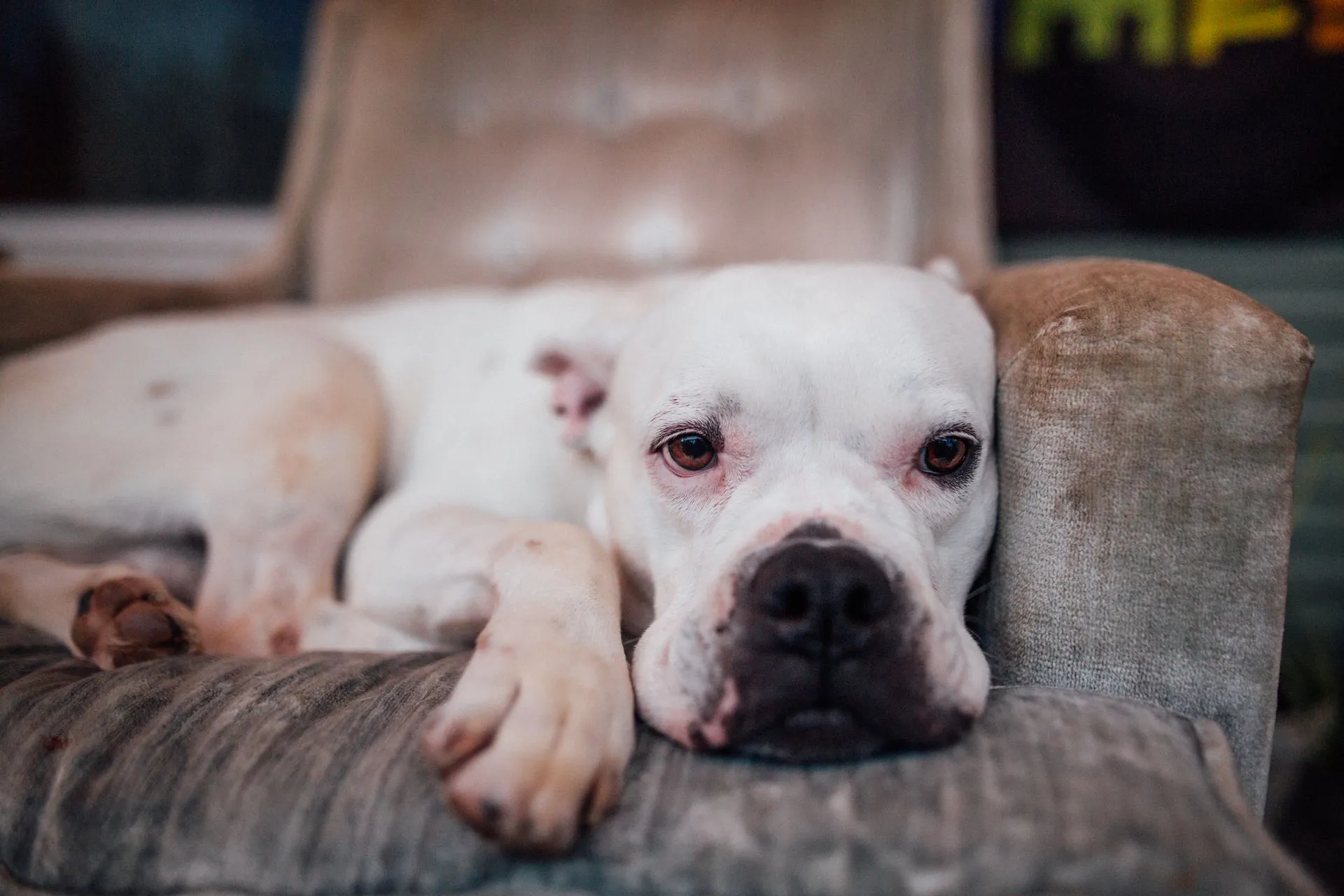
A brain tumor in dogs often shows up first as a seizure, sometimes in a dog who has never had one. It can also look like circling, a head tilt, bumping into things, or a dog who seems less like themselves. Maybe a vet has named a brain tumor as one possibility, or an MRI has confirmed it, or you're trying to make sense of changes you're seeing at home.
In most cases, a cure isn't realistic, Partner Veterinary's neurologists note. Surgery, radiation, and comfort care each aim to ease signs. Some families pursue surgery or radiation, some care for their dog at home with comfort-focused medicine, and some say goodbye at the first signs or soon after.
If your dog is seizing or collapsing right now and a vet gave you a comfort-care or seizure plan, that plan may say what to do. If not, Cornell's Canine Health Center says to seek emergency care immediately if your dog has multiple seizures in a short time (clusters) or one lasting more than five minutes (status epilepticus), and that a dog who suddenly collapses should be seen immediately. Our guide on what to do when a dog has a seizure covers first aid during a seizure and in the hours after.
Key Takeaways
- Seizures are the most common sign of a brain tumor in dogs, VCA says, and it notes that most dogs who develop one are over 5. Behavior changes, circling, and a head tilt are other signs it lists, and lists like this describe what vets see across many dogs.
- If your dog is seizing or collapsing right now and a vet gave you a comfort-care or seizure plan, that plan may say what to do. If not, Cornell's Canine Health Center says to seek emergency care immediately for seizures close together or one lasting more than five minutes, and to have a dog who has suddenly collapsed seen immediately. If you can't easily get there, the closest clinic you can reach can tell you what they can do.
- Brain tumors are generally diagnosed by MRI or CT scan, VCA notes, and NC State adds that either scan has to be done under general anesthesia. Some families get a scan, and some don't; from there, some see a neurologist, some care for their dog at home, and some say goodbye. If your dog has died, we're so sorry, and there's a section for you below.
- Brain tumors in dogs typically progress over weeks to months, MSPCA-Angell's specialists write. For a dog diagnosed now, the tumor type shapes the pace: Merck notes that primary tumors typically grow slowly, while secondary tumors generally progress more rapidly. Survival figures for surgery, radiation, and comfort care come from groups of dogs in studies, not any one dog.
- Families decide to say goodbye in different ways. Some weigh comfort, seizures, appetite, and how their dog is doing day to day, and some decide after one hard night. Treatment, comfort care, and euthanasia are all paths families take, and some dogs die on their own.
Table of Contents
- 1Signs of a Brain Tumor in Dogs
- 2Types of Brain Tumors in Dogs
- 3Brain Tumor vs. Stroke, Dementia and Other Look-Alikes
- 4How Vets Diagnose a Brain Tumor in Dogs
- 5Treatment Options for a Brain Tumor in Dogs
- 6How Fast Does a Brain Tumor in Dogs Progress?
- 7End-Stage Brain Tumor in Dogs: Changes to Watch For
- 8When to Euthanize a Dog With a Brain Tumor
- 9If Your Dog Has Died
- 10Caring for a Dog With a Brain Tumor, Whatever Comes Next
- 11Frequently Asked Questions About Brain Tumors in Dogs
Signs of a Brain Tumor in Dogs
The signs of a brain tumor in dogs depend on where the tumor sits. Seizures are the most common sign. Others include behavior changes, circling, pressing the head against things, a head tilt, a wobbly walk, vision problems, and neck pain.
For a dog showing these signs now, NC State's neurology service notes that they aren't specific to a tumor, because a disease affecting the same part of the brain could produce similar signs. Each one is reason to see a vet.
When Brain Tumor Signs Are an Emergency
Some signs can't wait for a regular appointment. Along with long seizures and seizures close together, Cornell's Canine Health Center says that if a dog suddenly collapses, seems very weak, or can’t use one or more legs, they should be seen immediately, and that any trouble breathing is an emergency.
If distance, transport, or cost makes getting there hard, we'd suggest calling the closest vet clinic you can reach, telling them what's happening, and asking what they can do from there, including any lower-cost options.
Seizures: Often the First Sign
The most common sign of a brain tumor in a dog is seizures, VCA notes, and it says a brain tumor must be considered a possibility any time a dog 5 or older has a new onset of seizures. In one report that MSPCA-Angell's specialists cite, a seizure was the first sign in 75% of dogs with a tumor in the forebrain, the large upper part of the brain. With a forebrain tumor, NC State notes, seizures may be the only sign or come alongside other changes.
If your dog is with you now, it helps to know that not every seizure looks like a dog falling and paddling. VCA's seizure guide describes focal, or partial, seizures as those that involve only certain muscle groups and are characterized by behavioral changes; they may cause twitching on one side of the body, with or without loss of consciousness, and can progress to generalized seizures. A video of anything unusual can help a vet tell what it is.
For a dog being checked now, a first seizure in an older dog can have other causes too, which the look-alikes section below covers. Our guide to dog seizures and saying goodbye goes deeper into seizure medicine, seizure logs, and cluster seizures, for seizures from any cause.
Behavior Changes, Confusion and Circling
Tumors in the forebrain, the part of the brain that handles thinking and behavior, can cause loss of learned behavior and depression, NC State explains. A dog may forget habits they've had for years, seem dull or withdrawn, eat or drink more or less than usual, or pace and circle constantly. Some dogs press their head into a wall or furniture, and Partner Veterinary's neurologists include head pressing among the common signs: behavior changes, seizures, compulsive circling, head pressing, incoordination, and vision problems. Not every dog shows all of these.
If your dog's personality or habits are shifting, a short video of what you're seeing can help a vet.
Head Tilt, Balance and Walking Changes
Tumors in the brainstem and cerebellum, at the back of the brain, tend to affect balance and movement. MSPCA-Angell's specialists write that central vestibular dysfunction, meaning balance problems that start in the brain itself, is the most common sign of tumors there. NC State lists the signs of a balance problem as:
- A head tilt, with leaning or falling toward that side
- A drunken-looking walk and circling toward the tilt
- Flicking eye movements or an abnormal eye position
- Loss of appetite and vomiting
Brainstem problems can also cause weakness on one side of the body, NC State notes. A tumor in the cerebellum can cause the signs NC State lists for cerebellar disease: a high-stepping, uncoordinated walk; head tremors that worsen when a dog focuses on something like food; and swaying and a wide stance, while strength stays normal.
Vision Changes, Neck Pain and Other Signs
VCA's list of signs includes abnormal vision and extra sensitivity to neck pain. NC State explains that a forebrain tumor can reduce awareness and vision on one side of the body, so a dog may misjudge doorways or bump into things on that side. Merck notes that sudden blindness may be the initial clinical sign in animals with tumors near the optic chiasm, where the nerves from the eyes cross.
Is a Dog With a Brain Tumor in Pain?
Some may be. NC State notes that dogs with a forebrain tumor sometimes behave as if they are in pain, and VCA lists extra sensitivity to neck pain among the signs. Merck describes comfort care for brain tumors as centering on controlling seizures, relieving intracranial pressure and inflammation, and minimizing pain, which a vet can help with.
Seizures themselves are a different matter. VCA's seizure guide notes that they are not painful, although your dog may feel confused and might panic.
If your dog is with you now, mention signs like crying out, not wanting their head or neck touched, restlessness, or hiding to a vet, who can discuss pain medicine alongside any steroids or seizure medicine.
Signs of a Brain Tumor in an Old Dog
Partner Veterinary's neurologists describe brain tumors as more common in middle-aged to older dogs, and Merck notes that the median age for dogs to develop brain tumors is 9 years. VCA adds that most dogs who develop one are over 5. In older dogs, MSPCA-Angell's specialists write, brain tumors are the most common cause of new neurological signs, though they also stress keeping an open mind about other causes. Younger dogs aren't exempt: NC State notes a concerning trend of brain tumors arising in young dogs of certain breeds, such as Boxers and Boston Terriers.
Types of Brain Tumors in Dogs
Vets group brain tumors in dogs as primary or secondary. Primary tumors originate from brain tissues or membranes covering the brain, VCA explains. Secondary tumors, by contrast, have spread to the brain from a tumor elsewhere in the body, VCA adds, and some may also arise from nearby structures, such as the cranial nerves. Partner Veterinary's neurologists note that primary brain tumors are seen more often than secondary ones. The type matters because it shapes how fast a tumor tends to grow and which treatments a vet may suggest.
Meningioma in Dogs
Meningioma is the most common primary brain tumor in dogs. It grows from the membranes that line the brain rather than the brain tissue itself, NC State explains, and it's usually relatively slow-growing, although more malignant forms do occur. Merck notes that meningiomas are often found in long-nosed breeds, especially Golden Retrievers, and that they rarely spread outside the brain. As they grow, they cause signs by compressing or invading the brain, NC State explains.
Glioma in Dogs
Gliomas grow from the nervous system's structural cells, VCA explains. Merck reports that approximately half of primary brain tumors in animals are meningioma and 30–40% gliomas, and that Boxers, Boston Terriers, and English Bulldogs are at increased risk of brain tumors, gliomas in particular. Merck names astrocytomas and oligodendrogliomas among the gliomas reported in dogs.
Pituitary Tumors
The pituitary gland sits at the base of the brain. Merck notes that pituitary tumors are common in dogs and appear more likely in short-nosed breeds, and that some are linked to Cushing's disease. In dogs with that form of Cushing's, Merck reports, 10 to 30% eventually develop a pituitary tumor that causes neurological signs. In dogs with larger pituitary tumors, Merck lists changes in behavior, walking problems, vision problems, neck pain, and seizures among the signs.
Other Primary Brain Tumors
Partner Veterinary lists choroid plexus tumors, medulloblastoma, primary CNS lymphoma, histiocytic sarcoma, and neuroblastoma as types that are occasionally noted. If a vet names one of these, ask what's known about that specific type, since outlooks differ.
Secondary Brain Tumors
Secondary tumors start somewhere else. NC State gives examples of tumors that may spread to the brain, which include hemangiosarcoma, mammary carcinoma and melanoma, and Merck notes hemangiosarcoma is the most common tumor to spread to the brain in dogs. Merck also notes that tumors growing into the skull from the nasal sinuses are relatively common in dogs, and that some dogs with these show only neurological signs.
Whenever a brain tumor is suspected, NC State explains, vets routinely take chest X-rays, and sometimes an abdominal ultrasound, to check for cancer elsewhere in the body. Our guide to hemangiosarcoma in dogs covers that cancer in its own right.
Breeds and Causes
VCA lists breeds that seem more likely to develop brain tumors, including Boxers, Bernese Mountain Dogs, Golden Retrievers, Doberman Pinschers, Scottish Terriers, Miniature Schnauzers, Boston Terriers, Labrador Retrievers, and others. As for why, VCA notes that the definitive cause of canine brain tumors is unknown, although dietary, environmental, genetic, chemical, viral, traumatic, and immune system factors may be involved.
Brain Tumor vs. Stroke, Dementia and Other Look-Alikes
Other conditions can look like a brain tumor, especially in an older dog. MSPCA-Angell's specialists write that while brain tumors are the most common cause of new-onset neurological symptoms in older dogs, vets should keep an open mind about other causes. If your dog is being checked now, a vet will look at how the signs change over time.
Brain Tumor vs. Stroke in Dogs
For a dog being checked now, strokes and tumors can cause many of the same signs. In dogs, MSPCA-Angell's specialists write, the most common sign of a stroke is a balance problem, and stroke signs are per-acute onset, non-progressive, and usually spontaneously improve with time: they come on suddenly and don't keep getting worse. Brain tumor signs, by contrast, are progressive and typically get worse over weeks to months.
Strokes can recur, MSPCA-Angell's specialists add, especially in dogs with risk factors such as high blood pressure, hypothyroidism, kidney disease, or Cushing's disease. A vet uses that history, an exam, and imaging to sort out which is more likely.
Brain Tumor vs. Dementia in Dogs
Canine cognitive dysfunction, often called dog dementia, can bring anxiety, pacing and restlessness at night, and in time seizures or circling, MSPCA-Angell's specialists write. Its signs typically start mildly and progress over months to years. That's slower than the weeks to months they describe for brain tumors. Our guide to dementia in senior pets covers its signs and care in detail.
Vestibular Disease and Epilepsy
A sudden head tilt and loss of balance in an older dog can also come from old dog vestibular disease. Our guide to old dog vestibular disease explains how vets tell that condition apart from balance problems that start in the brain. Seizures in older dogs aren't always a tumor either. For a dog being checked now, MSPCA-Angell's specialists note that epilepsy with no cause found accounts for about a third of dogs over 6 who come in for seizures.
How Vets Diagnose a Brain Tumor in Dogs
Brain tumors in dogs are generally diagnosed by MRI or CT scan, VCA notes, and NC State adds that the scan has to be done under general anesthesia. With rare exceptions, NC State explains, brain tumors cannot be seen on radiographs of the skull, so ordinary X-rays of the head don't show them.
Before a scan, NC State recommends a full physical and neurological exam, routine blood work to rule out other illness and check anesthetic risk, and chest X-rays to look for cancer elsewhere. For a dog being checked now, it notes that MRI, as a general rule, shows the brain in more detail than CT, and that CT can miss gliomas. The tumor type can be suspected from how it looks on a scan, but NC State explains it can only be confirmed with a tissue sample, taken during surgery or by biopsy. In one study that MSPCA-Angell's specialists cite, 90% or more of cases were correctly diagnosed with an intracranial neoplasm based on MRI, before any tissue sample.
For a dog being checked now, a normal exam doesn't always rule out a tumor. MSPCA-Angell's specialists note that up to 64% of dogs with new seizures who were later found to have a structural brain problem, such as a tumor, had an otherwise normal neurological exam.
Seeing a Veterinary Neurologist
MRI is more expensive and less widely available than CT, NC State notes. A family vet may refer your dog to a veterinary neurologist or an imaging center. Penn Vet's Ryan Hospital notes that dogs must be anesthetized for an MRI, since they must remain absolutely still during the procedure, and that anesthesia usually lasts 1.5 to 2 hours there, depending on the study. Before booking, you can ask how far the nearest MRI is and what the anesthesia involves for an older dog.
To find a specialist for a dog with you now, you can search VetSpecialists.com, a directory of board-certified specialists that describes itself as the only online directory that allows you to search for Board-certified veterinary specialists in the six specialties of the American College of Veterinary Internal Medicine, including neurology and oncology. You can search by ZIP code, city, or country, and filter for specialists who consult remotely.
What an MRI and Brain Surgery Cost
An MRI and neurology workup can run several thousand dollars. In February 2021, the University of Wisconsin's veterinary hospital listed $200 to $300 for the first neurology exam and $3,000 to $3,500 for a typical neurologic evaluation including MRI and CSF tap (a spinal fluid sample), with brain surgery at $3,000 to $5,000. Prices vary and have likely changed since then, so we'd suggest asking any hospital for an itemized estimate before booking. For a dog you have now, you can also ask each hospital what payment options it accepts.
Caring for a Suspected Brain Tumor Without an MRI
Some families go ahead with a scan; others don't. MSPCA-Angell's specialists write that comfort care plays a significant role in the management of both definitively diagnosed and presumptive brain tumors. A presumptive tumor is one a vet suspects but hasn't confirmed with a tissue sample.
For a dog with you now, when a vet strongly suspects a tumor, MSPCA-Angell's specialists write that a trial of steroids is reasonable to consider. For a dog in that situation, they list things that can strengthen a vet's suspicion without a scan: an older dog, signs that progress over days to months, signs that don't improve over time, and improvement on steroids. A vet can talk through what a trial of steroids would look like.
Treatment Options for a Brain Tumor in Dogs
If you're weighing options for a dog with you now, treatment for a brain tumor in dogs can include surgery, radiation therapy, chemotherapy, and comfort-focused care, and VCA notes that the treatments required depend on the type of tumor. Partner Veterinary's neurologists are frank that in most instances a cure for a brain tumor is not a realistic expectation, and describe surgery, radiation, and chemotherapy as ways to help ease signs and prolong survival. Comfort care also aims to ease signs, and it's a path of its own, covered in the steroids section below.
Surgery
Surgery can relieve pressure from a large tumor and provide a tissue sample to confirm the type, MSPCA-Angell's specialists explain. The University of Missouri notes that surgery is most common for meningiomas. Where the tumor sits is the main limit, MSPCA-Angell's specialists note, and tumors within the brain tissue or at the back of the brain are less likely to be candidates.
For anyone weighing surgery, the risks are part of the conversation. MSPCA-Angell's specialists report a mortality rate of up to 13% and major complications, such as worsening neurological signs, new or worsening seizures, or aspiration pneumonia (from breathing in food or fluid), in up to 18%. You can ask the surgeon how often they operate on tumors in that location and what recovery looks like.
Radiation Therapy
Radiation can be used alone or after surgery. Merck notes that radiation is beneficial for treatment of inoperable tumors. It's given either in standard courses, usually spread over three to four weeks, or as stereotactic radiosurgery, usually one to four treatments, and Merck lists the risks of repeated anesthesia as a possible complication. If you're considering radiation for a dog with you now, the complications reported in published studies include changes in alertness or behavior soon after treatment, which one review lists as altered mentation (acute central nervous system toxicity), along with delayed damage to brain tissue, permanent hair loss, shrinking of the muscles at the temples, eye problems including cataracts, deafness, and aspiration pneumonia (from inhaling food or fluid). Ask how many sessions are planned, how far you'd travel for each, what it would cost, and which side effects to watch for.
Chemotherapy
VCA lists chemotherapy medication, which may shrink the tumor and improve clinical signs, as one of the three ways of treating brain tumors in dogs. Merck notes that the blood-brain barrier, which protects the brain, may affect how well chemotherapy drugs reach a brain tumor. If chemotherapy is suggested for a dog with you now, it can help to ask which drug and what's known about it for the tumor type. A 2015 review of published studies found that the available data didn't support lomustine, one chemotherapy drug used for brain tumors, as an effective treatment. A vet or veterinary oncologist can explain whether chemotherapy fits the suspected type.
Clinical Trials for Brain Tumors in Dogs
Some university and referral hospitals study new brain tumor treatments in dogs. NC State's neurology service says one of its research aims is tracking how different tumors respond to treatment, and the University of Missouri notes that some veterinary referral centers are running treatment studies. The AVMA's Animal Health Studies Database, as the University of Tennessee's veterinary college puts it, connects you with veterinary clinical trials reported by researchers. Each trial has its own requirements, so for a dog with you now, a neurologist can tell you whether your dog might qualify.
Deciding Whether to Pursue Treatment
For anyone weighing treatment for a dog with you now, the University of Missouri's neurology service notes that options depend on the tumor's type and location, how the signs started, costs, and the risks involved. Families also consider their dog's age and overall health, how their dog handles car rides and hospital stays, how far the nearest specialist is, and what the weeks of treatment would ask of you. Treatment, comfort care, and euthanasia are all paths families take, and a vet can talk through each one for your dog.
Follow-Up After Treatment
After treatment, VCA notes, follow-up usually includes periodic exams, with or without more imaging. A vet can tell you how often to come in and which changes to call about between visits.
How Fast Does a Brain Tumor in Dogs Progress?
MSPCA-Angell's specialists describe the usual course this way: typically, the progression is subacute (weeks) to chronic (weeks to months). Signs can start suddenly or come on gradually, NC State's neurology service notes, and because tumors cause signs by pressing on or invading the brain, which signs show up depends on the part of the brain affected.
For a dog being diagnosed now, the kind of tumor shapes the pace. Primary tumors typically grow slowly, the Merck Veterinary Manual says, while secondary, highly malignant, metastatic tumors and bone tumors generally progress more rapidly. Meningioma, the most common primary brain tumor in dogs, is usually relatively slow-growing, NC State notes, although more malignant forms do occur. A vet can say which type they suspect.
If your dog is with you now, it may help to know how this tends to unfold across many dogs. MSPCA-Angell's specialists report that the time between a dog's first seizures or behavior changes and a neurological exam showing lasting changes averages 78 days, ranging from 2 to 400 days, and NC State notes that signs can wax and wane in severity.
How Long Can a Dog Live With a Brain Tumor?
Veterinary sources give median survival by treatment. Each is a middle value from groups of dogs on specific treatments, and describes those groups, not your dog or the path you take:
- Surgery: 10.5 months for primary brain tumors treated with surgery, according to MSPCA-Angell.
- Comfort-focused care: two to three months in general, according to MSPCA-Angell, which notes that the outlook depends somewhat on the tumor's type and location. For pituitary tumors, a different group of dogs, Merck reports a median of 359 days (just under 12 months) with this kind of care.
- Radiation: 351 days (about 11.5 months) across published reports, according to Merck.
The studies in one 2015 review of brain tumor treatment in dogs differed in which dogs they included and how they counted survival, making comparisons among modalities troublesome, its authors write. Outcome data are limited, NC State adds, partly because some dogs get radiation or chemotherapy without the tumor type ever being confirmed. For a dog with you now, a vet can share what's known for the type and location they suspect.
If your dog has died, these figures describe dogs in studies, not yours.
Steroids and Comfort Care for a Brain Tumor in Dogs
For a dog with you now, steroids are the main comfort-focused treatment, MSPCA-Angell's specialists write. Sources differ on what steroids do to the tumor. VCA notes that steroids may be used to decrease fluid buildup or to slow the growth of a brain tumor, while MSPCA-Angell explains that they generally don't treat the tumor directly. MSPCA-Angell also notes that most dogs with a brain tumor show some improvement on them, though there's no guarantee. It adds that signs return as the tumor grows, and that the dose can be raised as they worsen, up to a point. The goal, MSPCA-Angell explains, is the lowest dose that keeps signs under control. Most brain tumor patients will not tolerate being tapered completely off steroids without signs coming back, the article notes, so a vet may keep your dog on a low dose.
Comfort care can include more than steroids: anti-seizure medicine for dogs having seizures, anti-nausea medicine for dogs with balance problems, and appetite stimulants, as needed, in MSPCA-Angell's description. The seizure medicines it names include levetiracetam, zonisamide, phenobarbital, and potassium bromide, and a vet can explain which fits your dog. If your dog is on steroids, seizure medicine, or both, a 2015 review of brain tumor treatment lists more drinking, more peeing, a bigger appetite, and sleepiness as the complications and side effects reported with this care, and a vet can help tell those apart from tumor signs.
Keeping a Dog With a Brain Tumor Safe at Home
If your dog is with you now, a few changes at home can make day-to-day life easier for a dog with balance problems, vision changes, or seizures. We suggest blocking stairs, putting down rugs or mats on slippery floors, keeping food and water within your dog's reach without much walking, and keeping them away from pools and other water. If steroids make your dog hungrier, ask a vet before adding extra food, and if swallowing seems hard, ask about softer food and how best to feed them. After a seizure, Cornell's Canine Health Center notes that a dog may stay disoriented or confused for minutes to hours, which can sometimes be expressed as aggressive behavior. We'd suggest giving them space and keeping children back until your dog has settled.
It can also help to keep a log to share with a vet: whether and what they eat, how they sleep and settle, the date and length of any seizure, and how they seem afterward.
End-Stage Brain Tumor in Dogs: Changes to Watch For
The veterinary sources we rely on don't describe set stages for a brain tumor in dogs the way some cancers are staged. They describe signs that return or change as a tumor grows. For a dog on steroids, MSPCA-Angell's specialists write that the prednisone dose can be incrementally increased as signs worsen, up to a point. A vet can help you notice when that's happening.
Which changes show up depends on where the tumor is, and your dog may show some, none, or others. If your dog is with you now, these are changes to raise with a vet:
- Seizures that come more often, last longer, or come close together.
- Signs coming back that steroids had eased, or new signs appearing.
- Less awareness of people and surroundings. The University of Missouri's neurology service lists altered mentation, such as mental dullness or stupor, among the signs of brain tumors.
- Trouble swallowing, a change in voice, or trouble moving the eyes, which NC State lists among the signs of tumors in the brainstem.
- Weakness on one side, falling, or not being able to stand or walk.
- Eating or drinking much less, or not settling to rest.
Trouble swallowing matters for safety. VCA explains that if tumor pressure makes swallowing difficult, there's a risk of accidentally inhaling food and/or water and developing aspiration pneumonia, so coughing or gagging at meals is a reason to call a vet. The brainstem helps regulate breathing, NC State notes, and Cornell's Canine Health Center says any trouble breathing is an emergency. For a dog in comfort care, a vet can tell you which changes to call about right away and which can wait for a visit, and it helps to have that written down at home.
When to Euthanize a Dog With a Brain Tumor
Families decide when to euthanize a dog with a brain tumor at different points. Some decide at the first seizure or before any tests, some at diagnosis, some after a hard night, and some when steroids stop easing the signs, seizures keep coming despite medicine, or their dog can't eat, rest, or get around comfortably.
No veterinary source we rely on gives a seizure count or stage that decides it. A vet can talk through what each path would look like for your dog, including cost, travel, and what at-home care requires of you.
Quality of Life for a Dog With a Brain Tumor
Quality of life means your dog's comfort and what you can realistically give right now. If your dog is with you now, it can help to notice:
- How often seizures come and how your dog seems afterward.
- Eating, drinking, and keeping food down.
- Rest: whether they can settle or seem anxious and restless.
- Getting up, walking, and going outside to use the bathroom.
- Whether they seem to know you and their surroundings.
- How steroids and other medicines are affecting them.
- What the watching, medicines, appointments, and cost ask of you right now.
Our guide to the HHHHHMM quality of life scale walks through a tool that scores seven areas, including hurt, hunger, happiness, and mobility. For a dog with you now, some families score it every few days to see how things are changing. Our guide on how to know when to say goodbye to a dog looks at the decision for dogs with any condition, including signs families watch for and talking it through with a vet.
Caring for a dog with a brain tumor can bring grief before a loss. Our anticipatory grief resources are written for this time, while your dog is with you.
What Comfort Care at Home Does
For a dog with you now, Merck describes comfort care for a brain tumor as controlling seizures, relieving pressure and inflammation in the brain, and minimizing pain. A helpful question is how your dog is doing day to day, and a vet or quality-of-life consultation can help you assess it.
Comfort Care and Hospice at Home
Comfort care for a dog with a brain tumor centers on steroids, seizure medicine, and pain control, as described above. A hospice team can help with that at home, adjust medicines as signs change, and help you plan ahead. Our guide explains how pet hospice works and when families choose it. In our directory, you can search for pet hospice and palliative care providers by ZIP code, postal code, or city, and some help online.
Euthanasia at Home or at a Clinic
Euthanasia can happen at a clinic or, with some providers, at home. If you choose euthanasia, the AVMA explains that a vet may first give a tranquilizer to help a dog relax, and that once the euthanasia drug is injected, a pet immediately becomes deeply and irreversibly unconscious. The AVMA adds that a pet may move their legs or head or breathe deeply several times afterward, and that these are reflexes, not signs of pain.
Our directory lets you search for in-home euthanasia providers and quality-of-life consultations by ZIP code, postal code, or city, and some quality-of-life providers offer support online. Once you've arranged a goodbye, you can ask the vet whether to keep seizure medicine on hand until the appointment.
Planning Ahead While Your Dog Is With You
Some families find it helps to make a few plans on a calm day. If your dog is with you now, you might ask a vet for a written plan for seizures at home, save the number of the nearest emergency clinic, and, if you're open to it, find an in-home euthanasia provider or hospice team in your area. You can also plan for aftercare, such as cremation or burial, ahead of time. None of this commits you to anything, and plans can change.
Questions to Ask a Vet About a Brain Tumor
While your dog is with you, you can bring these to an appointment or keep them on your phone:
- Which type of tumor do you suspect, and where is it?
- Would an MRI or other tests change the plan, and how much would they cost?
- What would surgery, radiation, or comfort care look like for my dog, and what would each involve for us at home?
- If my dog has a long seizure or seizures close together at home, what should I do?
- What side effects of steroids or seizure medicine should I expect?
- Which changes would you want to hear about, and how quickly?
If Your Dog Has Died
We're so sorry. Some dogs with a brain tumor die at home, during or after a seizure, some after surgery or radiation, and some families say goodbye at the first seizure, before any scan, at diagnosis, after a hard night, or after months of care. However it happened, this section is for you.
The figures in this guide describe groups of dogs in studies, not your dog. If a vet saw your dog and you have questions about what happened, that vet may be able to talk you through it.
If your dog died at home, our guide to the first 48 hours after a dog dies walks through what to do next, from caring for their body to choosing aftercare. If you'd like someone to talk to, our directory lists providers who offer pet loss grief counseling, including some who offer online support.
Caring for a Dog With a Brain Tumor, Whatever Comes Next
A brain tumor in dogs brings a lot of uncertainty, and nothing in this guide takes that away. For a dog who's with you now, it helps to know the signs, know which ones need help right away, and have a plan with a vet for the weeks ahead.
From there, families find what fits their dog and their home, whether that's surgery or radiation, comfort care with steroids and seizure medicine, or saying goodbye. Our dog end-of-life resources gather our guides on comfort care, saying goodbye, and aftercare in one place. And if you're not sure where to start, our team can help you find your next step.
Frequently Asked Questions About Brain Tumors in Dogs
How long can a dog live with a brain tumor without treatment?
There isn't one number, because survival depends on the kind of tumor, where it is, and the care a dog gets, and published figures come from groups of dogs rather than any single dog. Published figures for comfort-focused care come from dogs on medicines such as steroids and seizure medicine. For that kind of care, MSPCA-Angell's specialists report a median survival of two to three months overall, with type and location making a difference. Partner Veterinary's neurologists put average survival with supportive care, meaning steroids and possibly seizure medicine, anywhere from a few weeks to months. For a dog with you now, MSPCA-Angell notes that most dogs show some improvement on steroids, though there's no guarantee. A vet who knows your dog can say what's known for the type they suspect. If your dog has died, these numbers come from studies and don't describe your dog.
What are the first signs of a brain tumor in a dog?
Seizures are the most common sign, VCA notes, and seizures that start for the first time in a dog 5 or older are one reason vets think of a tumor. Other early signs depend on which part of the brain is affected. A tumor in the forebrain can change behavior, so a dog may forget routines, seem dull, pace, circle, or eat and drink differently, according to NC State. A tumor toward the back of the brain more often affects balance, with a head tilt, leaning or falling to one side, or an unsteady walk. Trouble seeing, bumping into doorways, and a sore neck can be signs too. Many of these can also come from other conditions, and these signs describe what vets see across many dogs. A vet will want to know when each change started and whether it's getting worse.
Is a dog in pain with a brain tumor?
Some may be. Dogs with a tumor in the forebrain sometimes act as though they hurt, according to NC State, and VCA includes neck pain on its list of brain tumor signs. Merck counts pain relief as part of comfort care for brain tumors, next to seizure control and easing pressure in the brain. Seizures themselves don't hurt, according to VCA's seizure guide, though a dog may feel confused. For a dog with you now, pain isn't always obvious, so crying out, flinching when you touch their head or neck, restlessness, or hiding are good reasons to call a vet. A vet can add pain medicine to steroids and seizure medicine when it's needed.
Can a dog live a normal life with a brain tumor?
For a dog with you now, some dogs feel more like themselves for a time on comfort care. Steroids reduce swelling around the tumor, and MSPCA-Angell's specialists note that most dogs with a brain tumor show some improvement on them, though there's no guarantee. VCA adds that some dogs improve for weeks or months on steroids, and seizure medicine can be added for dogs having seizures. We'd suggest small changes at home, such as blocking stairs and covering slippery floors, for a dog with balance problems. Because steroids don't treat the tumor itself, signs return as it grows, MSPCA-Angell explains, and how long dogs live on comfort care depends partly on the tumor's type and location. A log of what they eat, how they rest, and any seizures can help you and your vet see how things are going. If your dog has died, these descriptions come from groups of dogs and can't speak for yours.
When should you euthanize a dog with a brain tumor?
The veterinary sources we rely on don't name a seizure count or stage for this decision. Families get there in different ways. Some weigh eating, sleeping, getting around, and how seizures and medicines are affecting their dog. Some decide after a hard night, and some at the time of diagnosis. Ongoing treatment, comfort care, and euthanasia are each a path families choose, and some dogs die on their own. A vet, or a provider who offers quality-of-life consultations, can help you see where your dog is and what home care would involve. Euthanasia can be done at a clinic, and some providers come to your home. If your dog has died and you find yourself second-guessing, that's a common part of grief, and it comes from caring.

On this topic