





If your dog's kidney disease has stopped responding the way it used to, you may be facing end-stage kidney failure in dogs, the point where...

End-Stage Kidney Failure in Dogs: When to Say Goodbye
read more
Start here
By topic
By pet

Not sure where to start?
Answer a few questions and a real person on our team will send resources picked for you.
Get personalized helpCare for older pets, serious illness and the end of life.
See all end-of-life carePeople who help before and after a loss.
Cremation, burial and ways to remember.
Also in Find Care

Start here
By topic
By pet
Not sure where to start?
Answer a few questions and a real person on our team will send resources picked for you.
Get personalized helpCare for older pets, serious illness and the end of life.
See all end-of-life carePeople who help before and after a loss.
Cremation, burial and ways to remember.
Also in Find Care
Pet end-of-life planning is not about giving up on your animal. It is about giving yourself the clearest possible path through one of the hardest things a pet owner faces. This section covers it from every angle: medical, financial, emotional, and logistical, from talking to your vet about prognosis to palliative and hospice care, quality-of-life assessment, and the euthanasia process. The emotions that surround these decisions belong here too. Guilt, anticipatory grief, the fear of choosing wrong. All of it is real.
Unsure where to start? Get personalized help from our team →
If your dog's kidney disease has stopped responding the way it used to, you may be facing end-stage kidney failure in dogs, the point where...
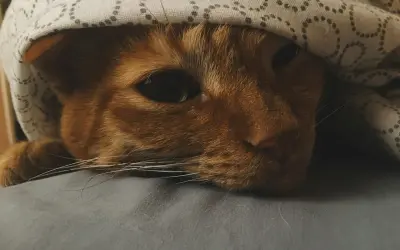
If your cat has been living with kidney disease and the good stretches keep getting shorter, you may be facing end-stage kidney failure in...

Does pet insurance cover euthanasia? In most cases, yes, when a veterinarian recommends it for a condition the policy already covers. The...
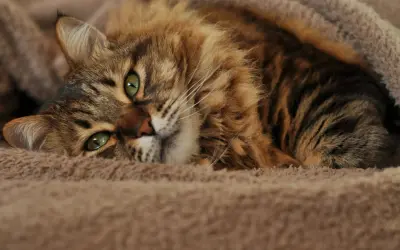
If you're watching for the signs your cat is dying, you're carrying one of the heaviest kinds of love there is, the kind that keeps paying...

If you're asking how much it costs to put a cat down, you're probably facing one of the hardest weeks of your life, and worrying about the...

If you're asking how much it costs to put a dog down, you're probably facing one of the hardest weeks of your life, and worrying about the...
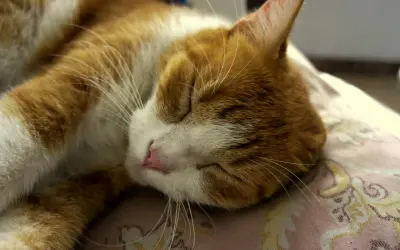
There may be no harder decision in a cat's life than this one, and if you're weighing when to put your cat down, it's because you love them...

No decision in a dog's life is harder than this one, and if you're weighing whether to put your dog down, it's because you love them and...

If your cat has been given a diagnosis that isn't going to be cured, palliative care is the name for everything you do from here. Keeping...
The honest answer is: earlier than feels comfortable. Most people start thinking about end-of-life options only when a crisis arrives, which means their first conversation with a vet about euthanasia or hospice care happens in a moment of high emotion, often with limited time to think.
Starting these conversations when your pet is diagnosed with a serious condition or enters their senior years gives you time to understand your options, ask all your questions, and make thoughtful decisions rather than reactive ones. It does not mean you are planning for an imminent death. It means you are being a thoughtful caregiver.
Not all veterinarians are equally comfortable with end-of-life conversations. Some are excellent at them. Some prefer to wait until asked. Knowing what questions to bring to the conversation helps ensure you walk away with the information you actually need.
Useful questions to ask your vet:
If your vet is not able to engage meaningfully with these questions, you may benefit from a consultation with a veterinarian who specializes in end-of-life care or hospice. These practitioners exist and are worth seeking out.
Palliative care focuses on comfort rather than cure. It is appropriate for pets with serious illnesses, in which the goal has shifted from treating the underlying disease to keeping the animal as comfortable and engaged as possible for as long as quality of life allows.
Pet hospice, sometimes called pawspice care, is a more intensive form of palliative care that typically includes a dedicated care plan, regular check-ins with a veterinary team, and support for the pet and the family. It is not available everywhere, but the field is growing, and there are more options now than even a few years ago.
Choosing palliative or hospice care does not mean giving up. It is a different kind of caring, focused on the quality of remaining time, not length.
A quality-of-life assessment provides a framework for evaluating your pet's wellbeing over time. The Villalobos Quality of Life Scale, also called the HHHHHMM Scale, assesses seven areas: Hurt, Hunger, Hydration, Hygiene, Happiness, Mobility, and More good days than bad. Each is rated on a scale of 1 to 10.
Using a tool like this consistently, rather than just in moments of crisis, helps you track changes and reduces the distorting effect of both hope and fear on your perception. A total score below 35 is generally considered a signal that warrants serious discussion with your vet.
These tools are not meant to make the decision for you. They are meant to help you see your pet more clearly when your emotions make it hard to do so.
The decision to euthanize a pet is one of the hardest decisions a pet owner can face. There is rarely a moment of perfect clarity. Most people describe it as feeling like both too soon and not soon enough.
Veterinarians who specialize in end-of-life care often say that loving owners almost always wait longer than necessary. Not out of cruelty, but out of love and the deep hope that things might still turn around. Knowing your pet's quality-of-life baseline before things deteriorate helps you recognize the change when it comes.
If you are at this stage and struggling, you are not alone, and you are not doing it wrong. There are resources here specifically about the euthanasia decision, what to expect, and how to carry it afterward.
In-home euthanasia allows your pet to pass away in their own environment, surrounded by familiar smells and the people they love. Many families find this significantly more peaceful than a clinic visit. The process is the same as a clinic euthanasia, but in your home, on your schedule.
In-home euthanasia providers are available in most metro areas and increasingly in suburban and rural areas as well. Costs are typically higher than a clinic euthanasia, but many families find the experience worth it. You can search for in-home euthanasia providers in our directory.
End-of-life care can become expensive, particularly if it involves specialist consultations, palliative medications, or in-home services. Having at least a rough understanding of likely costs gives you more flexibility when making decisions.
Pet insurance does not always cover end-of-life care, but some plans include hospice and palliative benefits. CareCredit and similar financing options are accepted by many veterinary practices. Some hospice providers offer sliding-scale fees. Knowing these options exist before you need them reduces the financial panic that can complicate an already hard time.
Love, Baxter covers end-of-life planning from every angle. You will find articles on talking to your vet about prognosis, quality-of-life assessment tools, what palliative and hospice care involves, how to navigate the euthanasia decision, and how to plan financially. Our directory connects you with in-home euthanasia providers, hospice vets, and end-of-life specialists in your area.
The HHHHHMM Scale, developed by Dr. Alice Villalobos, assesses your pet's quality of life across seven categories: Hurt, Hunger, Hydration, Hygiene, Happiness, Mobility, and More good days than bad. Each is rated 1 to 10. A total score below 35 is generally worth discussing with your vet. Using it consistently over time helps you track trends rather than relying on how you feel on any given day.
Palliative care focuses on comfort rather than cure, managing pain and quality of life when treatment is no longer the primary goal. Pet hospice is a more intensive form of care that includes a dedicated care plan, regular veterinary check-ins, and support for the family. Both are oriented around the quality of remaining time rather than its length.
There is rarely a single clear moment. Most people describe a gradual shift in the ratio of good days to hard ones. Veterinarians who specialize in end-of-life care say that loving owners almost always wait longer than necessary, out of love rather than neglect. A quality-of-life framework tracked consistently over time can help you see the trend more clearly when emotions make that hard.
In-home euthanasia allows your pet to pass in their own environment, surrounded by familiar smells and the people they love. Many families find this significantly more peaceful than a clinic visit. Providers are available in most metro areas and increasingly in suburban and rural locations. You can search for in-home euthanasia providers in our directory.