







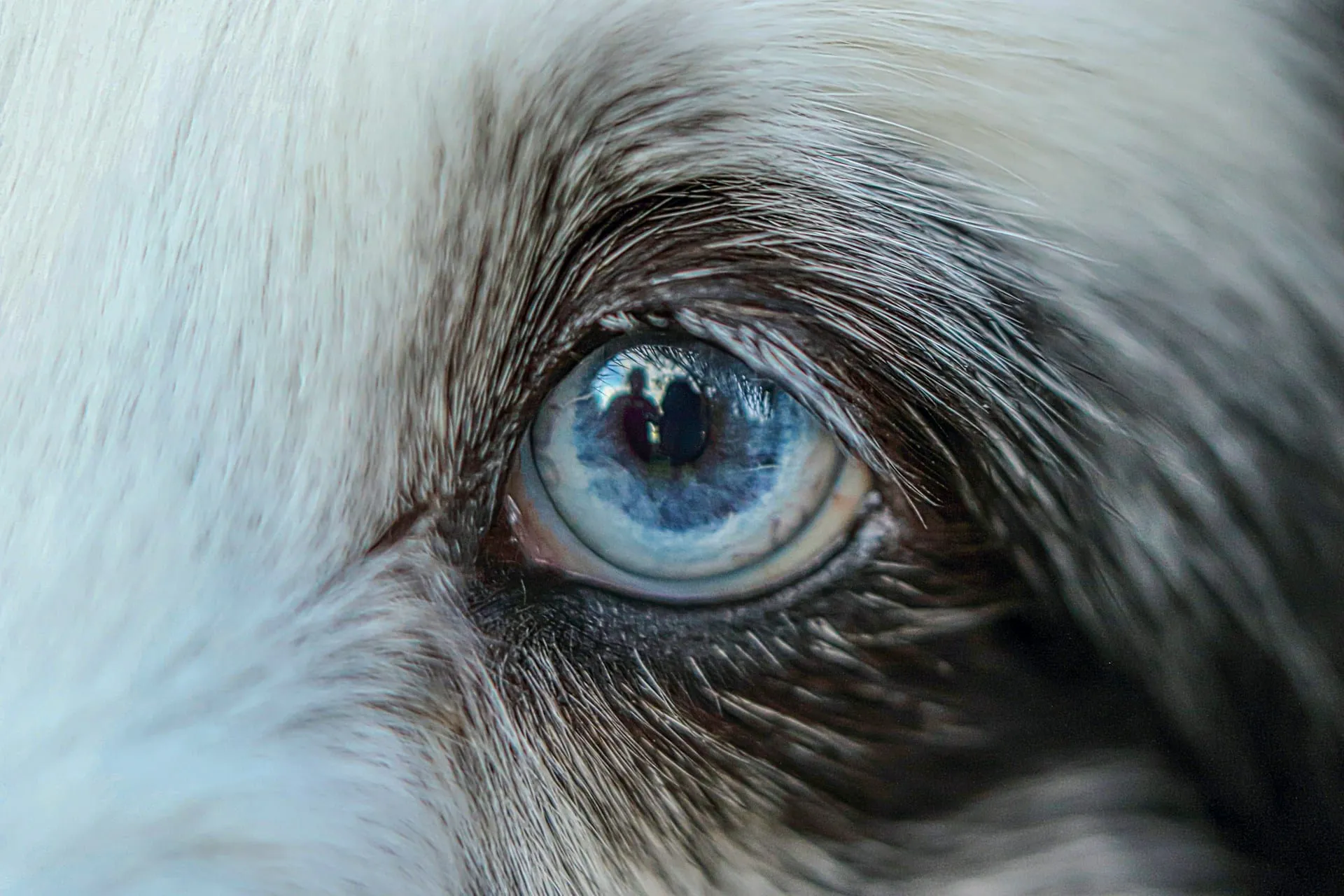
A dog who waits at the hinge side of the door for it to open. A cat who yowls at an empty hallway in the middle of the night. When a senior pet starts getting lost in rooms they know well, dementia is often the word that comes to mind.
Dog dementia is what vets call cognitive dysfunction syndrome (CDS), also known as canine cognitive dysfunction (CCD), a common age-related disease in dogs that affects the brain. It’s similar to Alzheimer’s in people, and cats can get dementia too. Approximately 14–22.5% of dogs older than 8 years show age-related cognitive impairment. The changes usually come on slowly, and some can look like ordinary old age.
There’s no cure for dementia itself. But treatment and home changes can ease the signs, and we’ll walk through what helps, alongside our other senior pet care guides. If your pet is already gone, this describes what’s known across many pets, not what happened with yours.
Key Takeaways
- Vets sort the signs of dog dementia under DISHAA: disorientation, changes in how they interact, sleeping by day and pacing at night, accidents in the house, changes in activity, and anxiety. In cats, the most commonly reported sign is increased vocalizing, especially overnight.
- A vet diagnoses dementia mainly from behavioral changes and may run tests to see whether anything else is contributing.
- Treatment can’t cure it, and its effectiveness varies. For dogs, options include selegiline (the one drug licensed for dog dementia in North America), diets made for aging brains, enrichment, and routine; for cats, enrichment and mental stimulation matter most, and vets sometimes use medications off-label.
- To calm a dog with dementia at night, among the things vets suggest trying are spending time together and getting more daylight during the day, keeping the same place and time for sleep, and using a darkened room at night. Medication helps some dogs.
- Dementia usually changes slowly, and in dogs the pace varies from dog to dog. For some families, dementia becomes a quality-of-life question, often when fear or sleepless nights take up more of the day, or caring for their pet becomes more than they can manage. A vet or a quality-of-life consultation can help you think it through.
Table of Contents
- 1Dog Dementia Signs and Symptoms: What to Watch For at Home
- 2Cat Dementia Signs: How It Looks in an Older Cat
- 3What Causes Dementia in Dogs and Cats?
- 4How Vets Diagnose Dementia in Dogs and Cats
- 5Treatment for Dog and Cat Dementia: What Can Help
- 6How to Calm a Dog or Cat With Dementia at Night
- 7Caring for a Dog or Cat With Dementia, Day to Day
- 8Dog Dementia Stages: How It Changes Over Time
- 9When Is It Time to Say Goodbye to a Dog or Cat With Dementia?
- 10Caring for Yourself While Caring for a Pet With Dementia
- 11Living With a Dog or Cat Who Has Dementia
- 12Frequently Asked Questions About Dog and Cat Dementia
Dog Dementia Signs and Symptoms: What to Watch For at Home
The most common signs and symptoms of dog dementia are getting lost or stuck at home, sleeping more by day and pacing at night, changes in how they greet or follow you, and new anxiety. Accidents from a house-trained dog can be part of it too. Vets group them under one acronym, DISHAA, for six kinds of change. In a dog, they tend to look like this:
- Disorientation: A dog may get stuck behind furniture or in a corner, or stare at a wall. Finding the water bowl can take a while.
- Interactions: A dog who used to seek you out stops, or a dog who kept to themselves follows you from room to room. Familiar people can start to seem like strangers.
- Sleep: Long naps by day, then pacing and restlessness at night. Barking, whining, or crying in the dark can come with it.
- House soiling and forgotten training: Accidents from a reliably house-trained dog. Some forget to go while they’re outside, then have an accident the minute they’re back inside. They may also stop responding to cues they once knew well, like sit or their name.
- Activity: Less interest in toys, play, and exploring. Or the opposite: wandering, pacing the same loop, licking or circling.
- Anxiety: New fears, like thunder or places that never bothered them before. A dog who used to nap while you were out may now struggle to be left alone.
In dogs, vets most often see daytime sleeping and nighttime restlessness, decreased interaction, disorientation at home, and anxiety. A dog doesn’t need all six. If your dog shows more than one, it may be more than ordinary aging.
Is It Dog Dementia or Just Old Age?
Some slowing down is normal. Older dogs can show slower learning, decreased retention, and a decline in nonsocial attention without dementia. Dementia is not considered a normal aging change, even though it gets more common with age.
Dogs may start showing it around nine years of age, or older. In one study, signs consistent with it turned up in 28% of dogs 11–12 years old and 68% of dogs 15–16 years old. Age alone doesn’t mean a dog has it, though. Some dogs stay sharp into old age.
Writing the signs down makes the pattern easier to see. A free printable DISHAA checklist asks about signs that have arisen or progressed since 8 years of age and has you score each one from 0 (none) to 3 (severe). If your dog came home older than that, score what you’ve seen since they arrived.
If there’s time, filling it in more than once can show the change on paper. If you see a vet, a short phone video of a restless night can show them what’s hard to describe.
Why Is My Old Dog Walking in Circles?
Circling is one of the repetitive behaviors on the DISHAA checklist, alongside chewing, licking, and stargazing. A dog with dementia may walk the same small loop over and over, and sometimes end up stuck in a corner or behind a chair.
Not all circling is dementia. Circling that starts suddenly, always to one side, or comes with a head tilt, stumbling, or a fall, can have causes other than dementia. Circling that builds slowly can come from dementia, and it can have other causes too. If you can see a vet, a short video shows them what it looks like at home.
Does My Dog Have Dementia? A Quick Check at Home
This isn’t a diagnosis, and a vet can help tell dementia apart from other causes. But if you’re wondering, answer these about the past few months:
- Does your dog get stuck behind furniture or in corners, or stare at walls?
- Do they wait at the wrong side of a door, or seem lost in the house or yard?
- Have they stopped greeting people they know, or started following you everywhere?
- Are they sleeping more by day and restless, pacing or barking at night?
- Are there indoor accidents from a reliably house-trained dog?
- Is their name, or a cue they used to know well, getting no response?
- Do they pace, circle, or lick in repetitive loops?
- Have new fears shown up, or panic when they’re left alone?
One sign alone can have many explanations. If several sound familiar, that’s a pattern worth bringing to a vet. If your dog has trouble seeing or hearing, some of these can come from that instead. For a cat, the questions shift toward night yowling, litter box changes, and attention-seeking, which the cat section covers sign by sign.
Cat Dementia Signs: How It Looks in an Older Cat
The most common sign of cat dementia is the voice: crying or yowling, often at night. A cat with dementia may vocalize in a demanding or mournful way, especially overnight, calling out to a dark, quiet house. Other signs include wanting more attention or pulling away, sleeping by day and roaming at night, going outside the litter box, and getting lost in familiar places. Signs like these tend to show up in the senior years, and our guide to when a cat is considered a senior covers the cat life stages.
Vets use a longer acronym for cats, VISHDAAL, with the signs listed from most common to least. Here’s what each can look like:
- Vocalization: crying, yowling, or howling, often at night.
- Interaction: compared with dogs, cats with dementia tend to have an increase in interaction and vocalization, so some want more attention than before. Others pull away or get snappish.
- Sleep: sleeping more during the day, then waking at night, pacing, and calling out.
- House soiling: going outside the litter box.
- Disorientation: getting stuck somewhere, or forgetting where the litter box is or that they’ve just been fed.
- Activity: less play, pacing, grooming less than they used to.
- Anxiety: startling at noises that never bothered them before.
- Learning: not answering to their name, or struggling with a change in routine.
The signs tend to become clearly noticeable in cats that are 10 years of age or older. In one study, 28% of pet cats aged 11 to 14 years developed at least one sign consistent with cognitive dysfunction, and over half of cats 15 and older did. Night yowling and litter box changes can have other causes in older cats too, and the diagnosis section below covers how vets sort them out.
What Causes Dementia in Dogs and Cats?
In dogs, dementia is caused by slow, age-related changes in the brain. Brain cells called neurons start to waste away, and a protein called beta-amyloid builds up, creating toxic conditions for neurons. As those cells stop working, the brain gets worse at processing information, and the confusion families see at home follows.
Oxidative damage plays a part too. In dogs, changes include the accumulation of beta-amyloid plaques and vulnerability to oxidative damage, much like the early stages of Alzheimer’s in people.
Similar changes happen in cats. As they age, cats with dementia can develop accumulation of β-amyloid and hyperphosphorylated tau deposits in the brain.
Are Some Dog Breeds More Prone to Dementia?
Breed size made no difference in one survey of older dogs: rates of dementia did not differ by breed size. Age shows up again and again in the research. In the Dog Aging Project’s study of more than 15,000 dogs, allowing for other factors, the odds of CCD increased 52% with each additional year of age. Dogs with a history of neurological, eye, or ear problems also had higher odds of dementia in that study.
Size may still play a part in aging, since large dogs age more quickly than small ones. A big dog may reach the age when signs start sooner than a small one would. These are patterns across thousands of dogs, not a forecast for any one dog.
Can Dog Dementia Be Prevented?
No one has found a way to prevent dementia in dogs. In one large study, less active dogs were more likely to have it, but that finding can’t say which comes first, since dementia itself can leave a dog less interested in moving. Like the other findings here, it describes thousands of dogs, not any one dog’s story.
For a dog in your life now, walks, play, and new smells at whatever pace their body allows give an aging brain something to do, and enrichment is part of how vets manage dementia, too. The enrichment section below has ideas for dogs and cats.
How Vets Diagnose Dementia in Dogs and Cats
No single blood test diagnoses dementia. Vets recognize it from the pattern of behavior changes you’ve seen at home, after checking what else could explain them with an exam and, often, blood and urine tests. Notes and short videos from home can help a vet see that pattern.
For a dog, a vet will usually do a physical exam and recommend blood and urine tests to rule out other conditions with similar signs, such as pain, arthritis, seizure disorders, illness elsewhere in the body, and vision or hearing loss. For cats, the list often includes an overactive thyroid, kidney disease, high blood pressure, arthritis, and painful teeth. In some cases, a vet may suggest an MRI to look for a brain tumor or other changes in the brain.
If cost is a worry, ask which tests would change your pet’s plan and which can wait. An older pet can have dementia and another condition at the same time. Many older cats with CDS signs may have another disease as well, and a vet can help sort out which signs come from which.
Can Dog Dementia Come On Suddenly?
Dementia usually builds slowly. A pet who becomes disoriented over minutes or hours, with a head tilt, trouble standing or walking, or a seizure, needs a vet or an emergency clinic right away, because sudden signs like these can have causes other than dementia. If a vet saw your pet during a sudden change, they can talk through what they found.
Dog Dementia and Drinking Water: Is Thirst a Sign?
Drinking a lot more isn’t on the DISHAA or VISHDAAL lists, so a vet will look for another cause. Increased thirst and urination are linked to kidney disease, hormone conditions like Cushing’s disease, an overactive thyroid, diabetes, and liver disease. If your pet is drinking more and you see a vet, it helps to measure how much water your pet drinks in a 24-hour period. Fill the bowl with a measured amount in the morning, top it up with measured amounts, and note what’s left the next morning, or ask a vet for another way to track it if other pets share the bowl. Bring a list of any medications, too.
The opposite can happen with dementia. A confused pet may stand at the bowl, wander off, or have trouble finding the water at all. A second bowl near where they rest, and water in the same spot every day, make it easier to find.
What to Bring to the Vet
Notes don’t need to be neat. These tend to be the most useful:
- The DISHAA checklist, filled in at home, or for a cat, notes on each letter of VISHDAAL.
- A simple log for a week or two: what happened, what time, how often. “Crying at the back door around 2 a.m., four nights this week” tells a vet more than “off lately.”
- Phone video of the pacing, the staring, or the night calling.
- Bring a list of every medication and supplement, including flea and tick products, because some dementia medication doesn’t mix with other drugs.
- Any changes in eating, drinking, weight, or bathroom habits, even small ones.
Write down your questions before you go, too, since appointments move fast. If you’re sorting which changes to mention, our guide to normal and concerning senior pet behavior changes lays out the difference sign by sign.
Treatment for Dog and Cat Dementia: What Can Help
Treatment for dog dementia can combine enrichment and home changes, a brain-support diet, and selegiline or another medication. Cat treatment focuses more on home care and play. There’s no cure, but these approaches can slow the disease for some pets and improve the associated behavioral signs. Most plans combine a few of these. Which ones fit depends on your pet’s health, what else they’re being treated for, and what’s possible for you. If cost matters, ask for a monthly estimate, since medication and prescription food are ongoing costs, and ask which parts of the plan matter most.
Medication for Dog Dementia
Selegiline (brand name Anipryl) is the one drug licensed in North America for dementia in dogs. Some dogs improve, and some don’t. Dogs get it once a day in the morning. A vet usually checks in after about a month and may adjust the dose if there’s no improvement.
Before starting it, a vet will want blood and urine results and a full list of your dog’s medications. Selegiline isn’t used with some antidepressants or opioids, including tramadol, or in aggressive dogs, so mention any growling or snapping. It also isn’t used with certain tick collars and other tick treatments, so ask a vet before using any flea or tick product. It needs care alongside some other drugs, including phenylpropanolamine and trazodone.
Possible side effects include vomiting, diarrhea, lack of appetite, restlessness, more confusion, and tiredness. Aged cheeses aren’t a good pill pocket for a dog on it. If your dog is on selegiline and has had one of these medications, a tick collar, or aged cheese, a vet or a pet poison line can tell you whether anything needs checking. If it doesn’t help, a vet can talk through other medications, diet and changes at home.
Anxiety can be treated on its own, not just as part of dementia. It can weigh on a pet and the people caring for them, and anti-anxiety medication eases it for some pets. Shorter-acting drugs such as trazodone and alprazolam are preferred by the task force behind AAHA’s senior care guidelines. Trazodone needs care alongside selegiline, so a vet will weigh the two together. Anxiety can be tied to pain, too, so a vet may look for sore joints or teeth.
Diets and Supplements for Aging Brains
Several diets are made for aging brains, with extra antioxidants, fatty acids, and medium-chain triglycerides (MCTs), a fat the body turns into ketones, a fuel the aging brain can still use. In one 90-day study, Purina researchers evaluated the effects of diets with MCTs and a blend of brain-support nutrients on dogs with signs of dementia. Dogs on both the test diet and a comparison diet improved, and the test diet group improved in more areas. A vet can say whether a diet like this fits your pet and your budget.
Supplements are less certain. Products with SAMe, phosphatidylserine, and antioxidants are sold for dogs and cats, and some vets use them, but the research behind most is limited. If you’re using one, or considering it, a vet can review what’s in it and whether it fits with other medications.
Treatment Options for Cats
In cats, no drugs or diets are licensed to treat CDS, so treatment leans on the home and on play. Vets sometimes prescribe selegiline off-label, and timing can differ in cats from dogs, so a vet will give directions. Fluoxetine, an anti-anxiety medication, is another option for some cats, and it isn’t given alongside selegiline. Before prescribing it, a vet will want to rule out other causes, such as an overactive thyroid or kidney disease.
Enrichment and mental stimulation do the heaviest lifting. Short play sessions that let a cat stalk, bat and pounce, a perch by a window, and new toys or smells now and then give an aging brain something to work on. Easy access matters too: ramps to climb, a nearby litter box, and meals at the same times each day. Fewer brain-support diets exist for cats than for dogs, but some cat foods add MCTs, antioxidants, and omega-3s. A vet can say whether one fits around other conditions, like kidney disease, that change what a cat should eat.
How to Calm a Dog or Cat With Dementia at Night
To calm a dog with dementia at night, start in the daytime: more daylight and time together, short play, a last trip outside, the same bed in a dark room at the same time each night, and a gate so they can’t wander. Cats get a similar routine, built around play. If nights stay hard, a vet can help.
This night restlessness is often called sundowning. When a dog is pacing all night, easing sleep disturbances may relieve caregiver stress, and better nights can make the rest of the plan easier to manage.
For dogs, the idea is to reset the day-night rhythm by interacting with the dog during the day, providing a consistent place and time for sleeping, increasing the dog’s exposure to light during the day, and darkening the room at night. In practice, that can look like:
- More time in daylight, outside or by a sunny window, plus short play or training sessions during the day.
- A last trip outside right before bed.
- The same bed in the same spot every night, in a darkened room.
- A gate so a wandering dog can’t get stuck behind furniture or reach the stairs at 3 a.m.
Cats need their own version. More play and attention during the day can mean more rest at night. A quiet, protected place to sleep, with a low-fronted litter box close by, gives them less to search for in the dark. One option is creating a separate room for your cat at night, where they can wander without waking anyone, and a timed feeder can settle a cat who forgets they’ve already eaten.
Medication and Supplements for Sleep
Some pets’ nights settle with changes like these, and some don’t. A vet can also talk through medication. Melatonin is used for sleep and behavior problems in dogs and cats, but human products may contain xylitol, which is toxic to dogs, and slow-release versions aren’t meant for pets, so a vet can point you to a safe product and dose. If you’ve already given some, the label will show whether it contains xylitol, and a vet or a pet poison line can tell you what that means.
Prescription options include trazodone for anxious dogs and gabapentin for some cats. Trazodone starts working in about 90 to 120 minutes, and it has a duration of action lasting 4–6 hours, so a vet will tell you when to give it. Some dogs get more restless at night, and a calm, predictable wind-down before bed helps some settle. Our guide to sundowning in dogs goes into that pattern in more detail, including what tends to help.
Pheromone products are another option some families try. For dogs, a synthetic dog-appeasing pheromone is available as a spray, diffuser, or collar. For cats, a vet may suggest cat pheromone sprays or adaptors to help with stress or sleep.
Caring for a Dog or Cat With Dementia, Day to Day
A predictable day suits a pet whose brain is losing its map, since a steady routine lowers the stress that change brings. Whatever times fit your life, keeping meals, outings, medication, and bedtime around the same time gives them something to count on.
Setting Up the Home
Not every idea fits every pet or home. Pick the ones that solve the problems you’re seeing.
- Many older dogs also lose some sight or hearing, and when they do, they can become disoriented far more easily. Hand signals for a dog who can’t hear well, your voice before your touch for one who can’t see well, and furniture that stays put can help.
- Keep furniture where it is and clear the paths between bed, water, food, and the door or litter box.
- Block stairs, pools, and the gaps behind couches where a pet tends to get stuck.
- Put rugs or runners on slippery floors, and ramps or pet steps where they climb.
- Use cues they can follow without thinking: a textured mat at the back door, a familiar scent near the bed, the same word every time you head outside.
- For dogs, take them outside more often, and if accidents keep happening, set up a washable area or an indoor potty spot for when you’re away.
- For cats, use an extra-large litter box with low sides, uncovered and close to where they spend their time.
- If your pet struggles when you’re out, a small, safe room or gated area with their bed and water gives them less to get lost in. A radio or TV on low adds a familiar sound, and a sitter or friend who drops in breaks up a long day.
- A confused older pet can take longer to settle into big changes, like a move or a new pet.
Games and Enrichment for a Pet With Dementia
Enrichment gives an aging brain work to do, and gentle exercise can be part of it, at whatever pace their body allows. Short, easy wins matter most. For dogs, that can mean practicing old tricks and teaching an easy new one, puzzle feeders, and scavenger hunts where they use their nose to find snacks or toys. For cats, that can mean a perch by the window, a wand toy to stalk and bat at, rotating toys so something feels new, and fresh smells to investigate.
Keep sessions short and stop while your pet is enjoying it. For step-by-step ideas, see our brain games for senior dogs and our guide to environmental enrichment for senior pets, which covers cats too. If a game seems to stress or confuse them, make it easier or try something else. A sniff walk on a familiar route, or five minutes of hide-and-seek with treats, is plenty for some pets.
Other Pets, Vet Visits, Boarding and Travel
A dog with dementia can grow more irritable or fearful around visitors, family, or other animals, and a cat can become more demanding, avoidant, or snappish. Give them a place where other pets can’t crowd them, feed them separately if meals get tense, and supervise play.
To make vet visits easier, ask whether your cat can wait somewhere quiet, away from dogs, since senior pets can be sensitive to noise and bright light. AAHA’s senior care guidelines suggest families bring pictures and videos displaying mobility and any abnormal behavior seen at home, plus photos of where your pet eats, drinks, and sleeps. Ask for the plan in writing, too, since a lot comes up in one visit.
Boarding and travel change a pet’s routine, and pets with dementia handle it differently. Some families use a sitter at home or a friend the pet knows, and some board. Wherever your pet stays, their own bed, bowls, and a worn T-shirt that smells like you, plus the usual feeding times, can help.
What to Do When Your Pet Is Stuck, Crying or Confused
The hard moments repeat, so it’s useful to have a plan for each.
- Stuck in a corner or behind furniture: gently guide them out, with a hand on their side and a calm word. Then block that spot if you can.
- Crying or yowling at night: it can help to check the basics, like water, a bathroom trip, or a litter box nearby. Some pets settle with a calm voice and a hand on their back, and others do better in a quiet, dim room of their own.
- Startled when you touch them: speak before you reach for them, and approach from the front where they can see you.
- Not seeming to know you: slow down, let them smell your hand, and give them a minute. Familiar voices and routines give them something to hold on to.
- An accident in the house: enzyme cleaner removes the smell that can draw them back to the same spot. For dogs, vets suggest rewarding eliminating outside instead of inside, and rewarding lying still instead of pacing works the same way.
- Pacing that won’t stop: a short walk, a chew, or a quiet room sometimes breaks the loop. If pacing fills most of the night, bring it up with a vet, since medication helps some pets.
Dog Dementia Stages: How It Changes Over Time
Dementia is usually described as mild, moderate, or severe, based on how many signs a pet has and how strong they are. There’s no fixed timeline from one to the next, and a dog can stay at one level for a while. The DISHAA checklist assigns numbers. A score of 4-15 is consistent with mild, 16-33 is moderate, and above 33 is severe. Most families never need the exact number. The direction over time matters most.
So the stages roughly look like this:
- Mild: a few signs, mostly scored low, like waiting at the wrong side of the door now and then.
- Moderate: signs in more areas, or scored higher, such as night pacing, accidents, and getting stuck showing up together.
- Severe: many signs, scored high. Not recognizing familiar people or pets, getting lost at home, and strong anxiety are all on the checklist, and in this range, most of them are present.
Progression speed differs for every dog. Dementia in dogs worsens over time, but there’s individual variability in the rate of cognitive decline, so two dogs with the same score today can change at very different speeds. Cats show similar signs, but less is known about how it progresses because they’ve been studied less.
Other health problems can change the picture too, and a vet can talk through what fits at each stage. If there’s time, rescoring the checklist now and then can show where things are headed.
What the Final Stage of Dementia Can Look Like
In the severe range, most DISHAA signs are present, with many scored moderate or severe. A dog may not recognize familiar people or pets, may get lost in their own home or yard, and may pace or wander. Night waking and vocalizing can be frequent, accidents common, and anxiety high when they’re separated from their people. Some lose interest in toys and play. Less is known about how the last stage looks in cats.
Not every pet reaches this point. Some families decide on euthanasia before it, and others care for their pet through it. A vet can help you see where your pet is and what comfort care looks like at each step.
When Is It Time to Say Goodbye to a Dog or Cat With Dementia?
Families start thinking about euthanasia for a dog or cat with dementia at different points. Some begin when fear or sleepless nights take up more of the day, others when eating or settling slips, or care becomes more than they can manage. Some choose comfort care, and some choose euthanasia, and the timing looks different in every home.
To look at the whole picture, these can help:
- The basics: eating, drinking, sleeping, getting around, and whether comfort settles them when they’re upset.
- Fear: how often it comes, and whether anything settles it.
- Connection: how they respond to familiar voices and touch.
- What you can manage: sleep, money, work, and the rest of life.
- A calendar of good and bad days, if there’s time. AAHA’s end-of-life guidance suggests families track good versus bad days on a calendar or journal to see changes more clearly.
- A quality-of-life scale as a starting point for talking with a vet. The HHHHHMM quality-of-life scale is one widely shared option, built around hurt, hunger, hydration, hygiene, happiness, mobility, and more good days than bad.
Questions to Ask a Vet
A vet can help you look at what’s changing. A few questions families find useful, adapted from VCA’s veterinary guide to euthanasia decisions and shaped for dementia:
- Which signs would tell me my pet is uncomfortable more often than not?
- Could pain be behind the pacing or night waking?
- Would a medication change or dose adjustment help, or have we tried what makes sense?
- What day-to-day things are likely to change as the dementia moves on?
- How will I measure day-to-day quality of life? And how often?
- What would comfort care, or saying goodbye, look like from here?
- If my beliefs rule out euthanasia, what comfort care can we offer?
If You’re Planning for Euthanasia
Euthanasia can take place at a clinic or at home. Some families choose a clinic their pet knows, with a team they’ve met, and our directory lists clinics that offer end-of-life care. Others choose home, somewhere familiar, and the directory lists in-home euthanasia providers too. If there’s time, some families decide on aftercare and a keepsake, like a paw print, ahead of time.
A quality-of-life consultation is another place to talk it through. Our guides to knowing when it’s time for a dog and when it’s time for a cat cover the questions that come up.
Caring for Yourself While Caring for a Pet With Dementia
Broken sleep, accidents, and a pet who doesn’t settle add up. Caring for a senior pet takes time, patience, money, and emotional and often physical stamina, as AAHA’s senior care guidelines put it, and dementia can add to that.
A few things that make room for your own rest:
- If anyone can take a night or an afternoon, even once in a while, let them, so you can sleep.
- Ask a vet’s team what’s essential and what you can drop. A shorter plan you can keep up with often works better than a longer one you can’t.
- If there are people around you, tell them what’s going on. Disagreements in a family about care can add to the strain, and talking them through can ease it.
- Find support nearby. Our directory lists senior pet care providers who work with older pets and their families.
There’s often grief in this, too, while your pet is here with you. That grief has a name: anticipatory grief. Saying it out loud to someone, or keeping small rituals with your pet, can make it easier to carry. Our guide to coping with anticipatory grief for pets walks through more of what helps. Caregiving this long can wear anyone down, and our guide to pet caregiver fatigue covers the signs and what eases it.
Living With a Dog or Cat Who Has Dementia
Dog dementia and cat dementia usually change a pet slowly, and they change the shape of your days together. A familiar hand, a sunny spot, a quiet hour together can matter to them at any stage.
If you’re at the start of this, one place to begin: fill in the DISHAA checklist (or, for a cat, jot notes on each VISHDAAL sign), keep a few days of notes, and pick one change at home, like a gate, a cleared path to water, or a fixed bedtime. Small changes are easier to keep up than a whole new routine at once, and you can add more as you learn what your pet needs.
Frequently Asked Questions About Dog and Cat Dementia
How long can a dog live with dementia?
There’s no set life expectancy for a dog with dementia. It usually progresses slowly, and the pace is different for every dog, so two dogs diagnosed at the same age can have very different paths. A dog with mild signs and few other health problems is in a different place from one with severe signs and several illnesses adding up, and vets weigh that when they talk about the outlook. Some dogs stay in the milder range for a while, and others move through it faster. If there’s time, rescoring the DISHAA checklist or jotting a few notes now and then can show how things are changing. If a vet has seen your dog, they can give you a sense of what to expect.
Is my dog with dementia scared or suffering?
Some dogs with dementia are anxious or frightened, especially at night. Anxiety is one of the six DISHAA signs, and vets can treat the anxiety itself. Signs that fear is part of the picture include pacing or panting that won’t settle at night, new fears of sounds or places, and distress when left alone. A steady routine, a safe place to sleep, and medication can ease it for some dogs. Pain isn’t one of the DISHAA signs. Anxiety can be tied to pain from other conditions, though, so a vet may check for stiff joints or a painful mouth. It can help to notice both the relaxed moments and the anxious ones, and how they balance over time. If you’re unsure how your dog is doing, a vet can help you assess the balance.
Does a dog with dementia know who I am?
It depends on the dog and how far the dementia has gone. Not recognizing familiar people or pets is one of the DISHAA signs, and the checklist scores it from mild to severe. For some dogs, it stays mild; for others, it becomes severe. Some dogs pull away from their people, and others stay closer than ever. If your dog no longer comes to meet you, you can go to them instead. Say their name as you walk over, crouch to their level, and let them sniff you before you reach out. A familiar voice, the usual routine, and a calm pace give a confused dog something solid.
Why is my senior cat yowling at night?
Night yowling or howling in an older cat has a few common causes, and dementia is one of them. Cats with dementia often cry out loudly in the middle of the night, sometimes with pacing or seeming lost. But an overactive thyroid and high blood pressure can cause night yowling too, and high blood pressure can affect a cat’s eyesight, leaving them anxious and confused. Pain from arthritis or sore teeth can also change how an older cat eats, moves, and uses the litter box. If your cat is yowling now and you can get to a vet, they can help find out which of these is behind it. Either way, more play during the day, a set feeding time, a quiet room at night, and a nearby litter box can make the night easier for some cats.
When should I consider euthanasia for a dog with dementia?
Families make this decision at different points, and no single marker fits every dog. For some, it’s one part of the day that has become very hard, like fear at night or no rest. Others look at the whole day: how much is calm and how much is spent lost, pacing, or afraid. Sleep matters, for the dog and for you, and so do eating, getting around, and other illnesses that may be adding up. Families also weigh what they can manage: money, sleep, work, and the rest of life. A vet, a quality-of-life consultant, or an in-home euthanasia provider can each help you think it through. Some families choose home, and some choose a clinic their dog knows; either way, the vet can explain each step beforehand so you know what to expect.
On this topic