







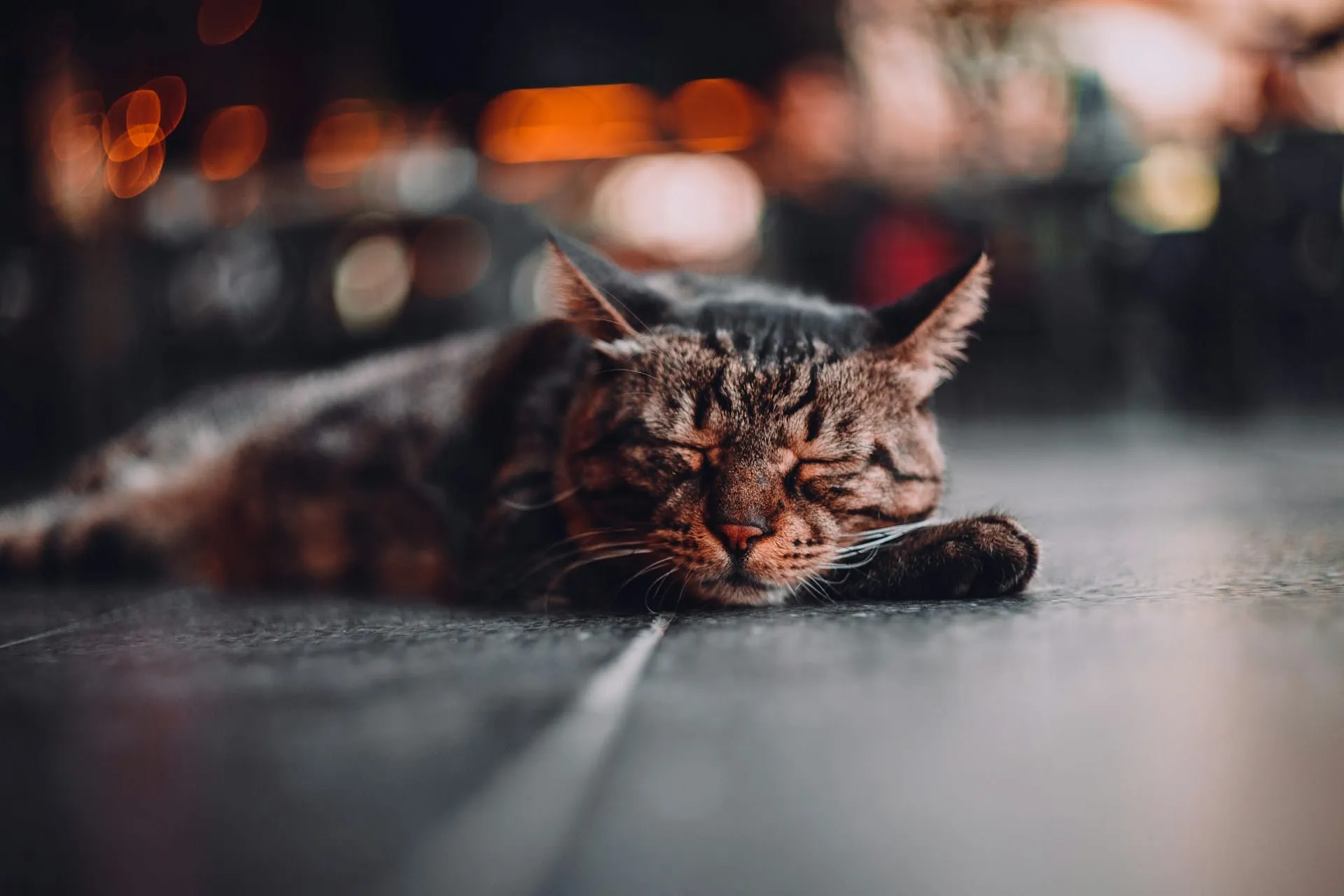
The old cat behavior before death that pet parents tell us about, over and over, comes down to seven changes: hiding, eating and drinking less, sleeping differently, giving up grooming, sounding different, struggling to move or reach the litter box, and either pulling away from you or suddenly needing to be touching you at all times.
Before the list, something matters more. Some of these aren’t a decline at all. They’re emergencies, and several point at conditions that can still be treated for years. A cat breathing with an open mouth needs a vet tonight. So does a cat whose back legs stop working, and a cat straining in the box with nothing coming out. The next section covers exactly which ones those are.
The rest of this is about reading your own cat honestly: what each change usually means, how to tell pain from slowing down, what helps at home, and how to have the quality-of-life conversation with your vet before you’re forced into it at 2 a.m. If your cat already has a diagnosis that isn’t going to be cured, what palliative care for a cat actually involves is the companion piece to this one. This is general information from people who have been through it, not a diagnosis. Your vet is the one who can examine your cat.
Key Takeaways
- Open-mouth breathing, sudden hind-leg collapse, straining in the litter box, and pale or bluish gums are emergencies. Cornell’s guidance on breathing difficulty is to get the cat to a vet right away.
- A cat who stops eating for a few days risks hepatic lipidosis, a liver condition that can be fatal but is treatable. Days without food are reason enough to call, with or without yellowing of the gums.
- Cats count as senior once they’re past ten, not twelve to fifteen, and the guidelines call for an exam at least every six months.
- Kidney disease, hyperthyroidism, diabetes, dental pain, arthritis, high blood pressure, and cognitive decline all produce these same signs, and all are treatable.
- Score quality of life in writing across two weeks. A single good afternoon or bad night tells you almost nothing.
Table of Contents
- 1Which Signs Mean Call a Vet Tonight
- 2What Counts as a Senior Cat, and What End of Life Means
- 3Seven Changes in Old Cat Behavior Before Death
- 4How to Tell Pain From Slowing Down
- 5How to Comfort a Dying Cat at Home
- 6Judging Quality of Life Without Guessing
- 7Talking to Your Vet About What Comes Next
- 8What to Do With the Time You Have
- 9Frequently Asked Questions About Old Cat Behavior Before Death
Which Signs Mean Call a Vet Tonight
Some of what follows is not decline. Get your cat to a veterinarian now, tonight and not tomorrow, for any of these:
- Breathing with an open mouth, or breathing that visibly takes effort, or a head held low with the neck stretched forward to pull air.
- Gums that look pale, white, gray, bluish, or yellow instead of pink.
- Sudden loss of the use of one or both back legs, especially with crying or cold hind paws.
- Straining in the litter box without producing urine.
- A seizure or collapse.
- Pain that their prescribed medication no longer touches.
Check the Gums First
Learn this one tonight, before you need it. Lift the lip and look, because healthy gums are pink and wet. Press a fingertip against them until the spot blanches, then let go; the color should flood back within two seconds. Pale or white suggests blood loss or shock. Blue or gray means your cat is not getting oxygen. Some cats have naturally black or blotchy gums, so find a pink patch and use that, or check the inside of the lower eyelid or the tongue. One exception, and it overrides everything else here: skip the check entirely if your cat is struggling to breathe. Handling a cat in respiratory distress can make it worse. Go.
Yellow is jaundice, and it can come from the liver, the bile ducts, or the red blood cells. All three are urgent. One warning, though: yellow is a late sign. Plenty of cats in serious trouble never show it, so pink gums are not a reason to wait.
Breathing You Can See
Cats work differently from dogs here. Panting is not a cat thing. Outside a few minutes after hard play, real heat, or a terrifying car ride, it’s abnormal. Cornell’s feline health guidance on difficulty breathing is blunt: a cat showing signs of respiratory trouble is at high risk of dying if the problem isn’t treated promptly, and any time you question whether an animal can breathe comfortably, get them to a veterinarian right away. Rapid breathing, noisy open-mouth panting, repeated coughing, and that lowered-head posture all appear on their list.
Back Legs That Stop Working Suddenly
This emergency is often mistaken for the end. A cat who suddenly cannot use one or both hind limbs, especially with crying, hard or painful back legs, hind paws that feel cold, or nail beds and paw pads that look pale or bluish, may have thrown a clot, which vets call aortic thromboembolism, or a saddle thrombus. It’s excruciating; it isn’t the same as arthritis creeping in, and it needs a vet that hour. Families read it as the moment the body finally gave out. Sometimes that’s true. It should never be assumed.
Straining in the Box With Nothing Coming Out
People misread this one as constipation. A blocked urethra stops a cat from urinating at all and turns fatal fast. Males block far more often, but any cat going in and out of the box, crying in it, or squatting with nothing coming out needs emergency care immediately. Not later today. Not in the morning.
A Cat Who Has Stopped Eating
Days without food are a trigger on their own, no matter what the gums look like. The University of Illinois College of Veterinary Medicine warns that a cat who goes without food for a few days in a row risks hepatic lipidosis. That liver condition can be fatal, and their advice is to seek veterinary attention promptly, not wait it out. A dog skipping meals for two days is worrying. In a cat, a clock has started.
None of this means your cat isn’t dying. It means some of what looks like dying is treatable, and an examination is the only way to tell. If the answer comes back that this is the end, at least you’ll know, and you can stop wondering whether you missed something.
What Counts as a Senior Cat, and What End of Life Means
Cats count as senior once they’re past ten. That’s the current definition in the 2021 AAHA and AAFP feline life stage guidelines, which set four stages: kitten to age one, young adult through six, mature adult from seven through ten, and senior past ten. No separate geriatric category exists. End of life is treated as its own stage, and it can arrive at any age.
Plenty of sources still say twelve or fifteen. That’s out of date, and the gap matters, because the same guidelines call for senior cats to be examined at least every six months, not once a year. A 14-year-old cat on annual visits is running on a schedule built for a much younger animal, and the slow changes that surface between appointments are the ones this whole article is about. For the full picture of what shifts with age, our senior cat care guide goes through it.
What Old Cat Behavior Before Death Actually Describes
Very little on that list is specific to the dying process. Several conditions common in cats past ten produce the same seven signs, and each carries a tell worth knowing, because most are manageable for years once they’re found. Our guide to the most common diseases in senior cats covers them properly.
Chronic kidney disease shows up as drinking and urinating much more than usual, gradual weight loss, and a coat that stops looking cared for. It’s one of the most common serious illnesses in old cats, and it’s managed rather than cured, often for a long time. Hyperthyroidism looks almost opposite: a cat losing weight while eating ravenously, often restless, often loud at night, sometimes with a racing heart. It’s treatable and frequently curable. Diabetes also brings heavy drinking and urinating with weight loss, but classically while the cat is eating more, not less.
Dental disease is the quiet one. A cat with bad breath who drops food, chews on one side, turns their head as they eat, or drools very likely has a mouth that hurts, and cats keep eating through pain that would floor a person. Arthritis gets missed because cats don’t limp the way dogs do. They stop doing things: the counter, the windowsill, the top of the stairs. High blood pressure is easy to miss too, and it can detach a retina, which looks like a cat who has suddenly started bumping into furniture, often with pupils that stay wide and don’t shrink in light. That one is a same-day call. Cognitive decline can bring night pacing, yowling into empty rooms, and getting stuck in corners.
No single sign separates end-of-life change from ordinary aging. Pattern does. Several changes arriving together over weeks, not years, in a cat who already carries a diagnosis. One new symptom in an otherwise steady cat means book an appointment. Four at once in a cat with kidney disease is a different conversation, and which behavior changes in senior pets should concern you is worth reading if you’re unsure where yours sits.
Seven Changes in Old Cat Behavior Before Death
Below are the seven, with what tends to sit underneath each one and what actually helps. Read them as a direction of travel, not a scorecard. Cats near the end rarely show all seven, and showing three sets no timeline. Whatever you notice, the useful next step is nearly always the same: get it looked at, then decide.
1. Hiding and Withdrawing From the Room
The kitchen greeting stops. Your cat spends the day under the bed, behind the couch, or at the back of a closet, somewhere dark and enclosed and awkward for you to reach, and no longer comes when called.
Sick cats hide, and the usual explanation is instinct. There’s something to that, though it’s worth being honest: it’s a reasonable story, not a proven mechanism. What’s clear is that cats who feel unwell look for enclosed, defensible spots, and the behavior tracks how bad they feel, not how they feel about you.
Make the hiding place better instead of ending it. Put a folded towel in the spot they picked, a water bowl within a few feet, and a litter box on the same floor, so nothing they need is a journey while they’re weak. Sit nearby without reaching in. Plenty of cats come out for a person who isn’t looming over them.
2. Eating and Drinking Less
Appetite usually slips early. It starts as walking away from food they liked, then eating only what’s warmed or hand-offered, then nothing at all.
Read the emergency section again on this one, because a cat off food for a few days is a medical situation and not a menu problem. Once a vet has ruled out treatable causes, reduced eating in the last stretch is expected, and pushing food into a cat who is genuinely dying buys distress, not comfort. Small, warmed portions and a raised dish so they don’t have to crouch help.
Water gets missed more often. A cat near the end will stop drinking sooner than they’ll cross a room for it, and dehydration makes everything worse. Check the gums first, because they should feel slick; tacky or dry gums plus lethargy is a same-day call to your vet. Skin tenting is less reliable; a thin old cat tents even when they’re fine. Keep a wide, shallow bowl within a step of where they’re lying and change it often.
Subcutaneous fluids come up a lot at this stage, and they’re a question for your vet, not something to arrange around them. They aren’t right for every cat. In a cat with heart disease, they can do real harm, and one of the first signs of too much fluid is the breathing trouble this article opens by calling an emergency. If your vet has already prescribed fluids for your cat, keep going. This is about not pushing for them on your own. Our guide to what it means when a pet stops eating near the end covers the decision in more depth.
3. Sleeping More, or Sleeping Badly
Sixteen to twenty hours a day is ordinary for an old cat. Character is what changes: a cat who’s hard to rouse, or one who can’t settle anywhere and shifts from spot to spot all night.
Restlessness usually means pain or confusion. Night pacing is common in cats with cognitive decline, and just as common in cats whose arthritis bites harder after they’ve been lying still. Both are worth raising with your vet, and both respond to treatment to some degree.
Warmth settles more cats than anything else here, because old cats hold their body heat much less well than they used to. Use the lowest setting, cover only half the bed so they can move off it, and skip heat entirely for a cat too weak to move. A cat who can’t get away from a warm surface can be burned by one.
4. Grooming Stops, and the Coat Shows It First
Greasy fur, clumps, mats along the spine and hindquarters, dandruff across the back, a faintly unwashed smell. Grooming is the first maintenance behavior a cat drops when moving hurts, or energy runs short, and the coat announces it before anything else does.
Where they’ve stopped tells you something. Cats who can’t reach the back end but still wash their face are usually dealing with pain or stiffness, which is often fixable. A cat who has quit entirely, including the face, is further along.
Keep help short and unforced: a soft brush for a minute at a time, and unscented pet wipes for the face and paws. Never take scissors to a mat, because feline skin is thin enough to tent up into it and get cut. Use clippers, or a groomer or vet, for anything already tight against the skin.
5. Yowling at Night, or Going Quiet
Some cats get louder, with a yowl at 3 a.m. that sounds nothing like their usual voice. Others go silent in a way that’s just as telling in a cat who used to talk constantly.
Loud night vocalizing in an old cat has a short differential: cognitive dysfunction, hypertension, hyperthyroidism, hearing loss, failing vision, and pain. All six are worth raising. Several are a blood test or a blood-pressure cuff away from an answer. A disoriented cat may well settle with a nightlight and a familiar-smelling blanket where they tend to end up. A cat in pain will not.
You can’t tell which from the sound. A cry that’s new this week deserves checking against the emergency signs above before you reach for the nightlight, and a cat who cries when picked up or when using the box is telling you where it hurts.
6. Trouble Moving, and Litter Box Accidents
Missed jumps come first. The counter gets staged in two hops, or abandoned. The stairs stop happening. Your cat sleeps on the floor beside the couch instead of on it. Then the accidents start, just outside the box.
Sudden is the word that changes everything here. Gradual stiffness over months reads as arthritis. Back legs that stop working today, especially with crying or cold hind paws, are the clot emergency from the earlier section and need a vet that hour.
Accidents are rarely behavioral, but that doesn’t mean they’re mechanical. New accidents in a cat past ten are worth a urine sample and bloodwork before you conclude it’s the box, because drinking and urinating more points at kidney disease, diabetes, or a thyroid problem, and all three are treatable. Once that’s clear, fix the furniture: a shallow tray or a storage box with one side cut down, one on every floor they use, a waterproof pad underneath, and steps or a ramp to the sleeping spot they’ve lost. Cats hide pain well enough that most people underestimate it, and our guide to reading cat body language for signs of pain goes through what to look for.
7. Clinging, or Pulling Away
The seventh runs in both directions, which is what confuses people. Some cats turn into shadows in the last weeks, following you room to room, settling on you the moment you sit down. Others withdraw from a family they used to sit in the middle of.
Neither one tells you more than the other about how much time is left. A cat seeking contact wants warmth and security. A cat wanting distance is doing what cats have always done when they feel exposed. Both are changes from that particular cat’s baseline, and that baseline is the only comparison worth making.
Follow their lead instead of your instinct. Let them stay on you longer than is convenient. If they want the closet, sit on the bathroom floor nearby and talk. Pet parents tell us the thing they regret is rarely the hours spent sitting on a floor with a cat who wanted them there.
How to Tell Pain From Slowing Down
Cats mask pain well, which is why so many families find out afterward how much their cat had been carrying. Behavior alone is a poor guide. A scale built for it does better.
The Feline Grimace Scale reads pain from a cat’s face across five things: ear position, orbital tightening, muzzle tension, whiskers, and head position. Researchers at the Université de Montréal developed it and validated it as a scoring system for pain in cats in 2019. Ears rotating outward and flattening, eyes squeezing partly shut, a tense muzzle. Those are the ones to watch.
One caveat matters. The scale was validated for acute pain and trained scorers, so your numbers at home show a trend for your vet, not a diagnosis. Score them resting and undisturbed, not right after you’ve picked them up. Do it a few times across a few days and write the numbers down. A single reading describes one moment. A series tells you whether the pain control is holding.
High scores mean a conversation with your vet, not a wait. Feline pain relief has come a long way, and a cat written off as old and slow can still be in treatable pain. Ask for a defined trial: what you’re treating, what improvement would look like, and when the two of you decide whether it worked.
How to Comfort a Dying Cat at Home
Bring everything to them. Food, water, a low-sided box, and a warm place to lie, all within a few steps of wherever they’ve chosen to spend their days. Moving the bowl closer solves a problem most people don’t know they have.
Quiet and warmth do most of the work. Old cats get cold easily, so a heated pad on low under half the bed gives them somewhere to move off to. Leaving a lamp on helps a cat who wanders at night.
Moving them takes more care than people expect. Slide them onto a folded towel or the base of the carrier and move the surface instead of the cat, supporting the chest with one hand only if they tolerate it. Don’t lift or restrain a cat struggling to breathe, including around the chest: bring the carrier to them and let them walk in. If they won’t, slide the towel in with them and go. Anywhere they flinch when touched, note it and tell your vet.
Raise at-home support before you need it urgently. Anti-nausea medication, appetite stimulants, and pain relief can all be managed at home and can change a cat’s last weeks. Formal hospice is an option too, and your vet can tell you who provides it locally.
Judging Quality of Life Without Guessing
Nobody can tell you whether your cat is still having more good days than bad. Turning that feeling into a record helps, and it sits alongside everything else in our senior pet care resources.
Pick five or six things specifically true of your cat: whether they came out to greet you, ate without coaxing, groomed at all, got themselves to the box, sought contact, seemed comfortable lying down. Score each one daily. Keep it somewhere you’ll actually fill in, like a note on your phone.
Two weeks of that beats any single impression, because grief distorts a snapshot in both directions. A good afternoon convinces you there’s more time. A bad night convinces you there’s none. Written down, the slope shows. Our daily quality-of-life checklist for cats gives you a starting point, and your vet can weigh it for your cat’s condition.
The threshold most families land on isn’t a score. It’s a question: are the things that made this cat recognizably themselves still happening at all? Not as often. Not as well. At all.
Talking to Your Vet About What Comes Next
Start the conversation earlier than feels necessary. Vets are used to it, and a plan made on a Tuesday afternoon is a very different object from a decision made in a waiting room at midnight.
Questions worth bringing: what is this condition likely to do next, what would a bad night look like, and what should I do at 3 a.m. if one starts, what can we add now for pain or nausea, and what would you do if this were your cat. That last one is fair to ask, and most vets will answer it straight.
Ask about euthanasia before you need it, including whether they come to the house. Home appointments need booking ahead, and many cats find the vet’s office frightening in a way that shapes their last hour. Our guide to what to expect from in-home pet euthanasia walks through how the appointment actually goes, which is the part people say they wish they’d known.
Anticipatory grief is real, and it starts long before the appointment. The pet loss grief counselors in our directory work with people before and after a death.
What to Do With the Time You Have
Recognizing old cat behavior before death matters only if it changes what you do next.
Get the treatable things treated. Get the pain controlled. Move the water bowl. Book the six-month exam that senior cats are supposed to have and that most don’t get.
Then spend the time. Photograph them asleep in the ordinary spot, not posed. Record the purr, which fades from memory faster than the face does. Sit on the floor. An old cat who is dying still wants warmth, quiet, and the person whose voice they’ve known for fourteen years, and you’re the only one who can supply the third. Our cat end-of-life section covers everything practical that sits around this.
Frequently Asked Questions About Old Cat Behavior Before Death
How long can a cat live once they stop eating?
Nobody can give you a reliable number, and the better question is whether a vet has ruled out treatable causes. Cats are unusual here. Going without food for even a few days in a row puts a cat at risk of hepatic lipidosis. That liver condition can be fatal, and it’s treatable, with the outcome depending on how early it’s caught and how sick the cat already is. Yellowing of the gums, the skin inside the ears, or the whites of the eyes sends a cat through the door faster, but its absence proves nothing, and plenty of very sick cats never turn yellow. A couple of days without food is a call-now matter, not an end-of-week one, and a cat who is also straining in the litter box with nothing coming out needs an emergency vet tonight. Once you’ve ruled out treatable causes and your cat is genuinely in their last stretch, reduced eating is expected, and forcing food does more harm than good. Water matters more than calories then. Keep a shallow bowl within a step of where they’re lying.
Do cats know when they’re dying, and do they hide to die alone?
No evidence says cats understand death the way people do, and the idea that they wander off to die alone is mostly folklore. What happens is simpler. A cat who feels unwell looks for somewhere enclosed, dark, and defensible, which in a house means under a bed or at the back of a closet. It reads as withdrawal from you. It tracks how bad the cat feels, not how they feel about their family. That’s worth knowing, because plenty of people carry guilt about a cat who hid at the end, as though they’d failed to make things comfortable enough. Make the hiding place better. Don’t try to end it: a folded blanket there, water within reach, and you sitting on the floor nearby without reaching in. A lot of cats come out for a person who isn’t looming over them.
What are the signs a cat is in pain rather than just old?
The behavioral signs are usually absences, not events. No more jumping to the counter, no more grooming past the shoulders, sleeping on the floor instead of the favorite perch. Cats hide pain well enough that most people underestimate it. One tool that helps is the Feline Grimace Scale, which scores pain from a cat’s face using ear position, orbital tightening, muzzle tension, whiskers, and head position; it was developed at the Université de Montréal and validated in 2019. It was validated for acute pain and for trained scorers, so treat your own numbers as a trend to show your vet rather than a diagnosis. Score your cat resting and undisturbed several times over several days, so you see a pattern, not a moment. If the scores run high, that’s a conversation and not something to monitor. Ask your vet for a defined trial with an agreed point where you both judge whether it worked.
At what age is a cat considered senior?
Once they’re past ten. The 2021 AAHA and AAFP feline life stage guidelines set four stages: kitten up to one year, young adult from one through six, mature adult from seven through ten, and senior past ten. No separate geriatric stage exists, and end of life is its own category that can arrive at any age. Older material still says twelve or fifteen. That’s out of date and worth correcting in your own head, because the same guidelines call for senior cats to be examined at least every six months, not annually. A 13-year-old cat going in once a year is on a schedule designed for a much younger animal. The six-month cadence exists precisely because the changes that matter in old cats develop in the gaps between appointments.
Should I let my cat die at home or choose euthanasia?
This one is genuinely contested among people who care about animals, and a confident universal answer should make you suspicious. The thing most families aren’t prepared for is that an unassisted death can be slower and less comfortable than they pictured, particularly where breathing difficulty, seizures, or uncontrolled pain are involved. Set against that, some families place real value on a death at home without intervention, and that view deserves respect, not correction. The question worth asking isn’t which option is kinder in the abstract. It’s what your cat’s specific condition is likely to do in its final hours, and your vet can tell you. Ask directly what a bad night would look like and what you should do if one starts at 3 a.m. If you choose euthanasia, ask whether it can happen at home, since it usually needs booking ahead and many cats find the clinic frightening in a way that shapes their last hour.
On this topic