






Your cat won’t tell you when they’re in pain. They’ll hide it. Cats evolved as both predator and prey, and that dual instinct runs deep, so showing weakness has always meant danger. Even a cat curled up safely on your couch carries the same wiring, which creates a real problem for the rest of us: by the time the hurting is obvious, your cat has usually been uncomfortable for a while. Learning to read cat body language pain signals is one of the most loving things you can do, because it’s often the only warning you’ll get.
The good news is that your cat communicates all day through their eyes, ears, posture, tail, grooming, and behavior. Most people miss those signals because they’re subtle and because nobody teaches us to look for them: a slight squint, ears rotated back, a hunched sit that looks almost normal until you realize it’s become the new baseline. This guide walks through what pain actually looks like in a cat, face to tail; how to tell it apart from ordinary aging; and when to bring it to your vet. Catching it early doesn’t always change the outcome, but it can improve how comfortable your cat is in the time they have.
Key Takeaways
- Cats hide pain as a survival instinct, so small, steady changes in body language are usually your earliest and only warning that something’s wrong.
- The face shows it first: squinting or dull eyes, ears rotated back or flattened, and tension around the whiskers and muzzle, the same features vets score on the Feline Grimace Scale.
- Posture and movement shift early too, with hunching, stiffness after rest, reduced grooming, and a new reluctance to jump often showing up before any limp.
- Behavior changes matter as much as physical ones: appetite drops, litter box accidents, hiding, new irritability, and vocalizing more or going unusually quiet.
- When several signs stack up, or a senior cat shifts past normal aging, write down what you’re seeing and call your vet, since earlier pain relief means better days.
Table of Contents
- 1Why Cats Hide Pain So Well
- 2The Facial Signs: Reading Cat Body Language Pain
- 3Posture and Movement Changes
- 4What Grooming Changes Reveal
- 5Tail Language and Pain
- 6Behavioral Signs Your Cat Is Hurting
- 7Aging Versus Pain in Senior Cats
- 8When to Call the Vet, and What to Bring
- 9Frequently Asked Questions
Why Cats Hide Pain So Well
Your cat masks pain because their body is built to. The American Animal Hospital Association explains that cats often hide pain as a survival response, since in the wild they are mid-level predators who become prey if they look injured or ill. That instinct doesn’t switch off just because your cat lives indoors and naps in a sunbeam.
In the wild, that concealment kept cats alive. In your living room, it creates a blind spot, because a cat can hurt for days or weeks while looking more or less normal. By the time one is openly limping, refusing food, or crying out, the pain has usually been there a while. The AAHA makes the same point differently, noting that in cats, a behavior change is often the only sign that anything is wrong. So the job isn’t to wait for something obvious. It’s to notice the small shifts that, stacked together, tell you your cat is uncomfortable. If your cat is aging, learning to sit with anticipatory grief as a senior pet declines can help you process what you’re seeing while you act on it.
The Facial Signs: Reading Cat Body Language Pain
A cat’s face changes in fairly predictable ways when something hurts, which is exactly why researchers turned it into a scoring tool. Veterinary pain scientists at the University of Montreal built the Feline Grimace Scale. This validated tool scores five features of a cat’s face: ear position, orbital tightening around the eyes, muzzle tension, whisker position, and head position. Each feature scores 0 to 2, and the scale is both valid and reliable, with scores dropping after pain relief is given. Learning the same features it watches sharpens your own eye at home.
Eyes: Where Cat Body Language Pain Often Shows First
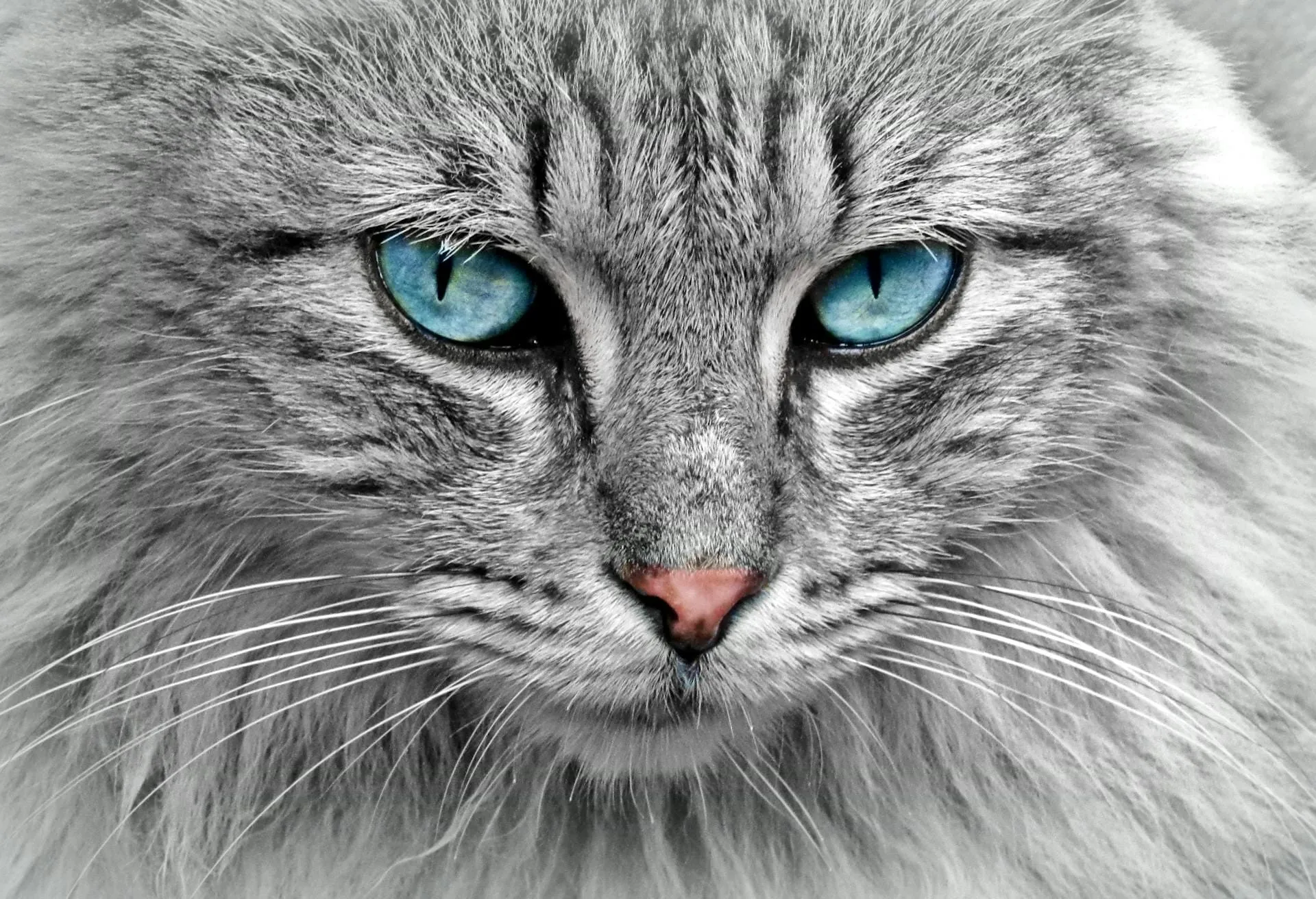
Start with the eyes. A comfortable cat has bright, open, alert eyes. One of the earliest signs of pain is squinting or partial eye closure, a slight narrowing your cat holds even at rest or when you touch a sore spot. That orbital tightening is one of the five things the Feline Grimace Scale measures. You might also notice dull, glassy eyes that lose their spark of engagement, or look slightly sunken and withdrawn even when your cat is awake.
Ears: Rotated Back and Held Still
Healthy cats swivel their ears constantly to track sound and mood. A hurting cat holds them differently: rotated backward or flattened, and noticeably still instead of fluid. Watch for ears held asymmetrically, with one turned more than the other, which can point to pain on one side of the head or face. The stillness is the tell. Rigid, fixed ears look nothing like the easy, restless movement of a comfortable cat.
Whiskers and Muzzle: Tension in the Face
Whiskers are sensory tools, and in a relaxed cat they sit loose and slightly forward. When something hurts, they pull back and tighten toward the face, and the muscles around the muzzle draw taut. The mouth area that should look soft goes tight, sometimes with a clenched jaw or the mouth held slightly open. The whole expression shifts from soft and settled to drawn and tense.
Posture and Movement Changes
How your cat holds and moves their body says a lot, and these shifts often show up days or weeks before any obvious limp, which gives you a real window to act.
Hunching and a Lost Curve
A healthy cat has a fluid, curved spine. A cat in pain hunches, rounding or flattening the back and sitting in a tight, compact posture instead of a relaxed one, as belly or spinal pain curls them inward. It can be subtle at first, just your cat sitting more and sitting stiffly. Over time, it becomes their new normal, and it’s easy to stop noticing unless you’re watching for changes in how they carry themselves.
Stiffness and Reluctance to Move
Pain shrinks a cat’s world. A comfortable cat gets up, stretches, roams, jumps, and plays. A sore one moves less, holds one spot for hours, and treats jumping, stairs, or climbing in and out of the litter box as an effort to avoid. Stiffness after rest is common: your cat rises slowly, takes a few careful steps, then loosens a little before settling again. You may also notice they favor one or two lying positions instead of the twisty variety cats usually cycle through, and that getting up and down takes visible care.
What Grooming Changes Reveal
Grooming is central to being a cat, so a change in it is one of the loudest signals of pain, and it often arrives before the more obvious ones. A cat who lets their coat go, or who suddenly licks one patch raw, is usually telling you that ordinary movement has started to hurt, or that one specific spot aches.
When a cat hurts, grooming usually drops off. The coat turns rough or matted, clumps form in spots that are hard or painful to reach, and a once-sleek cat starts looking unkempt. That isn’t laziness. The flexibility and energy grooming takes become too much when moving hurts. Some cats swing the other way into stress grooming, licking or chewing one area so much they create bald patches or raw skin, usually right over the sore spot. A cat with back or hip pain might overgroom the lower back or rear legs; a cat with dental pain might work at the face and mouth. New or increasing bald patches, raw skin, or fixated licking are all worth noting.
Tail Language and Pain
The tail is an extension of the spine, so discomfort shows up there clearly, often early. A healthy cat carries the tail up and moves it fluidly for balance and expression. A hurting cat tends to hold it lower or clamped against the body, stiff and slow instead of loose, sometimes wrapped tight or tucked away.
Often the change is quiet. A previously high-tailed cat now carries it at hip level, or the easy, independent swish that usually signals mood turns into a stiff twitch and little else. It’s a small shift, but because tail position is so central to how cats move and communicate, it’s a meaningful one.
Behavioral Signs Your Cat Is Hurting
Beyond the physical tells, pain reshapes behavior, and a change in routine is sometimes the very first thing you’ll catch.
Appetite is a big one. A hurting cat may leave food, pick at meals, eat slower, or skip a favorite. Dental pain has its own tells: the AAHA notes that cats with dental disease sometimes start scooping food out of the dish before they eat, and you might see slow chewing, dropped food, or favoring one side of the mouth. The litter box is another: pain in the hips, back, or legs can make getting in, squatting, or standing up hurt, so a cat starts going outside the box or straining, which is physical, not spite. Watch too for a normally chatty cat going quiet, or a quiet one crying out; for more hiding and social withdrawal as your cat seeks safe stillness; and for new irritability, since even a sweet cat may hiss or swat when a sore area is touched. Sleep can shift as well, with restless nights, more daytime sleeping, or a general flatness where the usual play used to be. Any one of these can have other causes, but several appearing together point toward pain.
Aging Versus Pain in Senior Cats
Senior cats are prone to painful conditions like arthritis, dental disease, kidney disease, and cancer, so the hard part is telling ordinary aging apart from pain. Both can look like slowing down, but they aren’t the same.
Normal aging is gradual and even. Your cat naps more, plays a little less, and jumps less often, and they still eat well, still groom, and still seek you out. It’s a slower version of the same cat. Pain looks different. It brings specific signals: reluctance to do things they used to do easily, visible discomfort when moving, grooming that falls off, a drop in appetite, withdrawal, and the facial tension covered above. The line isn’t always sharp, which is exactly why a daily feline quality-of-life check and regular vet visits matter more as cats age. If you’re watching a senior cat decline, it helps to understand your cat’s end-of-life care options and the warning signs of real suffering before you’re in the thick of a decision.
When to Call the Vet, and What to Bring
Once cat body language pain has you worried, the next move is your veterinarian, and sooner beats later. Don’t wait for the signs to get loud or undeniable, because a cat who’s masking discomfort is already past the early stage, and earlier evaluation usually means earlier relief, a clearer diagnosis, and more good days for your cat.
Before the visit, write down what you’re seeing. Note when the changes started, which signs you’ve spotted, and whether they’re getting worse, and bring any photos or short videos of the movement or posture that worries you. A specific note like “avoids the litter box, cries jumping down from the couch, eating about half of meals for a week” is far more useful to your vet than “seems painful.” Your vet will pair your notes with a hands-on exam, checking gait, palpating joints and organs, looking for dental disease, and running tests like bloodwork or X-rays if needed. They may also score your cat’s face on the Feline Grimace Scale during the visit. From there, pain management options, from medication to environmental changes, can genuinely improve how your cat feels day to day, and palliative and comfort care for cats centers everything on quality of life. If a painful condition is advancing and you’re weighing harder questions, our guide to knowing when it’s time can help you work through it with your vet. Reading cat body language for pain is, in the end, an act of attentiveness: you notice the change, you write it down, and you advocate for the cat who can’t speak for themselves.
Frequently Asked Questions
What is the Feline Grimace Scale, and can I use it at home?
The Feline Grimace Scale is a validated tool that gauges pain by scoring five parts of a cat’s face: the ears, the eyes (orbital tightening), the muzzle, the whiskers, and head position. Each part is scored from 0 to 2, and the combined total points to the likely pain level, with higher scores meaning a cat probably needs relief. Veterinary pain researchers at the University of Montreal developed it, and studies have found it both reliable and responsive, since scores drop once pain medication is given. You can absolutely learn the features to sharpen your own eye at home, but it’s most accurate in trained hands, so treat your read as a prompt to call your vet rather than a diagnosis. Your veterinarian can walk you through the basics or use it during an exam. The real value is knowing that a cat’s expression is a genuine, measurable window into how they feel.
My cat seems fine most of the time but sometimes cries out or limps. What does that mean?
Pain that comes and goes can point to a few things, like arthritis that flares after activity or rest, a muscle strain, or a condition that waxes and wanes. It can also mean your cat compensates well most of the time and only hits a bad moment when they move a certain way or an area gets more inflamed. Either way, the pattern is worth documenting and bringing to your vet. Note when the episodes happen, whether after activity, at certain times of day, or after rest, how long they last, and what your cat was doing. Keeping a short log makes the pattern legible. Intermittent pain is sometimes more telling than constant pain, because it hints at an underlying issue that may respond well to treatment. Don’t let the good stretches talk you out of the vet visit.
How do I tell if my cat is just grumpy or actually in pain?
Some cats are simply prickly by nature, so the trick is to compare against your own cat’s normal. Pain-related irritability tends to be new or escalating, and it usually travels with other signs like posture changes, appetite loss, or reduced grooming. A cat who’s just grumpy still eats well and keeps up their coat. A cat in pain often stops grooming, eats less, hides more, and shows physical tells like hunching or reluctance to move. Look at the whole picture, not just one mood. A one-off hiss when you touch a paw is different from a steady new pattern of swatting, flinching, or avoiding handling they used to accept. When several changes cluster together, pain moves up the suspect list. If you’re unsure, your vet can help separate personality from a real problem.
My cat is hiding and eating less. Is that pain, or could it be stress?
Hiding and a smaller appetite can come from pain, stress, anxiety, or illness, so context is what sorts it out. Ask what changed. If something new happened, like a move, a new pet or person, or rearranged furniture, and the hiding started right after, stress or anxiety is more likely. If the changes crept in over weeks with no obvious trigger, and they come alongside posture shifts, facial tension, or reluctance to move, pain or illness moves to the front. The number of signs matters too, since several pain tells at once strengthens that case. These causes need different responses, so ask your vet rather than trying to settle it at home. A brief exam can rule pain in or out and point you toward the right kind of help.
Where can I find a quality-of-life assessment for my cat?
When you’re watching your cat struggle, the hardest part is often not knowing whether they’re truly suffering or still have good days ahead. A quality-of-life assessment is a structured way to weigh your cat’s daily experience across what matters most: pain, appetite, mobility, hygiene, happiness, and connection. Love, Baxter keeps a directory of quality-of-life consultation professionals who can walk you through an assessment and help you make sense of the pattern you’ve been seeing. These are people who work with cats in exactly your cat’s position, and they can help you put words to what you’ve noticed over time. A consultation isn’t a verdict; it’s a conversation that gives you more information so you can make the most caring choice for your specific cat right now. You don’t have to figure it out alone, and you don’t have to wait for things to get worse before reaching out.
On this topic