







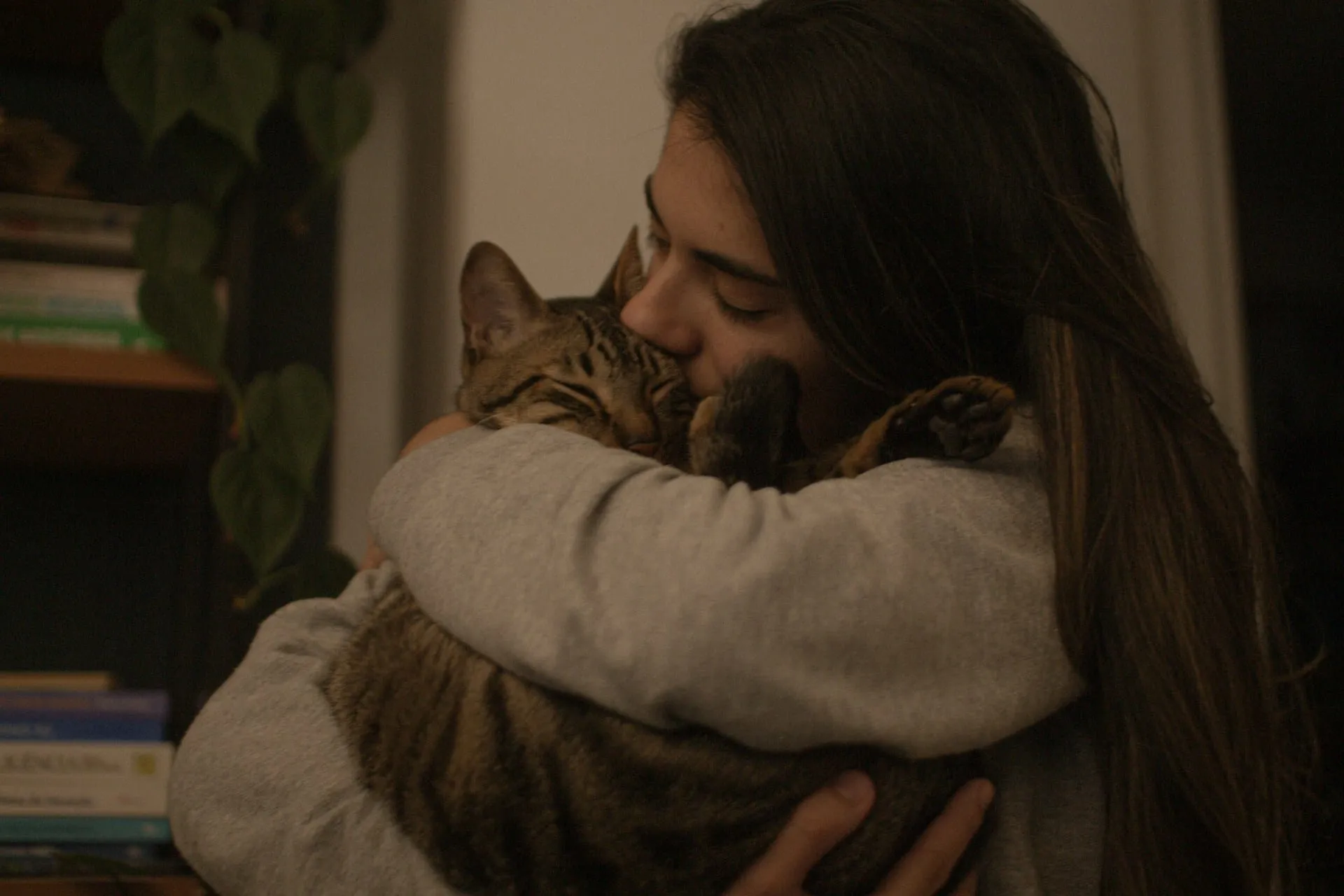
The sudden loss of a pet leaves no time to get ready. They were here, part of an ordinary day, and then they weren’t, and now there are decisions to make. If your pet is with you, keeping them somewhere cool matters most. When you want help, a vet, an emergency clinic, or an aftercare provider can take them in, and most of the rest can wait until you’re ready.
A death with no warning can take away things a planned goodbye usually allows: time with them, a chance to say what you wanted to say, a keepsake made before cremation. Some of that is still possible. If cremation hasn’t happened yet, you can make a paw, nose, or hoof print, and a letter can hold what you didn’t get to say. Our sudden pet loss resources go further into the grief that can come later, including guilt and replaying.
If you or someone else is in danger right now, call 911. For thoughts of suicide or emotional distress, call or text 988, the Suicide & Crisis Lifeline.
Key Takeaways
- Keep your pet somewhere cool if they’re with you, and call a vet, an emergency clinic, or an aftercare provider when you want help. Most other things can wait until you’re ready.
- Some aftercare providers will come to your home if you’d rather not move your pet yourself, and our directory shows who can reach you.
- A necropsy (an exam to find the cause of death) can sometimes answer why your pet died, and a vet can tell you how long you have to ask, and how to keep your pet until then. If aftercare has already happened and a vet saw your pet, they may be able to talk through what they found.
- Guilt and what-ifs are common after a sudden loss. A veterinary pet loss team notes that guilt often comes from believing we had more control over the situation than we did.
- If what happened keeps replaying, whether you saw it or not, a therapist trained in trauma can help. If you or someone else is in danger right now, call 911, and for thoughts of suicide or emotional distress, call or text 988.
Table of Contents
- 1What to Do in the First Hours After a Sudden Pet Loss
- 2How to Choose Aftercare: Necropsy, Cremation or Burial
- 3Telling People, Taking Time Off and Talking to Children
- 4Why the Sudden Loss of a Pet Can Feel Unreal at First
- 5Trauma After Seeing or Finding Your Pet
- 6Guilt and the What-Ifs After a Sudden Pet Death
- 7Living With Questions About What Happened
- 8Why Pets Sometimes Die Suddenly
- 9How Other Pets in Your Home May React
- 10Honoring a Pet After a Sudden Loss
- 11When to Get More Help After a Sudden Pet Loss
- 12What the Sudden Loss of a Pet Can Feel Like in the Months After
- 13Frequently Asked Questions About the Sudden Loss of a Pet
What to Do in the First Hours After a Sudden Pet Loss
In the first hours after a sudden pet loss, if your pet is with you, focus on two things: somewhere cool for them and a call to a vet, an emergency clinic, or an aftercare provider. If you might want to know why they died, you can ask about a necropsy, and how long you have to decide.
Their things, the calls to other people, any memorial: most of it can wait until you’re ready, and a vet or aftercare provider can tell you what can’t. If you’re planning a burial at home, the aftercare section below covers what to check.
If Your Pet Died at Home
Not sure they’re gone? Check for breathing and feel for a heartbeat; if you can’t tell, call a vet or emergency clinic now. Once you’re sure, you can take some time. Some people sit beside them, say their name or talk to them for a while, and some don’t.
When you’re ready, and if you can move them, lay a smaller pet on a blanket or towel in a cool room. A towel underneath helps, because the bladder and bowels can release as the body relaxes.
In cool weather, they can stay at home for up to 24 hours. In warm weather, it’s less, and you may need a wrapped ice pack. The ASPCA advises that a well-cooled body can be held for up to 24 hours, but the sooner it can be taken somewhere else, the better; if it’s been longer, a vet or aftercare provider can tell you what to do next.
The ASPCA notes that, where there’s room, placing a wrapped smaller pet in a refrigerator or freezer is recommended. A larger pet can lie directly on a cool concrete floor, uncovered so that heat can leave their body. If a blanket is already over them, you can fold it back when you’re ready, and you can still sit with them there.
If you might want a necropsy and your pet isn’t frozen yet, the refrigerator is preferred. If they’re already frozen, a necropsy can still be done. The necropsy section below has more.
For a horse or another large animal, a vet can tell you what options you have in your area. For a smaller pet in the middle of the night, contact the nearest emergency veterinary center and ask whether they can take your pet until morning.
Why Their Eyes May Stay Open and Their Body May Move
Some of what happens after death can frighten you if no one has told you to expect it. If something you see worries you, a vet or an emergency clinic can talk you through it on the phone.
The normal relaxed position of the eyes after a pet (or a person) has passed away is open. You can gently close them if you’d like, though they may open again, and that’s normal too.
Over the first hour or two, their body will begin to cool, and stiffness can follow in the same window. You may see a small twitch. Cornell’s veterinary college explains that after death, chemicals normally stored in nerve endings are released causing occasional muscle twitching in the early post-mortem period, and air leaving the body is normal too. None of it is a sign of life.
Who Can Come to Your Home
Some aftercare providers will come to you if you’d rather not move your pet yourself. Enter your ZIP code in our directory of pet transport services to see who can reach you, look for listings marked “Comes to you,” and ask whether they can take your pet into their care.
A real person at Love, Baxter reviews every listing, and you can contact providers directly for free. If no one comes up near you, ask a vet or an emergency clinic who serves your area.
For cremation, ask whether they handle that too, or go straight to a crematory through our pet cremation directory, which works the same way. Some families decide on that first call, while others ask the provider to care for their pet and decide the rest later.
In a communal cremation, pets are cremated together, and no ashes come back. Some families choose it because they’d rather not keep ashes at home. If you’d like ashes returned, ask about private or partitioned cremation, which the aftercare section below explains.
If Your Pet Died at the Vet or an Emergency Clinic
Maybe the call came from the clinic, or you were in the room when it happened. Either way, you can still ask for what you need. You can ask to see them, and for a quiet room and some time. You can ask for their collar, their blanket, or anything else that was theirs.
You can also ask whether the clinic can make a keepsake, like a paw print or a small clipping of fur, or whatever fits your pet. If you’ve already left and would like to see them, call and ask whether a visit is still possible.
Some families choose aftercare right there, and some want time to decide. If you’d like time, ask how long the hospital can care for your pet. UC Davis’s veterinary hospital, for example, gives families three business days to make a decision, and that’s also its window for requesting a necropsy.
Other clinics set their own times, so ask yours. Ask the vet to write things down or call you later if what they tell you doesn’t sink in.
If Your Pet Died at a Groomer, Kennel or Sitter’s
When a pet dies in someone else’s care, grief can come with shock, a lot of questions, and sometimes anger. You can ask to see your pet, and ask where they are now and who’s caring for them. If you might want a necropsy, ask that they be kept in a refrigerator rather than a freezer if possible, and if they’ve already been frozen, a necropsy can still be done.
With a business, you can ask for a written account of what happened, including whether a vet saw your pet. Rules vary by state, and in Colorado, licensed groomers, boarding kennels, and pet handlers must keep an incident record that includes the date and time when the owner was notified, so you can ask whether one was made. If it was a friend or family member, ask them to tell you what happened, when you’re both ready.
If It Happened on the Road or Away From Home
If they might still be alive, go to the nearest emergency clinic, and let someone else drive if you can. If they’ve died and it’s safe to reach them, you can wrap them in a blanket or a jacket. Take a moment with them, if you’d like, before you move them.
Bring them to a vet or emergency clinic if you can lift them, and ask the staff to help with what comes next, including whether they can hold your pet while you decide on aftercare. If you can’t move them, a vet, an emergency clinic, or animal services can tell you who can help.
If Your Pet Is Missing
When a pet is missing and you don’t know what happened, call your local animal services and shelters. Ask whether an animal like yours has come in, and whether they scan found animals for a microchip and check for tags. Leave a photo and description, and ask them to call you.
If your pet is microchipped, make sure your phone number is current with the registry so a shelter or vet who scans them can reach you. Posting a photo in local lost-pet groups can help neighbors keep an eye out. Our guide for when a pet is missing covers searching and the not knowing.
Looking After Yourself Right Now
Your body has been through this too. Drink some water, eat something small, even if it’s toast at an odd hour, and rest when you can, even if sleep doesn’t come.
If there’s someone to tell, you can keep it to a line or two: “[Pet’s name] [died/passed away] suddenly [today / this week]. [I’m not okay / I just wanted you to know].” If telling everyone feels like too much, ask one person to pass the news along. Our list of free pet loss support lines has numbers to try if there’s no one to call. If someone offers to come over and you’d like company, say yes.
How to Choose Aftercare: Necropsy, Cremation or Burial
Aftercare after a sudden pet death comes down to three questions: whether you want a necropsy, whether you want cremation, water cremation, or burial, and whether you want their ashes or a keepsake back. Once a vet or provider is caring for your pet, you can take the questions one at a time.
If you’re still arranging aftercare, we always suggest asking for an itemized price list, so you can see what transport, an urn, or a keepsake adds. It also makes providers easier to compare.
Deciding Whether to Ask for a Necropsy
A necropsy is the animal version of an autopsy, a way to learn why they died. The University of Missouri’s diagnostic lab defines it as a detailed postmortem examination, usually to determine the cause of death or characterize the extent of disease, and there, a veterinary pathologist performs the exam. It can include a microscopic look at tissue and infection testing, and at Missouri’s lab, toxicology is a separate test, so if you’re worried your pet ate something, say so at the start.
If the exam hasn’t happened yet, two things can change the decision. The lab notes that the remains aren’t suitable for viewing afterward, so if you’d like to see them, ask for time with them first. It also advises against home burial after a necropsy, so if you’re planning one, ask what’s possible where you are.
Private cremation with ashes returned can still follow, and Missouri’s lab works with a local company for it. If your pet is already frozen, the lab says it can still do a necropsy. Ask what the exam will cost, how long results take, and what it might show for your pet.
Cremation, Water Cremation or Burial
Cremation comes in three kinds. The words get used loosely, so it helps to know what each one means. In a private cremation, your pet is the only animal in the cremation unit, while in a communal one, multiple animals are cremated together and no ashes are returned. In a partitioned cremation, several pets are cremated at the same time with ashes returned, and because they share the unit, partitioned isn’t the same as private.
If you’re choosing now and it matters that the ashes hold only your pet, ask how the crematory keeps pets apart. Our guide to communal vs. private pet cremation walks through the differences and the questions to ask.
Water cremation, also called aquamation, uses water and an alkaline solution instead of flame. Cornell’s veterinary college, which offers it, calls it a proven water-based alternative that leaves the same kind of dry, powdered ash as flame cremation, and after an individual water cremation at Cornell, your pet’s ashes come back to you. Our directory lists pet water cremation providers you can contact directly if you’d like to compare.
Whether home burial is allowed depends on local laws, and a lease or HOA can have its own rules. Our state-by-state guide to pet burial laws is a place to start. Our directory of pet burial and cemetery providers lists people you can contact directly if you’d rather not bury at home.
Some keepsakes can only be made before cremation, so if you’d like one, ask before it happens. Colorado State’s veterinary hospital suggests deciding whether you’d like to have a paw print made of your pet’s paw or keep a locket of hair, and whether to keep their collar. For a bird, a reptile, or a horse, ask the provider what they can make, and if cremation has already happened, some families keep a photo, their tags, or a favorite toy close.
Telling People, Taking Time Off and Talking to Children
People handle this differently: some share the whole story, some keep it short, and some tell almost no one. Some start with whoever knew what their pet meant to them, and some tell everyone at once. A short reply can handle a hard question, a personal day can give you room at work, and for children, brief and honest words are the place to start.
What to Say When You Tell People About the Sudden Loss of a Pet
Someone may ask whether you’ll get another one, or say something else that stings. A short line can close the conversation kindly: “Thank you. [Pet’s name] was family to me, so I’m taking it slowly.” To tell a wider circle, one post or one message to a group can save you from repeating it.
If you work, you may not have pet loss leave, since it’s still the exception. Of more than 400 employers surveyed in July 2023 about their standalone bereavement leave, 16% include pet loss in their definition of qualifying bereavement events. Your handbook may say what’s covered, and you can ask for what you need, whether that’s a personal day, a sick day, or an afternoon: “[Pet’s name] died suddenly [yesterday], and I need [today] to take care of things.”
Back at work, you might tell one colleague what happened. Then someone nearby may know why you might need to step away.
What to Tell Children
When a death is sudden, KidsHealth suggests explaining calmly and briefly, and letting your child’s questions guide how much information you provide. It also suggests being careful with “put to sleep,” since young kids can take things literally. If you’ve already said something else, you can tell them more now.
For a young child: “[Pet’s name] died [today]. Their body stopped working, and they can’t come back.” For an older child: “We don’t know why yet, and I’ll tell you if we learn more,” or, if you know, “The vet thinks it was [cause].” An honest “I don’t know” is an answer too.
Children may ask the same question again days later, and that’s another chance to answer it. Our guide to comforting children after a pet’s death goes age by age, from preschoolers to teenagers.
Who to Let Know: Microchip, Insurance and Deliveries
If your pet has died, a few small tasks can stop reminders from arriving later, and none of them has to happen right away. If they were microchipped, you can update their registry record. If they had pet insurance, let the company know.
You can pause or cancel automatic deliveries of food, medication, or supplies, and if a box has already arrived, you can ask the company about returns. If a vet’s office sends reminders, you can ask them to stop, and if your city or county licenses pets, ask whether they can stop renewal notices. Someone else can do it for you, or it can wait.
Why the Sudden Loss of a Pet Can Feel Unreal at First
After the sudden loss of a pet, numbness and disbelief are common. Some people get through the calls and the first decisions with a strange calm, and for some, the grief comes days or weeks later. Others feel all of it at once, and Cleveland Clinic notes that grieving people often describe their emotions as coming in waves.
In one study of people grieving a pet, at least half described numbness or disbelief at first, one of the reactions endorsed by half to four-fifths of the sample. Grief can be delayed, too. Sometimes the shock of the loss pauses your body’s ability to work through these emotions, and sometimes the practical tasks keep people too busy to grieve until they’re done.
That can mean a hard day comes well after the first one, on an ordinary afternoon. MedlinePlus notes that grief reactions might not occur in a specific order, and can occur together. We cover sudden vs. expected pet loss in its own guide, if you want to understand how the two can differ.
Trauma After Seeing or Finding Your Pet
If you saw your pet die, found them, or arrived at something frightening, you may be carrying trauma along with grief. One sign is the replay: the moment comes back when you didn’t call it up, in images or sounds that return on their own. Trauma-focused therapy can help, and there are specific kinds to ask for.
MedlinePlus, writing about people, notes that the sudden, unexpected death of a loved one can also cause PTSD, and lists flashbacks, nightmares, and staying away from reminders among the signs. Get checked if symptoms last longer than four weeks, cause great distress, or interfere with work or home life.
The VA’s National Center for PTSD names three talk therapies as the ones that work best: Cognitive Processing Therapy (CPT), Eye Movement Desensitization and Reprocessing (EMDR), and Prolonged Exposure (PE). CPT usually takes 12 weekly sessions, so about three months. Ask for a therapist with trauma experience, not only grief experience, and tell them it was a pet. Our guide to when pet loss grief becomes trauma goes deeper into how the two differ.
Guilt and the What-Ifs After a Sudden Pet Death
Guilt often shows up early after a sudden pet death, along with a list of what-ifs, and it tends to replay what happened with everything you know now. One question from a veterinary pet loss team can help sort it out, and writing it down can too.
The University of Florida’s small animal hospital writes that almost everyone feels some guilt after the death of a pet, and that it most often comes from believing we had more control over the situation than we did. Its question: had you known how it would turn out, would you have acted differently? Guilt, it notes, comes after you know what happened and look back.
Some people write out what happened, as much of it as they want to, from the last ordinary moment onward. Then, for each what-if, they write down what they knew at that moment, and put the pages away. If writing it brings the moment back too hard, stop, because that’s work a trauma therapist can do with you.
If You Were Part of What Happened
Maybe a door was open, or someone was driving, or something was within reach. The same UF guidance says that when an accident involved someone who loved the pet, guilt can be overwhelming for some people, and it can still be worked through. It suggests seeing the accident as a chain of events where one person’s part was one piece, and remembering the love you have for your pet.
If the thoughts come back, you can name them and turn your attention to something in front of you. Our guide for when you or someone close to you was part of an accident goes further into this, and a grief counselor can help too.
Living With Questions About What Happened
A sudden death doesn’t always come with a clear cause. Sometimes a conversation with the vet or a necropsy brings an answer; sometimes it doesn’t. Not knowing can be its own weight, and some people keep looking for an answer while others decide to stop.
If a vet saw your pet, you can ask for a follow-up conversation. Write your questions down first, since they’re easy to lose in the room: what the exam showed, what they think happened, and whether this is common in animals like yours. Ask for a copy of the records too so that you can read them later at your own pace. If you believe something went wrong in your pet’s care, our guide to grief after a suspected vet mistake covers records, second opinions, and your options.
A sudden loss can also end with a decision about euthanasia, made with little time to prepare, as pet parents in one study of end-of-life decisions described. If that decision keeps coming back to you, the vet who was there can talk through what they saw, and a grief counselor can help with the rest.
Some families get a clear answer. Others hear a list of possibilities, and some find that easier to live with than nothing. For some people, over time, the question shifts from why this happened to how to carry a story with a gap.
Why Pets Sometimes Die Suddenly
The cause of a sudden pet death often isn’t known until a vet or a necropsy looks, and sometimes not even then. In one large study of dogs and cats who died unexpectedly, heart disease was the most common cause found in both. These studies describe what was found across many animals, not what happened to yours.
That study, across four Australian veterinary schools, found that when a cause was identified, cardiovascular disease was most common in both species, followed by gastrointestinal disease in dogs, and trauma in cats, meaning injury. In the dogs, most of the stomach and intestinal deaths came from bloat (gastric dilatation and volvulus), and among the cancers found, hemangiosarcoma was the most common.
Heart disease, and hypertrophic cardiomyopathy in particular, was commonly present in cats that died unexpectedly in a study of 252 cats necropsied at a single UK center, 158 of them after an unexpected death. Both studies looked only at dogs and cats, so for another kind of animal, a vet who knows the species can tell you what’s common.
If you learn a cause, a vet can tell you what it says about what happened and whether it matters for any other animals at home. If you never learn one, that’s common too: more than a third of the sudden deaths in the Australian study stayed unexplained after a necropsy.
How Other Pets in Your Home May React
Other animals in your home may notice the loss too. They may look for their companion, ask for more attention, or eat differently for a while. Keeping meals and routines steady can help, and a vet can check on any pet who stops eating.
In one survey of pet parents, many dogs changed how they ate. Dogs were reported to reduce the volume (35%) and speed (31%) of food consumption after losing a companion. Both dogs and cats were reported to seek more attention and spend time at their companion’s favorite spot, and across all reported changes, the typical one lasted under six months.
Our guide to helping a pet cope with the loss of another pet has more on what they may need from you.
Honoring a Pet After a Sudden Loss
A sudden death can leave no time for a goodbye, and some people find a small ritual, whenever they’re ready, gives them a little of that. Many people keep ongoing meaningful ties with their deceased pet through fond memories and rituals, as interviews with grieving pet parents found.
You might write them a letter if there’s something you didn’t get to say, and read it somewhere that was theirs. If others knew them, you could gather a few of them to tell stories. Some people plant something, have a memorial tree planted in their pet’s name, light a candle on certain evenings, or keep a collar where they can see it.
Sudden loss often leaves an ordinary archive instead of planned portraits: blurry phone photos, a video where they’re half out of frame, a voice memo with them somewhere in the background. If you have photos or videos, pulling your favorites into one album keeps them easy to find, and you can print one if you’d like.
The hours your pet filled can feel empty, whenever those were: mornings, evenings, the time you came home. Putting something small and deliberate in those slots can give them a different shape, like coffee where you used to sit together, or a podcast for the first ten minutes after you get home. It may feel thin at first.
When to Get More Help After a Sudden Pet Loss
More help is there whenever you’d like it, especially when daily life stops working, the grief keeps getting heavier instead of easing, or what happened won’t stop replaying. Pet loss lines have limited hours, and a counselor or support group can help with what lasts. For a crisis, the lines below are there at any hour.
In life-threatening situations, call 911 or go to the nearest emergency room. For thoughts of suicide or emotional distress, call or text 988. The 988 Lifeline offers free and confidential emotional support to people in suicidal crisis or emotional distress 24 hours a day, 7 days a week, by call, text, or chat.
For pet loss specifically, Cornell’s Pet Loss Support Hotline is at 607-218-7457, and its hours may change depending on volunteer availability, so call for the current schedule. Tufts’ pet loss line, 508-839-7966, is staffed from 6 pm to 9 pm Monday through Thursday EST and has 24-hour voicemail. Leave a message if no one picks up.
Our directory lists vetted pet loss grief counselors and pet loss support groups you can reach out to directly, at whatever pace suits you. When you write to a counselor, you can say it was a sudden loss and ask whether they’ve worked with pet loss before.
What the Sudden Loss of a Pet Can Feel Like in the Months After
The sudden loss of a pet doesn’t resolve on a schedule. Over time, for many people, it becomes part of life rather than all of it. Hard days can still come, sometimes out of nowhere, a month or a year in.
Anniversaries can catch you off guard. Some people mark those dates with something small, like taking the day off, visiting a place you went together, donating to a shelter in their name, or, if there’s someone to tell, saying to one person, “Today’s the day [Pet’s name] died.”
If the weight isn’t easing, or it’s getting heavier, that’s a good time to reach out to a counselor, months later too. The counselors in our directory are one place to start, and a counselor who works with pet loss already knows this kind of grief.
Frequently Asked Questions About the Sudden Loss of a Pet
Is it normal to feel angry at the vet after a sudden pet death?
Some people feel anger at the vet after a sudden loss. If a vet was the last person who cared for your pet, that’s often where the anger lands. Sometimes it’s pointing at a real question, one you can ask in a conversation or in writing. Other times it’s grief looking for somewhere to go, and it can ease with time. Write your questions down and ask them, then see what the answers do to the anger. If it’s running your days, a counselor can help you work through it.
My pet died while I was away. How do I live with that?
Not being there can become the thing you replay. It can help to say what you would have said to them, out loud or on paper. If someone was with them (a sitter, a neighbor, or the clinic staff), you can ask them what happened, and some people find that conversation steadying. You can also ask the vet what they found, so imagination doesn’t fill in the gaps. If not being there keeps you up at night, bring it to a grief counselor, who can help you sort through it.
How long does the shock last after a sudden pet death?
There’s no set length, and some people feel everything at once with no numbness at all. Others feel strangely calm through the calls and the aftercare decisions, and for some, the grief comes once those tasks are done. Grief can come in waves rather than staying at one level. A hard day can arrive weeks in, with no warning. If weeks pass and you still can’t manage daily life, or the images keep replaying, talk with a doctor or a therapist.
When should I think about getting another pet after a sudden loss?
There’s no single timeline. Some people bring another animal home within days or weeks, some wait years, and some decide not to. If you have other pets, their needs may factor into the decision too. Well-meaning people may suggest a new pet sooner than you’d like, and you can thank them and leave it there. Some people change their mind along the way, in either direction.
Did my pet suffer?
Many people ask this after a sudden death, and the answer depends on what happened to your pet. If a vet saw your pet, or a necropsy was done, ask them directly what they found and what it likely meant for your pet in those last moments. A vet can tell you what they can and can’t know. If no one can know, some people find it helps to say the question out loud to someone they trust, or write it down. Others find some steadiness in remembering how their pet lived, the ordinary days as well as the last one. If the question stays with you, a grief counselor can help you carry it.
On this topic