







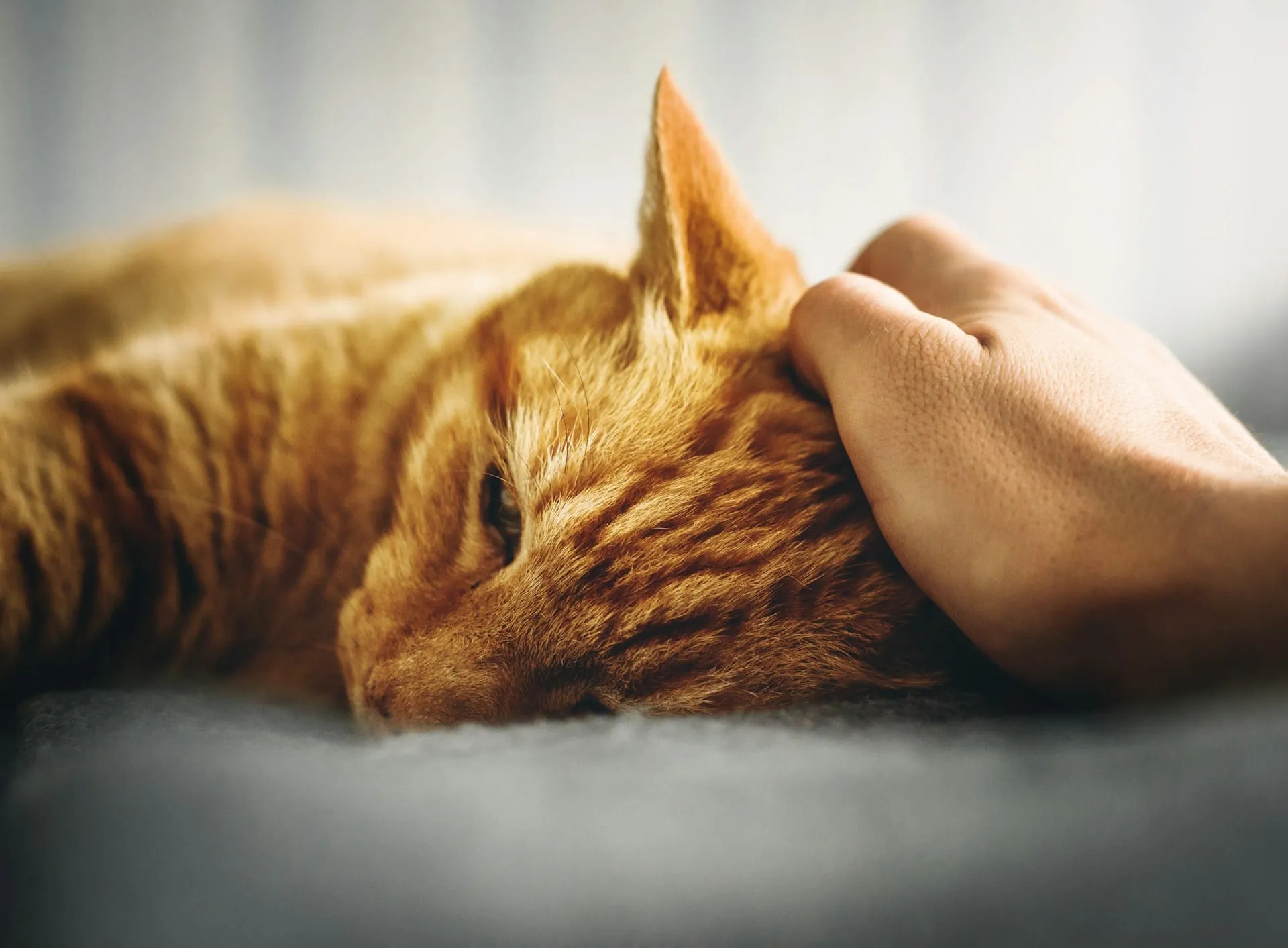
When a pet dies, the other animals at home may be grieving too. It is common for the behavior of surviving pets to change following the death of a housemate. Some animals will show no signs of grief after the death of another pet in the house. Others search the rooms, ask for more of you, or eat less.
To help your pet cope with the loss of another pet, you can keep their days familiar, follow their lead on attention, watch for them if they go searching, and get a vet’s help if something about them worries you.
Here’s where we land: whatever your pet understands, you don’t need a name for it to help. Steady, familiar care can help. For more on how a loss moves through a household, our resources on family relationships and pet loss are here, and our guide to the first week after losing a pet is there for you too if you’re in those days yourself.
Key Takeaways
- Many dogs and cats behave differently after a companion dies, most often in affection, like wanting more attention, and in territory, like spending time in the other pet’s favorite spot. Some show no noticeable change.
- Familiar feeding, grooming, and sleep times can help your pet’s day feel steady. For attention, you can follow your pet’s lead: closer when they come to you, and space when they want it.
- If your pet has already gone missing, this guide links to help with the search. Since some pets go looking for their companion, you can keep an indoor-outdoor cat inside for a couple of days and keep a close eye on a dog outside.
- A cat who stops eating can be facing a medical emergency, and a dog who stops eating is a reason to call a vet. If anything worries you, or changes last more than a couple of days to a week, a vet visit can help rule out illness.
- Some families let their other pet see their companion after the death; others don’t. In two studies, families who did and families who didn’t reported similar changes afterward.
Table of Contents
- 1Ways to Help Your Pet Cope With the Loss of Another Pet
- 2Do Pets Grieve When Another Pet Dies?
- 3How Dogs and Cats Respond When Another Pet Dies
- 4How Long Does It Take a Pet to Adjust After Losing a Companion?
- 5When to Call a Vet About a Grieving Pet
- 6When the Pet Who’s Left Is Older or Unwell
- 7Should You Get Another Pet for Your Surviving Pet?
- 8Caring for Your Pet, and Yourself, After a Companion Dies
- 9Frequently Asked Questions About Helping Your Pet Cope With the Loss of Another Pet
Ways to Help Your Pet Cope With the Loss of Another Pet
What helps most is ordinary and steady: familiar meal and sleep times, the usual walks or play, attention on their terms, some activity if they’re up to it, and a little extra care if they go looking for their friend.
Can Routine Help Your Pet Cope With the Loss of Another Pet?
It can. A pet’s day runs on routine, and a companion they shared it with is gone. The University of Florida’s Small Animal Hospital advises that feeding, grooming, and sleeping time should remain as close as possible to the way it was in the past. If the pet who died set the pace, like the dog who led the way to breakfast or the cat who started the evening chase, you can start those moments now.
How Much Attention Should You Give Them?
That depends on the pet. One dog won’t leave your side. A cat might spend more time on their own. The same hospital focuses on your pet’s desire for “hands on” attention, and you can let them choose how much.
When a Pet Goes Looking for Their Companion
Searching is real: some pets literally ‘search’ for their friend, and a search can end up out the door. You can keep an indoor-outdoor cat inside for a couple of days, and keep a close eye on a dog outside, including one who usually stays in an unfenced yard. If your pet has already gone missing, our guide to searching for a missing pet while you’re grieving includes search steps and support while you look.
Does Exercise Help a Grieving Pet?
Activity can help, depending on your pet. A dog who’s up to it might get a longer walk or a new route. With a cat, you can bring out a wand toy at the hour they used to play together. For an older or unwell pet, it might be a slow sniff outside or a favorite toy within reach.
Exercise is the best non-drug stress reliever you have available for your pet, and if it’s a new routine for them, you can talk it over with a vet.
For a pet who’s alone for hours now, the University of Florida’s hospital has one more idea: Try leaving a TV or radio on while you are gone. You can pick whatever was usually playing when you were home.
Do Pets Grieve When Another Pet Dies?
Many change after a companion dies, in ways that look a lot like grief. We can’t know how it feels to them. What we can see is the change: in how they act with you, where they spend their time, and how they eat, sleep, and play. That’s enough to act on.
In a study of dogs and cats, the pattern held for both: The two most common classes of behavioural changes reported for both dogs and cats were affectionate behaviours (74% of dogs and 78% of cats) and territorial behaviours (60% of dogs and 63% of cats). That can mean wanting more of you, or lingering in the other pet’s favorite spot.
Sometimes it looks like the other pet moved in: Taking on behaviors of the pet that died even if this never occurred before, like napping in their bed or playing with their toys. Personalities can shift too. A shy cat may start meeting you at the door, and a loud dog may go quiet.
Some changes are smaller and harder to name. A pet may just seem ‘off’ and not themselves. You know this animal.
Do Pets Understand Death?
Nobody can say for sure. Researchers who surveyed families about dogs whose housemate had died wrote that they still cannot confirm it was grief, whatever changes they saw.
Your pet may not understand where their companion went. They may notice someone they lived with isn’t there and that their days feel different. That’s where you can help.
Should Your Other Pet See Their Companion’s Body?
Families go both ways on this. Some behaviorists think a dog’s grief response may be reduced by having an opportunity to investigate their companion. If your pet is home and you’d like them to have a moment, you can offer it.
In the study of dogs and cats, most pets who saw the body sniffed and investigated it. Here’s what families reported afterward: No difference was reported by owners between animals that saw, and those that did not see their companion’s deceased body in the changes that followed. A second study of dogs found the surviving dogs showed no difference in behaviour, so the days after call for the same care, whichever way it went.
How Dogs and Cats Respond When Another Pet Dies
Dogs and cats show it in their own ways, but the lists overlap. Wanting more of you, playing less, and changes in sleep and appetite show up in both. A friendship across species can leave the same kind of gap.
Do Dogs Grieve Other Dogs?
Many change after losing a canine housemate. In a survey of Italian families whose dog had lost another dog, the most common changes were attention seeking increased (67%), playing less (57%), level of activity reduced (46%), with sleeping more, eating less, and seeming more fearful, each at about a third.
Two dogs who shared every walk may find the whole day looks different now. You can keep the walk on the old route or a new one.
Do Cats Grieve Other Cats?
Cats get called aloof, and loss can show otherwise. In a study of cats who lost a companion, families reported that they engaged less in sleeping, eating and playing but more in seeking attention from humans and other pets, hiding, spending time alone and appearing to look for their lost companions. The researchers found these changes similar to those families report in dogs.
A cat who shared a windowsill with their friend every afternoon may keep going back to that windowsill. You can leave it untouched, or add a soft blanket there, whatever feels right in your home.
When More Than One Pet Is Left
The whole group can shift. There may be increased tension (possibly fighting or vocalization) in the remaining pets. Cats especially, since the social structure changes when one member is gone.
For the most part, the pets can work out their own relationships, and you can step in before anyone gets hurt. When things heat up, you can try interrupting undesired behaviors with obedience commands or redirection to a new activity, like a toy, a treat puzzle, or a short walk.
When a Dog and a Cat Shared a Home
Some of the closest friendships in a home cross species. Cats did not respond significantly differently to the loss of a companion dog or another cat. A cat who used to curl up against the dog may look for them on the dog bed or by the door.
The routines in this guide apply across species: the same spot on the couch, the same walk past the window where the cat used to watch.
How Long Does It Take a Pet to Adjust After Losing a Companion?
There’s no set timeline, and every pet is their own case. Some settle within weeks, and some take many months. The median duration of reported behavioural changes in both species was less than 6 months. That’s a middle point, not a deadline.
In one study of dogs, the spread was wide: 24.9% of the owners observed it for more than 6 months, 32.2% between 2 and 6 months, 29.4% for less than 2 months, and the rest saw no change. A dog still looking for their friend at four months is within that range, and so is one who settled in two weeks.
What you can watch is direction. Small returns to the old pet, like a tail wag at the leash or a cat back in the sunny spot, count. If things get worse instead of easing, or you’re worried, you can call a vet.
When to Call a Vet About a Grieving Pet
A vet can help if your pet stops eating, if anything about them worries you, or if changes don’t ease within a couple of days to a week. Grief and illness can look alike, and a vet can check for illness.
Appetite matters differently by species. If a cat stops eating, this can be a medical emergency. If a dog stops eating, that’s also a reason to call a vet.
Beyond appetite, if your pet has symptoms or behavior that concern you, or if these symptoms last more than a couple of days to a week, a visit to your veterinarian is warranted to rule out illness or disease. That week is about checking for illness. It isn’t a limit on grief, which can take months.
Signs That Need a Closer Look
These changes are worth showing a vet or behavior specialist:
- Stress when left alone. Signs of separation anxiety include panting, pacing, whining, drooling, howling, barking, and not eating treats while alone, so a quick video while you’re out can show a vet what’s happening.
- Changes that don’t ease. In an older pet, our guide to normal and concerning behavior changes in senior pets can help you sort aging from something new.
- Fighting between the pets who are left. If tension turns into injuries, you can bring in a vet or behaviorist to help keep everyone safe.
If a pet loses their appetite, or isn’t improving as the days and weeks go by, medication or other treatment may be warranted, according to the University of Florida’s hospital. If behavior isn’t settling, you can bring in a vet, a veterinary behaviorist, or a certified applied animal behaviorist, and calming pheromone sprays and collars may be effective tools for reducing your pet’s anxiety. A vet can tell you which might suit your pet.
When the Pet Who’s Left Is Older or Unwell
More sleep, less interest in food or a shorter walk could be grief, age or illness, and in an older or unwell pet it’s often hard to tell which. Common underlying medical conditions can contribute to behavioral changes. A vet can help sort it out.
Before a visit, it can help to jot down what you’re seeing: when each change started, how they’re eating and drinking, how they’re sleeping, and anything new, like waking at night or seeming lost in a familiar room. Our guide to signs of dementia in older pets covers night waking, confusion, and staring at walls or corners. A quality-of-life consultation can also help you see how your pet is doing.
If you’ve lost two pets close together, our guide to grieving two pets at once can help. And if the pet who’s left is declining too, our guide to coping with anticipatory grief offers ways to look after yourself while you’re still caring for them.
Should You Get Another Pet for Your Surviving Pet?
This one comes back to you. As the University of Florida’s hospital puts it, you are the best person to answer, because you know whether your pet lights up around other animals or seems content as the only one, and whether your home is ready for another animal.
A few questions to think it through:
- Is your pet very social, and used to having other animals around?
- Would another pet help your pet get more activity and exercise?
- If your pet is now the only one, how much time will they spend alone?
- Are you, and anyone you live with, ready to commit to another pet?
The decision about bringing another animal into the home is very personal. The needs and temperament of the pets already at home matter. Our guides on how soon is too soon for a new pet and how to decide when, or if, to get another pet go deeper, whenever you want them.
Caring for Your Pet, and Yourself, After a Companion Dies
What can help your pet cope with the loss of another pet is mostly ordinary: meals when they expect them, a lap or a quiet corner when they want one, time outside if they’re up to it, and a vet when something worries you. Small, familiar things, repeated.
You lost them too, and help is here for you, too. Our guide to managing loneliness after a pet dies may help, and a pet loss grief counselor is there if you’d like someone to talk to.
We believe the pet who’s still with you knew the one who died in their own way. Looking after them, on the walk or in the favorite spot, is part of how your household carries on together.
Frequently Asked Questions About Helping Your Pet Cope With the Loss of Another Pet
Do dogs know when another dog dies?
No one knows what a dog makes of death. Many dogs seem to notice the absence. The dog they lived with is gone, and that’s a real change in their world. Some dogs wait by the door or check the other dog’s bed, while others seem unbothered. Washington State University’s veterinary teaching hospital points out that we can’t explain this loss to them, but we can help them through it. In practice, that means the same walk, the same mealtimes, and some company when they come looking for it. If your dog stops eating or seems unwell, a vet can check whether something else is going on.
Should I let my other pet see my pet’s body?
Families decide this differently. Some behaviorists believe a chance to investigate may ease a dog’s grief response. When families were asked afterward, though, pets who saw their companion’s body changed in about the same ways as pets who didn’t, in one study of dogs and cats and another of dogs. Most pets who did see the body sniffed and investigated it. If your pet is at home when a companion dies, including when a vet comes to your home for euthanasia, you can let them come close if it feels right to you. You can also keep them in another room, or with someone else, until it’s over. Either way, familiar routines and attention on their terms can help in the days after.
How long do pets grieve the loss of another pet?
It varies a lot from one animal to the next. In one study of dogs and cats, the typical change lasted under six months. In a second study of dogs, some families saw changes ease within two months, others saw them last two to six months, and about a quarter saw them go past six months. Some pets show little change from the start. A pet who’s slowly returning to old habits, like eating well again or going back to a favorite spot, is moving in a good direction, even if it takes a while. If a pet is getting worse or seems unwell, a vet can help, whatever the timing. A checkup can also give you a clearer picture if you’re unsure.
Do cats grieve dogs, and do dogs grieve cats?
Many do, going by what families report. In research on cats, the changes looked about the same whether the companion who died was a dog or another cat, and families in a study of both species reported similar changes either way. In a mixed home, the searching can look a little different. A dog may check the cat’s perch or the top of the stairs, and a cat may wait by the back door where the dog went out. Some families leave those spots untouched for a while; others don’t. If a cat stops eating, you can call a vet as soon as possible, since it can be an emergency. Steady routines and attention on their terms can help across species.
Should I get another pet so my surviving pet isn’t lonely?
It depends on your pet, and you know them best. Some animals love company and do well with a new friend, while others are happier as the only pet. It can help to think about how your pet has done around other animals in the past, how much time they spend alone now, and whether a new pet would bring them more play. Your own readiness matters too, along with anyone else in your home, since a new animal needs time and care. Ohio State’s veterinary team calls the decision very personal.
On this topic