







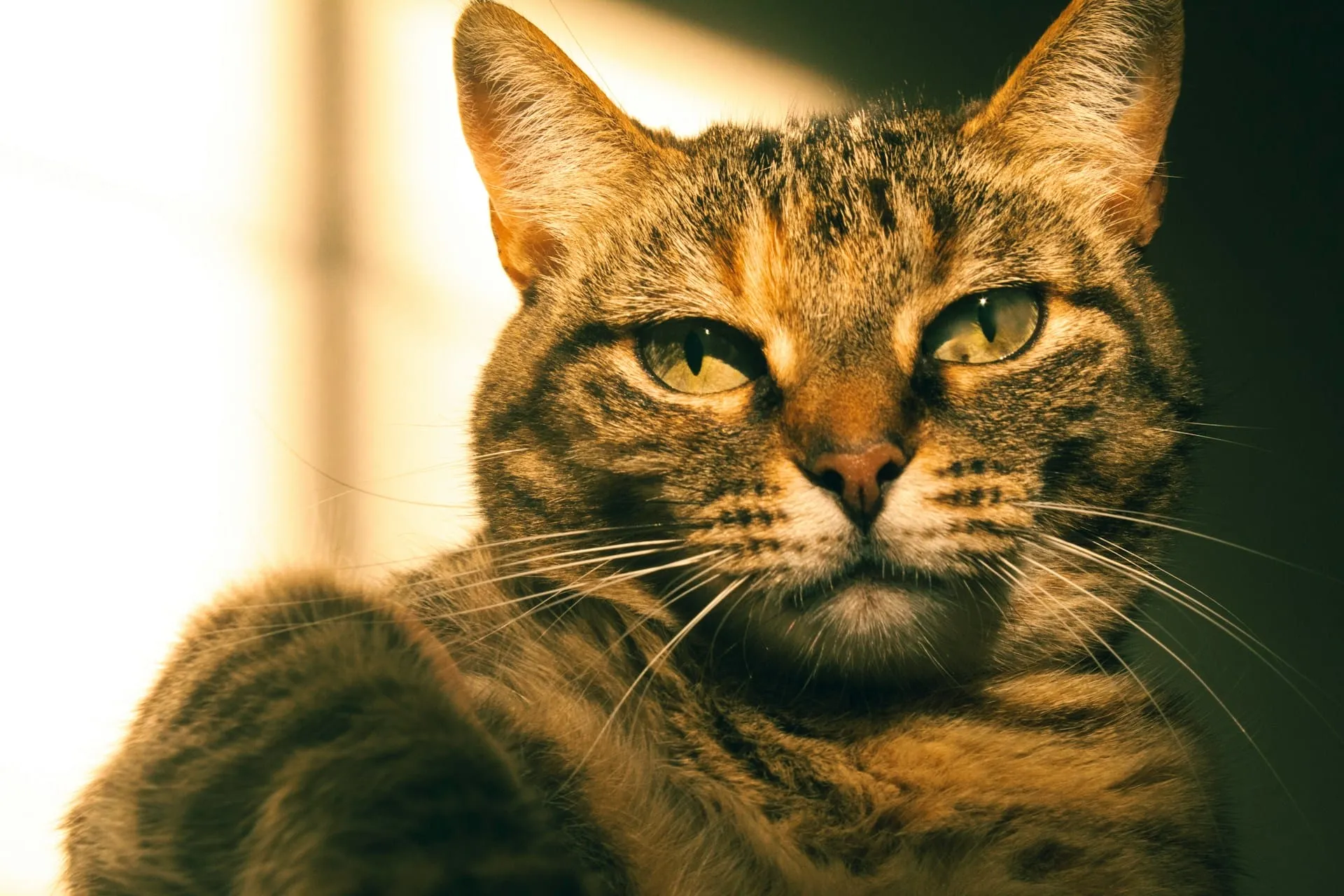
When is a cat considered a senior? Once they’re older than 10, under the AAHA/AAFP Feline Life Stage Guidelines. If you’ve read that cats are seniors at 7, that age now marks the start of what the guidelines call the mature adult stage, which runs from 7 to 10.
Maybe your 11-year-old has gone a little gray around the face and picked a new favorite nap spot. Maybe your 12-year-old still chases a toy mouse across the kitchen as if it owes them money. Both are senior cats. The label doesn’t tell you how your cat feels.
The label changes the practical stuff: the checkup schedule, a few comforts at home, and which changes a vet can help you address. Our senior pet care resources cover older pets of every kind, from signs of aging to nutrition, mobility, and quality of life.
This guide is the cat version: the life stages, a cat-to-human age chart, the signs of aging and of illness, and what vets check at a senior visit. We think of senior as a label, not a forecast, and we’ve tried to write it that way.
Key Takeaways
- Under the AAHA/AAFP feline life stages, a cat is a senior once they’re older than 10. Cats 7 to 10 are mature adults, and a cat 10 or older in excellent physical condition would be best treated as a mature adult, at a vet’s discretion.
- Cat-to-human age figures vary by source: a 12-year-old cat is about 64 in human years on FelineVMA’s chart and about 61 by Cornell’s formula.
- A slight haze in the lens and a lacy look to the iris are common in older cats, and Cornell’s Feline Health Center says neither seems to affect sight much. Some diseases can affect sight, and a vet can evaluate any changes you notice.
- If you notice changes in litter box habits, thirst, appetite or grooming, or you see weight loss or more meowing at night, a vet can help identify the cause. Straining to pee while passing little or nothing can mean a blockage, which is an emergency: call a vet or an emergency clinic right away.
- Warm, comfortable resting spots can help a senior cat who’s lost muscle or has joint problems, and extra food and water stations and litter boxes can save them some steps.
Table of Contents
- 1At What Age Is a Cat Considered a Senior?
- 2Cat Years to Human Years: A Senior Cat Age Chart
- 3Signs of Aging in Cats: What’s Normal as They Get Older
- 4Signs of Aging or Signs of Illness? What to Mention to a Vet
- 5Senior Cat Vet Visits: What Changes After 10
- 6Making Home Easier for an Older Cat
- 7How to Check In on a Senior Cat’s Quality of Life
- 8When Is a Cat Considered a Senior? The Short Answer
- 9Frequently Asked Questions About Senior Cat Age
At What Age Is a Cat Considered a Senior?
A cat is considered a senior once they’re older than 10. The AAHA/AAFP Feline Life Stage Guidelines define the stages as the kitten stage, from birth up to 1 year; young adult, from 1 year through 6 years; mature adult, from 7 to 10 years; and senior, aged over 10 years. So a 7-year-old cat is a mature adult, and a 12-year-old cat is a senior.
FelineVMA’s Cat Friendly Homes site says cats are considered senior when they are 11 years old, about 60 in human years. Changes can start before the senior label does. Many cats begin to encounter age-related physical changes between seven and ten years of age, and most do so by the time they are 12, according to Cornell’s Feline Health Center.
The ages are a guide, not a hard line. Pets with chronic health issues or who have experienced significant health challenges may age earlier, AAHA notes. Conversely, the AAHA/AAFP guidelines note that some senior cats aged 10 years and older may remain in excellent physical condition and, at a vet’s discretion, would be best treated as mature adults.
Cat Years to Human Years: A Senior Cat Age Chart
To convert cat years to human years, count a 1-year-old cat as about 15 in human years and a 2-year-old as about 24, then add about four for each year after that. On FelineVMA’s chart, that makes a 10-year-old cat about 56 and a 15-year-old about 76, so multiplying by seven overshoots for an older cat.
Here’s how FelineVMA’s numbers line up with the AAHA/AAFP life stages:
- Kitten: 1 month is about 1 human year, 3 months about 4, and 6 months about 10.
- Young adult: 1 year is about 15, 2 is about 24, 3 is about 28, 4 is about 32, and 6 is about 40.
- Mature adult: 7 years is about 44, 8 is about 48, 9 is about 52, and 10 is about 56.
- Senior: 11 years is about 60, 12 is about 64, 13 is about 68, 14 is about 72, and 15 is about 76.
- Senior, continued: 16 is about 80, 17 is about 84, 18 is about 88, 19 is about 92, 20 is about 96, and 21 is about 100.
Each stage on FelineVMA’s chart includes a checkup note, and for the earlier stages it reads: Veterinary Checkups: Minimum of One Per Year. Senior cats get their own schedule, which we cover in the section on senior vet visits.
For cats past age 2, Cornell’s math comes out a few years lower. By its formula, a one-year-old cat is physiologically similar to a 16-year-old human, and a two-year-old cat is like a person of 21, with about four human years for each year after. That puts a 10-year-old cat at about 53 and a 15-year-old at about 73. For a cat’s care, the life stage matters more than the exact human number.
Signs of Aging in Cats: What’s Normal as They Get Older
Older cats tend to be less active and playful, they may sleep more, gain or lose weight, and have trouble reaching their favorite places. Hearing and sight can fade, too: Senior pets may lose their vision, hearing, and sense of smell. As Cornell veterinarian Dr. Richard Goldstein puts it, “Growing older is not a disease,” and he adds that some older cats don’t change at all.
Why Does My Older Cat Look Scruffy?
Grooming tends to be less effective with age, which can leave fur matted and can cause skin odor and sometimes inflammation. Cornell also notes that the claws of aging felines are often overgrown, thick, and brittle. An older cat may use the scratching post less, so Cornell suggests checking nails weekly and trimming as needed.
Skin can loosen with age, too. FelineVMA’s list of age-related changes includes weight loss and loose skin, which can make an older cat look bonier than they used to. Weight loss can also signal illness, so mention it to a vet.
Eyes, Ears and Senses
A slight haziness of the lens and a lacy appearance to the iris are both common with age, and neither seems to dim a cat’s vision much. Hearing loss is common in older cats. Dental discomfort often causes a cat to eat less, and Cornell says a weaker sense of smell may also play a part in healthy senior cats.
Cornell notes that some diseases, especially those linked to high blood pressure, can affect a cat’s sight. If you notice new cloudiness, bumping into things, or hesitation in the dark, our guide to vision loss in senior pets walks through the signs, causes, and safer home setups.
Sleep, Play and Routine
More naps are normal for many older cats. So is wanting each day to go the same way. Cornell notes that older cats cherish predictable days more than younger cats do, so a steady routine can help. Dr. Goldstein adds that some cats may need more emotional support as they age, and others may prefer to be left alone. If a change seems new or sudden, a vet can help identify what’s behind it.
Signs of Aging or Signs of Illness? What to Mention to a Vet
Many changes in an older cat can come with age or with an illness, and from the outside they can look alike: eating less, grooming less, sleeping more, yowling at night. The AAHA/AAFP guidelines say senior cats exhibiting new or unusual behavior should be checked for medical causes.
Cats make this harder by instinct. FelineVMA explains that cats hide signs of discomfort and illness which could make them appear vulnerable to their enemies, a trait from wild ancestors who needed to avoid becoming prey.
Litter Box, Thirst and Grooming Changes in Older Cats
What to watch for, and what each change can point to:
- Litter box changes. According to the guidelines, changes in litter box usage may indicate urinary tract disease, constipation, or diabetes, and they can also result from weaker muscles, poor balance, or pain.
- Yowling at night. Vocalization, especially nighttime waking, is a common concern in senior cats, and hearing and vision loss, cognitive dysfunction, pain, an overactive thyroid, and high blood pressure can cause it.
- Drinking or peeing more. FelineVMA lists drinking more or less, and/or producing larger amounts of urine among general signs of disease.
- Grooming less. Reduced grooming by the cat may also indicate underlying illness, bladder pain, degenerative joint disease (DJD) pain, or reduced mobility, the guidelines note.
- Jumping less. In senior cats, DJD and/or muscle weakness may initially manifest as a change or reduction in jumping or climbing, so tell a vet if your cat has stopped jumping.
- Eating less or losing weight. Being underweight is a common problem in senior cats, and if your cat is eating less, a vet can check their mouth and look for other causes.
- Bad breath, drooling, or trouble chewing. Dental disease is extremely common in older cats and can hinder eating and cause significant pain, according to Cornell.
These are possibilities a vet weighs across many cats, not a list of what any one cat has. Signs of cognitive dysfunction tend to become clearly noticeable in cats that are 10 years of age or older, according to Cornell, and our guide to cat dementia signs and care covers the cognitive side in depth, from night waking to what can help.
Cornell notes that kidney failure is a common disease in older cats, and our guide to kidney disease in cats explains the staging numbers a vet may use. Cornell adds that hyperthyroidism and high blood pressure also become more prevalent as cats age, and our guide to hyperthyroidism in cats covers what a diagnosis means and what a vet may talk through.
Signs of Pain in a Senior Cat
Most cats with arthritis don’t become obviously lame, Cornell notes. FelineVMA’s list of pain signs includes hiding, hesitating to climb steps or jump, grooming less, squinting, sensitivity to petting or touch, and a hunched or tucked-up position instead of curled-up when sleeping. Joints are a common source, and arthritis, in addition to being very common in cats, is much more prevalent and severe in older cats, according to the guidelines.
With sore joints, a cat may increasingly seek out comforting places to nap, says Dr. Christine Bellezza, formerly of Cornell’s Feline Health Center. Our cat hub has a section on recognizing and managing pain in cats, from the quiet signs to treatment. If you’ve noticed changes, a few notes or a short video can help you describe them to a vet.
When a Vet Visit Can’t Wait
A cat straining to pee who passes little or nothing may have a urethral blockage, which Cornell calls a true medical emergency. Male cats are at greater risk.
Not eating is another reason to call. Cornell notes that anorexia can have a severe impact on a mature cat’s health if it persists for as little as 24 hours. On that page, a mature cat means any grown cat, not only one aged 7 to 10, so call a vet if your cat stops eating. That’s about getting help now, not how much time a cat has left.
Senior Cat Vet Visits: What Changes After 10
Under the AAHA/AAFP guidelines, senior cats should be seen at least every 6 months and more frequently for those with chronic conditions, up from the once-a-year minimum for all cats. FelineVMA goes further for older cats, recommending that cats over 15 years should be seen every 4 months. That works out to three visits a year.
In mature adulthood, the exam shifts toward pain, the thyroid, the eyes, and the joints, and after 10, recommended tests become more frequent.
What a Vet Checks at a Senior Visit
Expect questions about appetite, drinking and urinating, vomiting or diarrhea, and changes in nighttime activity or habits. During the exam, the guidelines say particular focus is on pain assessment and abdominal and thyroid palpation. They also describe:
- A detailed check of joints and muscles for osteoarthritis, which the guidelines call one of the most significant diseases in cats.
- An exam of the back of the eye, which can show eye disease or high blood pressure.
FelineVMA adds that your veterinarian will weigh your cat and feel your cat’s muscles at checkups. Comparing weight and muscle from one visit to the next can show small changes.
Senior Cat Blood Work and Other Tests
For an apparently healthy senior cat, the guidelines recommend a complete blood count, a chemistry panel, a urinalysis, a thyroid (T4) test, kidney measures including SDMA, and a blood pressure check, all at least yearly (every 6 months recommended). The first results become a baseline for comparison later.
Twice-yearly visits and a yearly blood panel add up. Our breakdown of senior pet care costs covers typical yearly spending, insurance, and how to talk with a vet about money.
Making Vet Visits Easier on an Older Cat
Vet visits can stress a cat. Pheromones or medications such as gabapentin or trazodone given before a visit may reduce stress while allowing thorough evaluations, the guidelines note, and they add that pain medication may be part of the visit for a senior cat who’s hurting.
Some in-home vets offer senior consultations, and our directory lists providers for senior pet care who come to the home or meet online. You can search it by ZIP code, postal code or city.
Making Home Easier for an Older Cat
A few changes at home save a senior cat a lot of climbing and walking. The guidelines note that cats with less muscle or sore joints would benefit from comfortable and warm resting locations, and that shorter trips to food, water and the litter box help.
- Move a favorite bed away from drafts. Cornell also says to think warm, not hot, for a cat who may not move away from heat quickly.
- If your home has more than one floor, install litter boxes on every floor to make them easy to reach. For a cat who climbs into a regular box to pee but not to poop, Cornell suggests a box with very low sides, even a large cookie sheet.
- Put food and water bowls in multiple places so a cat can skip the long trip.
- Add steps or a carpeted ramp to a favorite windowsill or couch for firm footing.
- Plug in night lights for a cat whose eyesight is fading.
- Rethink the bowls: Senior cats may prefer wide and low-sided food and water bowls that don’t touch their whiskers. Some cats are particular about water, too. The guidelines note that water-related factors to consider include freshness, taste, movement, so a fountain is one thing to try.
- Approach a cat with hearing loss from the front, not from behind, so you don’t startle them.
- Lend a hand with grooming. Cornell notes that older cats can benefit from more hands-on grooming help once their own grooming slows.
Food and Water for a Senior Cat
The guidelines say healthy senior cats shouldn’t be protein-restricted, though a vet may suggest a prescription kidney diet for a cat with kidney disease, and canned food may help a cat take in more water. If your cat’s food needs to change, try offering the new diet in a separate, adjacent container instead of swapping it, so your cat can show you what they prefer.
Our senior cat care guide covers the rest of daily life with an older cat, from food to grooming to comfort.
How to Check In on a Senior Cat’s Quality of Life
Quality of life is an assessment of comfort, function, and overall well-being and is especially important for senior pets, according to AAHA. A check-in can assess appetite and weight, mobility, litter box habits, and how your cat responds to what they enjoy.
AAHA’s examples of that enjoyment are wonderfully ordinary: toys and games, sitting with you on the couch, sharing a snack. Some people keep a short note of what their cat loves, like the sunny spot, a favorite toy, or a particular lap. On a week when something feels off, a note like that can help you describe your cat to a vet.
When a cat is living with a health condition, a structured scale can help. Veterinarians frequently recommend the HHHHHMM scale, which covers hurt, hunger, hydration, hygiene, happiness, mobility, and more good days than bad, and AAHA adds that tools like it support conversations with a vet rather than replace them. Our cat quality-of-life checklist lays out those seven areas as a daily check, and our directory lists providers who offer quality-of-life consultations in person or online, searchable by ZIP code or city.
When Is a Cat Considered a Senior? The Short Answer
So, when is a cat considered a senior? By the AAHA/AAFP life stages, they’re considered seniors once they’re older than 10, and many cats start changing a few years before that. Mostly, the label means more frequent checkups, a few changes at home, and a closer look at anything new.
However the years show up, a favorite spot can stay theirs. It just might need a ramp now.
Frequently Asked Questions About Senior Cat Age
Is a 7-year-old cat a senior?
No. Under the AAHA/AAFP Feline Life Stage Guidelines, a 7-year-old cat is at the start of the mature adult stage, which runs through age 10, and the senior years begin after that. Cornell’s Feline Health Center says many cats begin to go through age-related physical changes somewhere between 7 and 10, and most have by 12, so a 7-year-old may already be a little slower or sleepier. On FelineVMA’s chart, a 7-year-old cat is about 44 in human years. Cats vary a lot at this age, and the guidelines themselves call any age grouping arbitrary. A cat who still acts like a young adult at 7 and one who has settled down can both be aging normally.
When is a cat considered a senior: at 10 or 11?
Older than 10 under the AAHA/AAFP guidelines, and 11 by FelineVMA’s Cat Friendly Homes, while FelineVMA’s age chart labels its senior band as 10 and up. The guidelines also leave room for a vet to manage a cat of 10 or more in excellent physical condition as a mature adult. So a cat turning 10 or 11 sits at the edge of the senior years, and their health shapes the plan more than the exact birthday. A 10-year-old who still sprints to the food bowl and an 11-year-old with sore joints may get different advice. If you’re not sure of your cat’s age, which can happen if you adopt an adult cat, a vet can help you decide which stage to plan around.
How old is a 15-year-old cat in human years?
About 76, on FelineVMA’s cat-to-human age chart, or about 73 using the formula from Cornell’s Feline Health Center. The two count the first two years a little differently, and then both add roughly four human years for each cat year. Either way, a 15-year-old cat is well into the senior stage. Many cats this age like warm beds and a predictable routine. Cornell says signs of cognitive change tend to become noticeable at 10 or older, so bring up new nighttime yowling or confusion at a visit. Some 15-year-old cats are curious, chatty, and very much in charge, while others prefer a quieter day.
Do senior cats sleep more?
Many do. Cornell lists sleeping more as a common change in older cats, along with reduced activity and playfulness. More sleep can also signal pain or cognitive changes. FelineVMA notes that sleeping hunched or tucked up, instead of in a relaxed curl, can be one sign of pain. A former Cornell Feline Health Center consultant says cats with joint pain may seem lethargic and look for comforting places to rest. If the extra sleep is new or comes with eating less, hiding, or skipping jumps, a vet can help identify the cause.
How often should a senior cat go to the vet?
The AAHA/AAFP guidelines say senior cats should be seen at least twice a year, and more often if they have a chronic condition, up from at least once a year for all cats. FelineVMA moves that to every 4 months once a cat is past 15. During those visits, a vet weighs your cat, checks joints, eyes, and the thyroid, and reviews any tests. It helps to bring a short list of anything new you’ve noticed, plus a video or two of your cat moving around at home. If twice a year is hard to manage, say so, since a vet can help you prioritize. If your cat has a health condition, FelineVMA encourages you to talk with a vet about your concerns and what you can follow through on, so the plan works for you and your cat.
On this topic