






Horses are masters at hiding pain. As prey animals, they evolved to conceal weakness because showing vulnerability meant danger in the wild. That instinct runs deep, even in our domesticated companions. This means the responsibility falls on us to read the subtle signs they’re sending before pain becomes a crisis.
The challenge is that horses can’t tell us where it hurts. They communicate entirely through body language, behavioral shifts, and small changes we might miss if we’re not paying attention. A dull eye. Ears held stiffly backward. A subtle shift in weight. A reluctance to transition from walk to trot. These quiet signals matter enormously.
We’ve worked with countless horse owners who realized too late that their horse had been uncomfortable for weeks or months. Learning to recognize pain early, before it becomes crisis-level, means you can start pain management, adjust your horse’s routine, and prepare for whatever comes next. Understanding how to prepare emotionally as your horse ages is part of being a responsible owner. The good news is that learning to recognize the signs of pain isn’t complicated. It’s about becoming fluent in what your horse’s body language is telling you. The more you know what to look for, the faster you can respond and get your horse the help they need.
Key Takeaways
- Horses instinctively hide pain because of their prey animal heritage, so you must learn to read subtle physical and behavioral cues.
- Facial pain indicators include dull or glassy eyes, rigid or asymmetrical ears, and muzzle tension that can be assessed using the Horse Grimace Scale.
- Body posture changes, such as weight shifting, a sawhorse stance, and a hollow back, signal discomfort or injury.
- Gait abnormalities, reduced movement in pasture, and behavioral shifts, such as changes in appetite or aggression, often indicate pain before lameness becomes visible.
- Emergency signs requiring immediate veterinary care include signs of colic, refusal to eat, severe lameness, and an elevated heart rate above 50 bpm.
Table of Contents
- 1Why Horses Hide Pain Better Than You’d Expect
- 2Facial Expressions That Signal Equine Pain
- 3Body Language and Posture Changes in Horses
- 4How a Horse’s Movement Changes When They Hurt
- 5Behavioral Signs Your Horse Is Uncomfortable
- 6Vital Signs: What the Numbers Tell You
- 7Emergency Signs That Need a Vet Immediately
- 8Chronic Pain vs Acute Pain in Horses
- 9How to Document Pain for Your Veterinarian
- 10Quality of Life for Horses With Chronic Pain
- 11Recognizing and Responding to Horse Pain
- 12Frequently Asked Questions About Horse Pain Signs
Why Horses Hide Pain Better Than You’d Expect
Your horse isn’t being stoic. They’re following millions of years of evolutionary instruction. In the wild, a horse showing lameness or discomfort becomes a target. Predators single out the weak. So horses evolved an almost supernatural ability to mask pain until it becomes severe enough that hiding it is impossible.
This response is hardwired. Your domesticated horse, living safely in a pasture or stable, still carries that ancient survival mechanism. Their bodies tell them to hide their weakness. This works against us. We miss the early signs of injury or illness because horses are so good at pretending everything is fine until suddenly it isn’t.
Understanding this helps explain why your horse might seem normal one day and dramatically uncomfortable the next. They’ve likely been in pain for some time. We just couldn’t see it yet.
Facial Expressions That Signal Equine Pain
A horse’s face tells a story if you know how to read it. The eyes, ears, and muzzle shift in predictable ways when pain is present. Learning these signs is like learning a new language, and it’s one of the fastest ways to catch problems early.
Eye Changes in Horses With Pain
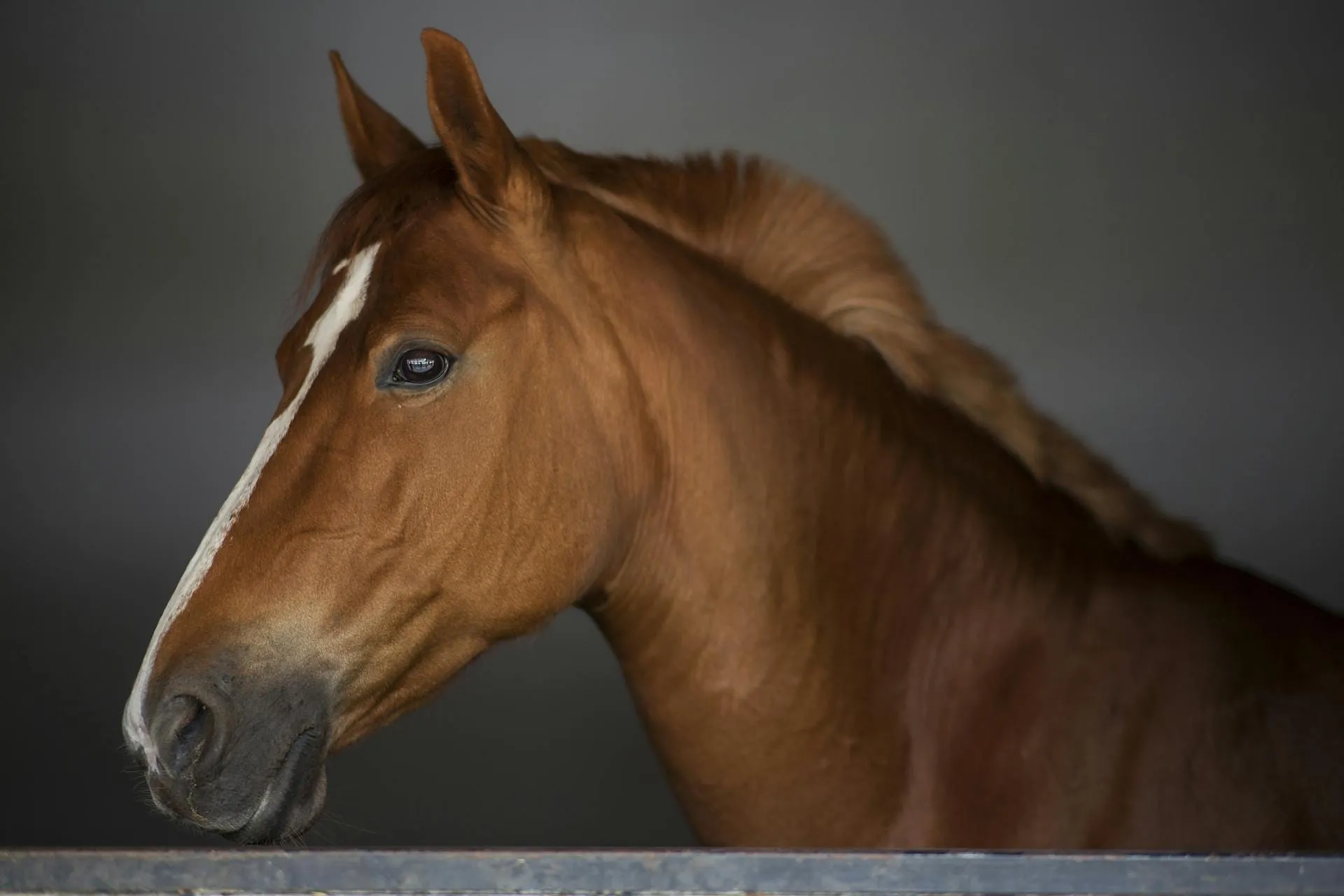
An alert, comfortable horse has bright, responsive eyes. The eye is open and engaged. You’ll see movement and interest in their surroundings. When a horse is in pain, the eye changes dramatically. It becomes dull or glassy, almost losing that spark of awareness. The eyelids may partially close, giving the eye a sleepy or withdrawn appearance even though your horse is standing and awake.
You might also notice orbital tension, which is tightness around the eye socket and the area above the eye. The skin pulls taut. The eye itself may recede slightly into the socket. This is one of the most reliable indicators and forms part of what researchers call the Horse Grimace Scale, a tool veterinarians use to assess pain objectively.
What Ear Position Tells You About Your Horse’s Comfort
Healthy horses move their ears constantly, rotating them independently to track sounds and express their emotional state. An ear pinned flat backward in anger or annoyance is different from ears held stiffly and persistently backward, which signal pain or distress. The rigidity matters. When a horse is in pain, the ears don’t move fluidly. They’re held in a fixed, tense position.
Sometimes ears are held asymmetrically, with one ear more firmly or rigidly pinned than the other. This asymmetry often indicates pain on one side of the head or neck. Horses may also let their ears droop slightly when they are in discomfort, losing the natural alertness and mobility you see in a comfortable animal.
Muzzle Tension and Whisker Position
Look at your horse’s muzzle and the area around the mouth. In a relaxed horse, the lips are soft and may be slightly parted. The mouth looks easy. When pain is present, the muscles around the muzzle tighten. The lips compress slightly. Whiskers, which should move naturally as your horse’s face shifts, may appear stiff or held in tension around the muzzle.
Some horses show clenching or grinding of the teeth, which can be subtle but is often a sign of discomfort. The entire lower face becomes tense in a way that’s hard to describe until you’ve seen it, but once you have, you won’t forget it.
Body Language and Posture Changes in Horses
The way your horse stands and carries themselves tells you as much as their face does. Postural changes often precede obvious lameness by days or weeks, giving you a window to address pain before it becomes severe.
Weight Shifting and Uneven Stance
A comfortable horse stands evenly on all four legs, distributing weight roughly equally. When a horse is in pain, especially in a limb or hoof, they’ll shift weight off the painful area. You might see a horse spending more time resting a hind leg, letting the leg dangle slightly while standing on the other three. This is sometimes called “pointing” and is a clear sign of discomfort in that area.
Weight shifting can be more subtle, too. A horse might stand with their hind legs positioned differently than usual, moving them backward or forward to find a position that’s less painful. Over days or weeks, this postural change becomes the horse’s new normal stance, and it’s easy to stop noticing it unless you’re actively checking.
Sawhorse Stance and Back Hollowing
The “sawhorse stance” is distinctive and almost always indicates pain. The horse stands with their hind legs stretched far behind it, and their front legs stretched forward, creating a posture that looks like a sawhorse or a dog in a play bow. Horses assume this position to shift weight off painful areas in the back, spine, or hindquarters.
Related to this is back hollowing, in which the horse’s back loses its natural curve, appearing flattened or even slightly concave along the spine. A healthy horse has a gentle curve to the back, but pain in the back or abdominal area causes horses to hollow and tense these muscles. The spine may appear more prominent, and the overall outline of the back changes.
Reduced Mobility and Stiffness
A painful horse moves less. You might notice they spend more time standing in one spot and less time grazing, moving around the pasture, or exploring. In a stall, they may seem reluctant to lie down or get up. Their movement, when they do move, looks stiff, especially in the first few steps after rest. This stiffness may improve slightly as they warm up, only to return when they rest again. Managing chronic pain with palliative care and other pain management strategies can help maintain mobility and comfort.
How a Horse’s Movement Changes When They Hurt
Lameness is the most obvious sign of pain, but lameness is the end stage. Long before your horse goes obviously lame, their gait changes in ways worth recognizing. These subtle movement alterations often appear weeks before full lameness develops.
Shortened Stride and Reluctance to Extend
A healthy horse moving freely has a ground-covering stride. Watch a comfortable horse trotting in the pasture, and you’ll see rhythm and reach. A horse in pain shortens their stride. Their steps become choppy. They’re hesitant to fully extend a limb, especially when moving forward. This is often asymmetrical, meaning the shortened stride is more obvious on one side than the other.
You might notice reluctance to transition from walk to trot, or from trot to canter. These transitions require weight shifts and extension, and they hurt. Your horse may hesitate, feel stiff, or require a stronger cue than usual.
Reduced Movement in Pasture
How much time does your horse spend moving around the pasture versus standing in one spot? A significant drop in activity is worth noting. This can happen gradually, so it’s easy to miss unless you’re baseline watching. If your horse normally grazes while walking and exploring, and suddenly they’re standing in one area most of the day, pain might be the reason.
Behavioral Signs Your Horse Is Uncomfortable
Pain changes behavior. Your horse’s personality and habits shift as discomfort becomes their constant reality. These behavioral changes are sometimes the first thing owners notice, even before they see physical signs.
Appetite Changes
A horse in pain often eats less or becomes picky. You might notice they’re leaving grain, picking at hay, or spending less time with their nose in the feeder. Appetite loss can be subtle and develop gradually. What used to be enthusiastic eating becomes half-hearted. The drive to eat isn’t there anymore.
Sleep Disruption
Horses sleep in short intervals, and healthy horses typically have clear patterns of lying down for naps and standing rest. Pain disrupts this. A horse in discomfort may avoid lying down because getting up or down hurts. You might notice they’re standing more than usual, looking exhausted but not resting. Over time, sleep deprivation compounds the stress on your horse’s system.
Personality Shifts and Social Withdrawal
Your horse’s personality tells you a lot. A normally social horse becoming withdrawn, spending time alone in the pasture, or showing less interest in companions is worth investigating. Some horses become grumpy or reactive to touch, especially around painful areas. They might pin their ears more frequently, move away from handlers, or show uncharacteristic aggression.
Vocalization Changes
Some horses vocalize when in pain. You might hear unusual whinnying, sighing heavily, or groaning. Other horses become uncharacteristically silent. Either shift is worth noting.
Excessive Sweating or Trembling
Acute or severe pain can trigger physical responses such as sweating without exertion or muscle trembling. This is a sign that pain is significant and warrants immediate veterinary attention.
Vital Signs: What the Numbers Tell You
A horse’s vital signs (heart rate, respiratory rate, and gut sounds) provide objective data about pain and stress. Learning your horse’s normal values helps you spot when something is wrong.
Heart Rate
A resting horse normally has a heart rate of 28 to 44 beats per minute. This can vary by age, fitness level, and temperament, so knowing your individual horse’s baseline is helpful. A horse in pain often has an elevated heart rate. If your horse is standing at rest with a heart rate consistently above 50 bpm, pain or illness is likely the cause. Acute, severe pain can significantly raise the heart rate.
Respiratory Rate
A resting horse breathes 8 to 16 times per minute. Pain, especially acute pain, elevates the respiratory rate. Combined with an elevated heart rate, this suggests significant discomfort.
Gut Sounds
Listen to your horse’s abdomen with your ear or a stethoscope. You should hear occasional gurgles and rumbles as the digestive system works. A horse in abdominal pain may have reduced or absent gut sounds. Conversely, very active, tinkling gut sounds can indicate colic. Either a change from your horse’s normal pattern is worth noting.
Emergency Signs That Need a Vet Immediately
Some pain indicators are emergencies. If you see any of these, contact your veterinarian right away.
- Signs of colic: Violent or repeated lying down and rolling, intense sweating, elevated heart rate above 60 bpm, complete absence of gut sounds, uncontrollable rolling, severe agitation, or inability to stand.
- Refusal to eat: Complete loss of appetite, especially when combined with other symptoms, can indicate serious pain or illness.
- Severe lameness: Inability to bear weight on a limb, or refusal to move at all, requires immediate evaluation.
- Elevated heart rate: A resting heart rate above 50 bpm, especially if persistent, signals significant pain or distress.
- Difficulty breathing: Labored or rapid breathing at rest, combined with other signs of pain, is an emergency.
- Sudden behavioral changes: Extreme aggression, panic, or apparent confusion, especially in an older horse, can indicate serious pain or neurological issues.
Chronic Pain vs Acute Pain in Horses
Understanding the difference between chronic and acute pain helps you respond appropriately. Acute pain comes on suddenly and is usually intense. Your horse is clearly uncomfortable, and the changes are obvious. A horse with acute lameness, sudden colic, or a fresh injury shows unmistakable signs.
Chronic pain develops over time. Your horse has been uncomfortable for weeks or months, and you’ve watched them adapt. They’ve learned how to stand, move, and behave in ways that minimize pain. The signs are subtler because your horse has normalized their discomfort. What looks like “just getting older” might actually be chronic pain from arthritis, dental disease, or back problems.
This is why it’s important to establish what’s normal for your individual horse and notice when that baseline shifts. A small change over weeks is often overlooked, but it might indicate developing chronic pain that benefits from early intervention.
How to Document Pain for Your Veterinarian
When you suspect your horse is in pain, documentation helps your vet tremendously. Write down what you’re observing and when. Include specific details: “Reluctant to trot on left front for the past week. Seems more comfortable after light exercise. Ear position is stiff on the right side during lunging.” Vague descriptions like “seems off” are less useful than specific observations with timelines.
Take videos or photos if possible. A short video of your horse’s movement or a photo showing posture can communicate what words sometimes can’t. Note any recent changes: new saddle, change in farrier routine, increased workload, or trauma.
Your vet will combine your observations with a physical exam and may recommend additional diagnostics, such as ultrasound, X-rays, or lameness exams. The better information you provide, the more accurate the diagnosis and treatment plan.
Quality of Life for Horses With Chronic Pain
Not all pain signals an emergency or demands euthanasia. Horses with chronic pain from arthritis, old injuries, or degenerative conditions can maintain a good quality of life with proper management. Pain medication, physical therapy, modified activity, and farrier adjustments can make a real difference.
The question isn’t whether your horse has pain. It’s whether they’re comfortable enough to maintain their normal behaviors, appetite, and personality despite that pain. A horse on appropriate pain medication who still eats well, moves around the pasture, and maintains social connections might have an excellent quality of life even with underlying chronic pain.
Work with your vet to establish a pain management plan that keeps your horse as comfortable as possible. Pain management options for end-of-life care can guide your thinking, even if your horse isn’t at that stage yet. Understanding what’s available helps you make informed decisions about your horse’s ongoing care.
If you’re considering euthanasia because of chronic pain, senior horse care resources and quality of life assessments can help you evaluate whether your horse still has good days and reasons to live. When pain becomes the defining factor in your horse’s life, understanding when it’s time to consider euthanasia is an important conversation to have with your veterinarian.
Recognizing and Responding to Horse Pain
The ability to recognize signs of horse pain develops with attention and practice. You’re not looking for one dramatic indicator. You’re noticing patterns. A dull eye combined with stiff ears and subtle weight shifting. A shortened stride with reduced appetite. Multiple small changes that, together, tell a story about your horse’s comfort.
Once you suspect pain, the next step is clear: contact your veterinarian. Don’t wait for the signs to get worse. Early intervention almost always leads to better outcomes than letting pain progress. Your vet can do a thorough evaluation, identify the source of discomfort, and recommend a treatment plan tailored to your horse. Understanding the full range of end-of-life options and decisions prepares you to have informed conversations with your vet about your horse’s care, even in earlier stages.
Your horse depends on you to notice when something is wrong. They can’t tell you in words, but they’re communicating constantly through body language, behavior, and subtle physical changes. Learning to read that language is one of the most important things you can do as a horse owner. If you need professional guidance on assessing your horse’s quality of life, quality-of-life consultations can provide clarity when you’re facing difficult decisions.
Frequently Asked Questions About Horse Pain Signs
Where can I find quality-of-life support for a horse in chronic pain?
Navigating ongoing pain management in a horse is one of the more emotionally and logistically demanding situations a horse owner can face. When you’re not sure whether your horse is comfortable enough or whether you’re at the point of making harder decisions, having professional guidance makes a real difference. Love, Baxter offers quality-of-life consultations through our directory at directory.lovebaxter.com/quality-of-life-consultations, where you can connect with professionals who specialize in end-of-life and chronic illness support for animals, including horses. These consultants work alongside your veterinarian, not as a replacement for veterinary care, but as an additional layer of support for the decisions that feel too big to make alone. They can help you assess your horse’s daily experience, think through what quality of life means for your specific animal, and prepare you for whatever comes next. If you’re at the early stages of a chronic diagnosis, starting these conversations early gives you more time and clarity. If you’re already deep in it, that support is available now.
How quickly can lameness develop in horses, and is early detection really possible?
Lameness can develop suddenly if there’s acute trauma like a fall or puncture wound, but most lameness develops gradually. Subtle gait changes and postural shifts often precede obvious lameness by weeks or even months. Early detection is absolutely possible if you regularly observe your horse’s normal movement patterns, posture, and behavior. Many owners catch early signs of problems such as arthritis or hoof imbalance before their horse goes fully lame, allowing for earlier intervention and better outcomes. The key is knowing what’s normal for your horse and noticing when things shift, even if the changes seem small.
My horse seems fine, but has a reduced appetite. Could this be pain rather than pickiness?
Appetite loss combined with other behavioral or physical changes often indicates pain or illness rather than simple pickiness. A completely healthy horse is usually enthusiastic about food. If your horse is eating less than usual, especially if this is a new pattern for them, it’s worth investigating. Look for other signs: changes in movement, posture, facial expression, or social behavior. If you notice multiple indicators together, pain is a reasonable possibility. Your veterinarian can rule out dental problems, digestive issues, and other causes of appetite loss through a physical exam and, if needed, additional diagnostics. Never assume appetite loss is behavioral without professional input.
What’s the difference between a horse that’s just cold or tired and one that’s in pain?
A cold horse might stand still and hold their ears back for warmth, but there’s usually movement and response. A cold horse will still eat and interact with other horses. A tired horse after heavy work might have a slightly reduced appetite and lower activity, but they usually recover within a day or two as they rest. A horse in pain shows consistent, often progressive behavioral changes over days or weeks. They’re withdrawn even when warm and rested. They lose interest in food even after they’ve had time to rest. Their facial expressions and posture show tension and tightness rather than just fatigue. Pain creates a pattern of changes across multiple systems, whereas cold or tiredness is usually temporary and situational.
When should I consider calling the vet for suspected pain versus waiting to see if it resolves?
Call your veterinarian whenever you notice pain signs or suspect something is wrong. Early evaluation is better than waiting. Waiting allows pain to progress, can lead to compounding problems (a lame horse changes how they move to compensate, causing pain elsewhere), and delays treatment that could help. There’s no harm in having your vet evaluate and find nothing serious. There can be significant harm in waiting. If you’re unsure whether something warrants a call, describe what you’re seeing to your vet’s office and let them advise on urgency. Most vets offer phone consultations to help you decide whether an in-person visit is needed. Trust your instinct: if something feels wrong, it probably is.
On this topic