







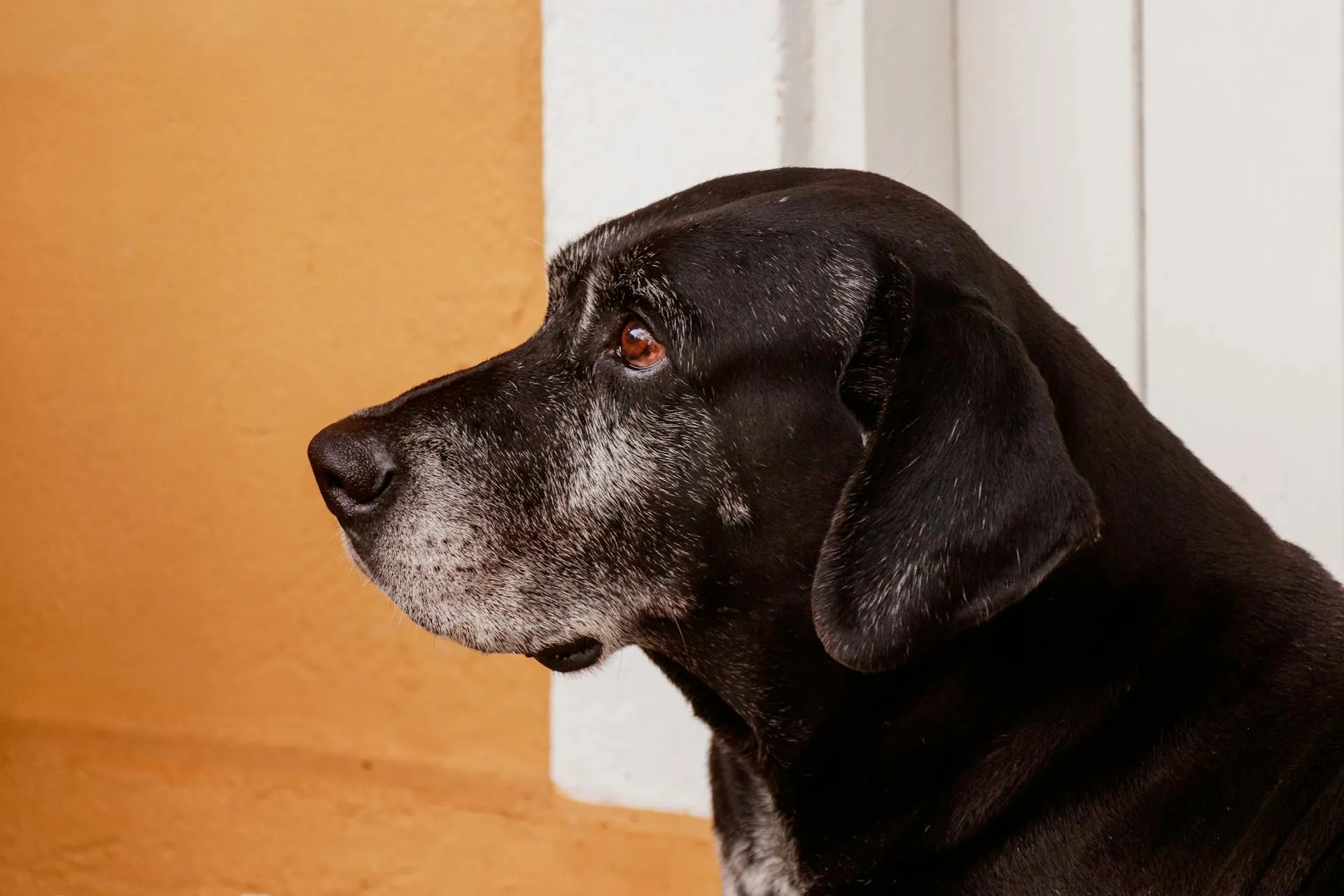
Dogs can’t tell us when something hurts, so they tell us in quieter ways: a stiffer morning, a flatter face, a growl that isn’t like them. Learning to read dog body language pain signals is one of the most useful skills you can build as a pet parent, because dogs are wired to hide discomfort, and the earliest signs are easy to miss or shrug off as “just getting older.”
This guide walks through what pain actually looks like in a dog, from the face and posture to movement, behavior, and the sounds they make, so you can catch it early and get your dog help sooner. We’ll also cover how to tell ordinary aging from real pain, what to do when you suspect your dog is hurting, and the red flags that mean you shouldn’t wait. None of this replaces your veterinarian, who can find the cause and treat it. Think of it as a way to notice the signals your dog is already sending, so nothing important slips past you.
Key Takeaways
- Dogs instinctively hide pain, so the signs are usually subtle changes from their normal rather than obvious yelping.
- Watch the whole picture: face, posture, movement, mood and behavior, and the sounds they make.
- A normally sweet dog who snaps, hides, or resents being touched is often hurting, not turning grumpy.
- Slowing down in a senior dog isn’t just old age; pain is treatable and worth a vet visit, not a shrug.
- Never give human pain relievers; many are toxic to dogs, and only your vet can prescribe what’s safe.
Table of Contents
- 1What Dog Body Language Pain Looks Like, and Why Dogs Hide It
- 2Facial and Eye Signs of Pain
- 3Posture and Body Signals
- 4Movement and Mobility Changes
- 5Behavior, Mood, and Vocal Changes
- 6Normal Aging vs. Real Pain in Senior Dogs
- 7What to Do When You Think Your Dog Is in Pain
- 8When Dog Pain Is an Emergency
- 9Frequently Asked Questions
What Dog Body Language Pain Looks Like, and Why Dogs Hide It
Dogs are built to hide pain. In the wild, showing weakness makes an animal a target, and our dogs still carry that instinct, so a hurting dog often carries on like nothing’s wrong until the pain is real. That’s why it’s so easy to miss, and why you, who know your dog’s normal, are most likely to catch it.
Because dogs can’t say where it hurts, the clues are all nonverbal, and they usually show up as small shifts from your dog’s baseline. Cornell’s Riney Canine Health Center puts it plainly: since dogs cannot verbally communicate pain, understanding their nonverbal cues is critical, and behavioral changes often develop gradually, so paying attention to daily habits is key. The rest of this guide covers those cues, grouped to make them easier to spot.
How to Read Dog Body Language Pain Signals
No single sign proves your dog is in pain, and no dog shows all of them. What matters is the change from their usual self, and the pattern that builds when several small signs show up together. A dog who’s a little slower, a little quieter, eating a little less, and flinching at a touch they used to lean into is telling you something, even if each piece on its own looks minor. Watch across the categories below rather than waiting for one dramatic signal.
Facial and Eye Signs of Pain
A dog’s face often tells the story before the rest of the body does, if you know what to look for. Pain can drain a dog’s relaxed, soft expression and replace it with tension.
Common facial and eye signs of pain include:
- A tense, grimacing expression, or a face that looks less relaxed and soft than usual.
- Flattened or pinned-back ears, held tight against the head.
- Eyes that look glazed, vacant, or as if staring into space.
- Squinting, or partially closed, half-asleep-looking eyes, sometimes from lost sleep because they can’t get comfortable.
- Excessive panting, especially at rest and when it’s not hot, and they haven’t been active.
Panting deserves a special note because it’s easy to dismiss. A dog panting hard on the couch on a cool, quiet evening isn’t just warm; that can be a real sign of pain or distress, and it’s worth paying attention to.
Posture and Body Signals
How a dog holds and carries their body is one of the most reliable pain tells, because a dog in pain instinctively shifts weight and position to protect the part that hurts. VCA notes several telling postures: standing with the front legs back under the chest to take weight off painful hips or rear legs, sitting with the rear legs splayed out instead of tucked underneath, and using the front legs to pull up to standing rather than pushing up with the back.
Other posture and body signals to watch for:
- A hunched or arched back, or a head carried low instead of level.
- A tucked or oddly held tail, or a generally stiff, braced way of holding the body.
- Guarding a body part, flinching, or tensing when you go to touch a certain spot.
- Obsessive licking or chewing at one area, sometimes enough to thin the fur or redden the skin, which often points to pain right underneath.
If your dog has a spot they won’t stop licking, resist the urge to treat it as only a skin problem. Persistent licking at one place is a classic way dogs draw attention to pain beneath the surface.
Movement and Mobility Changes
Changes in how a dog moves are often the first thing people notice, and they’re some of the clearest signals of all. The theme is reluctance and difficulty with movements that used to be easy.
Movement signs of pain include limping or favoring a limb, stiffness that’s worst after rest, and trouble getting up or lying down. Many dogs grow reluctant to take the stairs, jump onto the couch or bed, or hop into the car, and some tremble or shake in the legs, especially the back ones. On walks, a hurting dog may slow down, lag behind, or want to turn back early, and slick floors can become a real struggle for a dog whose joints or muscles hurt. For a big dog who can no longer rise or manage stairs on their own, our guide to safely lifting and moving a large dog covers how to help without hurting your dog or your back.
Behavior, Mood, and Vocal Changes
Pain changes how a dog acts and feels, not just how they move, and these shifts are easy to misread as a personality change or bad behavior. Reading them as pain instead is often the kinder and more accurate call.
Watch for these behavioral, mood, and vocal changes:
- Withdrawing and hiding, or the opposite, becoming unusually clingy and needy for comfort.
- New irritability or aggression: growling when approached, snapping when handled, or resenting being brushed or petted where it hurts.
- Losing interest in toys, games, walks, or family life, which can look like depression.
- Changes in appetite, and changes in sleep, whether sleeping more to escape it or unable to settle and rest.
- House-training accidents, when getting up and outside, or posturing to go, becomes too painful.
Vocalizing is part of the picture too, though it’s less reliable than people expect. Some dogs groan or grunt getting up and down, whimper trying to get comfortable, yelp when a sore spot is touched, or growl to head off a painful interaction. But plenty of dogs in real pain make no sound at all, so silence is never proof your dog is fine.
Normal Aging vs. Real Pain in Senior Dogs
Here’s the mistake that costs dogs the most comfort: chalking up a senior dog’s slowing down to “just old age.” Age itself isn’t painful, but the conditions that come with it, especially arthritis, very much are, and they’re treatable. When an older dog gets stiff, sleeps more, or loses interest in walks, pain is one of the likeliest reasons, and it deserves a look rather than a shrug.
The American Kennel Club is blunt about this, noting that chronic pain is common in senior dogs, but you shouldn’t dismiss it as normal aging, because it isn’t. The payoff for taking it seriously is real: managing a senior dog’s pain can hand them back energy, appetite, and joy you may have written off as gone for good. If arthritis is the culprit, our senior dog arthritis guide covers how to manage it, and if the decline looks steeper than pain alone, our guide to the signs your dog is dying can help you tell the difference. Cats hide pain the same way, which our guide to cat body language and pain signs walks through if you have both.
What to Do When You Think Your Dog Is in Pain
If the signs add up, the next step is simple: involve your vet and give them something to work with. Because dogs often act differently at the clinic than at home, and anxiety there can mask their pain, what you observe at home is genuinely valuable to your vet.
A few steps make that visit more useful:
- Write down what you’re seeing, and when. Is your dog stiff only after naps, or all the time? How long have they been picking at food or skipping the stairs?
- Take photos or short videos of the behavior that worries you, since your dog may not do it in the exam room.
- Ease off activities that clearly trigger pain while you wait for the appointment, swapping the long walk for short bathroom trips and using a ramp for the car.
- Track the pattern the way our guide to monitoring a sick pet’s vital signs and red flags lays out, so you can describe it clearly.
One rule stands above the rest: never give your dog human pain relievers like ibuprofen, naproxen, or acetaminophen. Many human medications are dangerous, even deadly, for dogs, and the dose matters enormously. Only your vet can prescribe safe pain relief, and once they’ve found the cause, options range from prescription medications to joint supplements, physical rehabilitation, acupuncture, and laser therapy.
When Dog Pain Is an Emergency
Some pain can wait for a regular appointment, and some cannot. Sudden, severe pain often signals a serious problem like an injury, a twisted stomach, or a slipped disc, and a wait-and-see approach can cost your dog dearly, so it helps to know which signs mean head to a clinic now rather than later.
Treat it as an emergency and head to a vet or emergency clinic right away if you see:
- Sudden, intense pain, crying out, or collapse, especially if it came out of nowhere.
- A distended or hard, painful belly, or unproductive retching, which can signal bloat, a true emergency.
- Trouble breathing, pale gums, or a dog who can’t get up or bear weight on a limb.
- Pain after obvious trauma like a fall or being hit, even if your dog seems to be walking it off.
- Signs of severe distress that keep escalating rather than easing.
When in doubt, call. A quick phone call to your vet or an emergency clinic costs nothing and can tell you whether to come in now or in the morning, and if your dog’s pain is part of a larger decline, our resources on navigating pet health and loss are here whenever you need them. Reading dog body language pain signals isn’t about diagnosing your dog yourself; it’s about noticing sooner, acting sooner, and getting them the relief they can’t ask for out loud.
Frequently Asked Questions
What are the most common signs a dog is in pain?
The most common signs are subtle changes from your dog’s normal rather than obvious yelping, because dogs instinctively hide pain. Watch the whole picture across a few categories. On the face, look for a tense or grimacing expression, flattened ears, a vacant or glazed stare, and heavy panting at rest. In posture and movement, watch for a hunched back, limping, stiffness after rest, trouble getting up, and reluctance to do stairs or jump. In behavior, notice withdrawal or clinginess, new irritability or aggression, loss of interest in play, and changes in appetite or sleep. Some dogs also groan, whimper, or yelp, though many painful dogs stay silent. No single sign is proof, so a pattern of several changes together should prompt a call to your veterinarian.
Why do dogs hide their pain?
It comes down to instinct. In the wild, an animal that visibly shows weakness becomes a target for predators or rivals. Hence, downplaying pain is a survival strategy, and our domestic dogs still carry that wiring. That’s why a dog can have a real, painful problem and still greet you at the door, wag, and try to carry on with the routine. It also means that by the time a dog is openly limping or crying, the problem is often well established rather than brand new. The practical takeaway is that you can’t wait for obvious signs, and you can’t assume a dog who seems mostly normal is pain-free. Because you know your dog’s baseline better than anyone, you’re in the best position to notice the small, early shifts that a dog’s instinct is working hard to hide.
Is my senior dog slowing down from age or from pain?
It’s easy to assume a slowing senior dog is just getting old, but age itself doesn’t cause pain, and treating the two as the same thing is a common and costly mistake. The conditions that arrive with age do cause pain, especially arthritis, and those are very manageable. So if an aging dog turns stiff, naps more, balks at the stairs, or stops caring about walks, discomfort is one of the likeliest culprits and deserves a proper look. The good news is that treating a senior dog’s pain often restores energy, appetite, and playfulness that you may have assumed were simply gone. Don’t dismiss the changes as inevitable aging. Bring them to your vet, who can tell whether you’re seeing normal maturity or a treatable painful condition, and help your dog feel more like themselves again.
Can I give my dog human pain medication like ibuprofen?
No, and this is important: never give your dog human pain relievers such as ibuprofen, naproxen, or acetaminophen unless your veterinarian has specifically directed it. These drugs are dangerous and potentially deadly for dogs even in small amounts, and they can cause severe stomach ulcers, kidney failure, or liver damage. Dogs need medications formulated and dosed for them, and only a vet can determine what’s safe for your dog’s size, age, and health. If your dog is hurting while you wait for an appointment, focus on comfort measures instead: rest, soft bedding, and easing off activities that trigger the pain. If you think your dog has already gotten into a human medication, treat it as an emergency and call your vet or an animal poison control line right away. For pain relief, the medicine cabinet is never the place to start.
When is a dog’s pain an emergency?
Get to a vet or an emergency clinic without delay when pain comes on suddenly and severely, when your dog cries out or collapses, or when it follows an obvious injury like a fall or a hard knock, even if they seem to shake it off. Other red flags include a hard, distended, or very painful belly, especially with unproductive retching, which can mean bloat, a life-threatening emergency. Struggling to breathe, pale gums, or an inability to stand or put weight on a leg also warrant immediate care. In general, pain that comes on fast or keeps escalating is more urgent than a slow, gradual change. When you’re unsure, the safest move is a quick phone call, because your vet or an emergency clinic can help you decide whether to come in now or wait for morning. It’s always better to check than to gamble with a dog who can’t tell you how bad it feels.
On this topic