







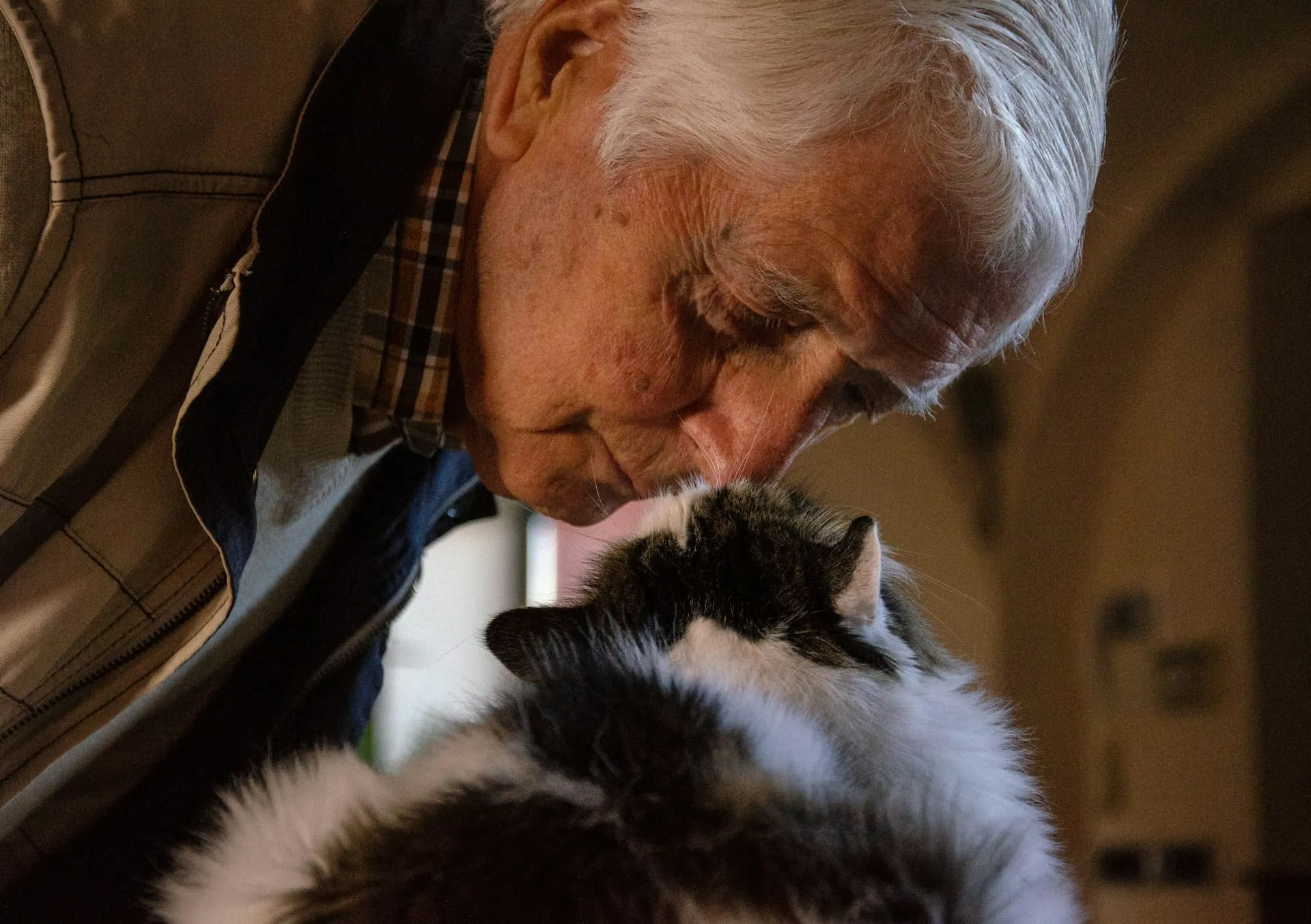
Pet loss grief is grief. Full stop. When your animal dies, you lose a family member, a daily presence, a life that depended on you. Comparing pet loss vs human loss isn’t about ranking which one hurts more. It’s about understanding why your grief feels the way it does, and why the world around you might not treat it the way you know it deserves.
The love isn’t the difference. The difference is in how society recognizes that love, the rituals we do and don’t have, the decision you may have to make yourself, and how completely a pet is woven into your day. Those structural gaps don’t make pet loss smaller. They’re a big part of why it can hit harder and last longer than people expect. This guide walks through each one, plainly, so you can make sense of your own grief without measuring it against anyone else’s.
Key Takeaways
- Pet loss grief is legitimate grief; the structural differences from human loss explain how it feels; they don’t diminish it.
- Society offers formal recognition for human death and almost none for pet death, and that gap can make your grief feel invisible.
- Human death comes with centuries of ritual, while pet death has almost none, which leaves the grief harder to contain.
- Choosing euthanasia is a weight most pet parents carry themselves, and it creates a specific guilt that many human losses don’t.
- A pet is woven into every hour of your day, so the absence shows up everywhere at once, long after people expect you to be fine.
Table of Contents
- 1Pet Loss Is Real Grief, Full Stop
- 2How Society Treats Pet Loss vs Human Loss
- 3The Euthanasia Decision You Carry Alone
- 4How Deeply Pets Are Woven Into Daily Life
- 5The Grief Timeline Double Standard
- 6Why Pet Loss Can Hurt More Than Some Human Losses
- 7Finding Support That Takes Your Grief Seriously
- 8Grieving Without Comparison
- 9Frequently Asked Questions
Pet Loss Is Real Grief, Full Stop
This has to be said first, because so much gets in the way of hearing it: your grief is real, and it doesn’t need a comparison to be valid. You loved a being who was present in your life every day and relied on you for everything. When that ends, the grief that follows is the natural cost of the bond you built.
You don’t have to take our word for how real it is. Harvard Health reports that grief from losing a beloved pet can be as intense as grief from losing a human loved one, and that a similar share of grievers develop prolonged, disabling grief as people do after losing a sibling, close friend, or partner. The intensity isn’t a sign you’re overreacting. It measures how much your pet mattered to you.
The bond with a pet is also, for many people, simpler than their human relationships. No conflict, no betrayal, no conditions attached, just steady companionship that asked little and gave a lot. Losing that kind of uncomplicated love is its own deep loss, and pet loss grief is a real and valid form of bereavement whether or not the people around you say so.
How Society Treats Pet Loss vs Human Loss
When a person dies, the world responds in a structured way: flowers, cards, meals, a few days off, a funeral that says out loud that this mattered. When a pet dies, the response is often silence. You go back to work as if nothing happened, and the two can feel like separate worlds.
That silence isn’t a verdict on your loss. Our cultural playbook for grief was built around human death, which has always been publicly visible, and it never expanded to include pets, who were long treated as property instead of family. The frameworks are shifting, slowly, but for now the gap between how the world marks a human death and a pet death adds a second layer of pain on top of the first. When people do try to help, they often reach for the wrong words, and our guide to what not to say when someone’s pet dies can steer the people in your life toward something kinder to hear.
Disenfranchised Grief, Explained
Grief has a name the culture doesn’t fully recognize. The Hospice Foundation of America describes disenfranchised grief as loss that is not openly acknowledged, socially supported, or publicly mourned. The grief expert Kenneth Doka introduced the term in 1989, and pet loss is one of its clearest examples. Naming it helps, because it explains why no one brought a casserole and why people expected you to be fine within a week. It isn’t your grief that’s off; it’s the social script around it, a pattern our deeper piece on why pet loss grief is so often disenfranchised lays out, if it helps to see the whole picture.
No Funeral, No Bereavement Leave
Human death comes with a funeral, a shared and structured moment that gathers people, marks the loss publicly, and gives grief a shape. Pet death has almost no equivalent and no default at all. The same gap shows up at work, where a human death often brings bereavement leave and a pet death usually brings nothing, so you swallow the grief on the clock and come apart at home. Building your own ritual, whether a backyard burial, a planted tree, or a small gathering of people who knew them, does real emotional work even without the culture’s stamp on it.
The Euthanasia Decision You Carry Alone
Here’s something that sets pet loss apart from many human losses: often, you’re the one who decides. You choose the day. You schedule it. You sign the form, and you’re in the room, holding them, when it happens. Few human deaths ask that of the people left behind.
Euthanasia is usually the most compassionate choice, and knowing that doesn’t lift the weight of having made it. The guilt isn’t guilt for doing something wrong. It’s the quieter kind: I decided, I chose the moment, I was the one who took them in. That specific blend of grief and responsibility is unique to pet loss, and it’s one more reason the grief can feel heavier than you braced for. If you’re carrying that weight, you’re not carrying it because you failed your pet. You’re carrying it because you loved them enough to spare them more pain.
How Deeply Pets Are Woven Into Daily Life
A pet isn’t a scheduled relationship. They’re there when you wake, underfoot at breakfast, warm against you on the couch, the reason you walk at dawn. For many people, a pet is more constantly present than any human in their life, because spouses go to work and friends live elsewhere, and the pet is always home.
That total integration is why the absence turns up everywhere. You wake, and they’re not there. You reach for the leash you no longer need. The bowl sits empty, the couch has a cold spot, the house is too quiet. The whole shape of your day was built around a body that isn’t in it anymore, and understanding why losing a pet cuts so deeply can make that daily ache feel less baffling.
The Physical Side of the Absence
Grief lives in the body, and pet grief especially, because so much of the bond was physical. You held them, fed them, felt their weight and their warmth. When that ends, many people are caught off guard by the physical symptoms: trouble sleeping in a bed that feels wrong, a jumpy quiet where a heartbeat used to be, no appetite because you’re no longer measuring out meals. None of that is you overreacting. It’s your nervous system searching for something it genuinely relied on.
The Grief Timeline Double Standard
There’s an unspoken clock on human grief, and it’s generous by comparison: devastation at first, time off, a slow return over months, and patience along the way. For pet loss, the clock is brutally short. A few days, a week if you really loved them, and then the nudges start about moving on and getting back to normal.
Grief doesn’t take orders from a calendar, though. You might feel it hard for months, get blindsided by a wave a year later, or find that a certain season brings it back. That’s not you failing to cope. That’s ordinary grief running on its own schedule, and the cultural stopwatch someone’s holding over you is wrong. Letting go of that borrowed timeline is a real part of grieving on your own terms.
Why Pet Loss Can Hurt More Than Some Human Losses
This part can be hard to say out loud: pet loss isn’t automatically worse than human loss, but in some situations it genuinely hurts more. The reason is structural, not a ranking of who mattered. It comes down to the shape of the relationship itself, lived out day after day.
The Structural Differences in Pet Loss vs Human Loss
Four things tend to stack up. A pet is there every single day, while a sibling or an old friend might be a weekly call. A pet’s love is uncomplicated, without the history that tangles many human bonds. A pet depends on you for everything, which builds a fierce, protective closeness. And a pet’s death is often a decision you make and then carry. Pile those together, and the grief can outweigh what you’d feel for a more distant person, which says nothing about your values and everything about the depth of that one specific bond.
Finding Support That Takes Your Grief Seriously
Because the culture won’t hand you support for this, you have to find it on purpose, and that isn’t a weakness. It’s how you honor the loss instead of swallowing it.
Most pet grief eases on its own timeline, with patience and connection. Sometimes it doesn’t. When it stays at full intensity and keeps you from functioning long after the loss, Mayo Clinic points to grief that lingers or gets worse and keeps you from healing as a sign to reach out to a professional. That’s not giving up, either. It’s the same good sense you’d use for any wound that isn’t closing on its own.
A few places to start: counselors who specialize in pet loss grief counseling already understand why you’re this sad, so you skip the part where you justify it; pet loss support groups and communities put you in a room, often a virtual one, with people who feel it too; and our guide to self-care while grieving a pet covers the quieter daily tending that keeps you going.
Grieving Without Comparison
This whole guide is built on a comparison, but here’s the truth underneath it: your grief doesn’t need a comparison to be real. The point of setting pet loss vs human loss side by side was never to rank them. It was to explain why your grief feels the way it does, and why the world sometimes acts like it shouldn’t.
Grief gets even more layered when the pet belonged to someone you’ve already lost, and our piece on losing the pet your loved one left behind is written for that situation.
Your pet was a real being. Your bond was real, your loss is real, and your grief is proportional to how much they mattered. You don’t owe anyone proof of that. If you want company for the road ahead, our guide to navigating pet loss and the wider resources on grief and emotions around pet loss are here whenever you need them.
Frequently Asked Questions
Does grieving a pet as much as a person make me a bad person?
No, not at all. The cultural status of a relationship doesn’t set the intensity of grief. It’s set by how deep the bond was, how woven into your daily life the other one was, how much they depended on you, and your own capacity to attach. If your pet was a constant presence and you loved them fully, grieving hard is simply what love does when the one it was for is gone. That says something good about your heart, not something worrying about your priorities. Anyone who implies otherwise is measuring your loss against a cultural yardstick that was never built to hold it. You’re allowed to feel this as big as it feels.
Is it okay to grieve a pet more than I grieved a distant relative?
Yes. Grief tracks the closeness of a relationship, not its label on a family tree. A pet who shared your home every day, who you fed and cared for and felt responsible for, can occupy more of your daily life than a relative you saw once a year. When that kind of everyday bond ends, the grief can reasonably run deeper. Feeling it more sharply than you felt a distant loss isn’t a failure of respect toward anyone. It’s an honest reflection of how close you really were. You don’t need to apologize for that or rank your losses to make anyone comfortable.
Is the guilt I feel about euthanasia normal?
The guilt is normal, and it doesn’t mean you made the wrong decision. Euthanasia is often the kindest choice available, and it still comes with a particular weight, because you were the one who decided, scheduled it, and stayed in the room. That combination of love, mercy, and responsibility can leave a residue that feels a lot like guilt even when you know you spared your pet suffering. Feeling it doesn’t change how right the choice was. It just reflects how seriously you took a hard decision with permanent consequences. Being gentle with yourself is part of grieving, and talking it through with someone who understands can lighten the load.
How do I handle people who expect me to be over my pet’s death by now?
You don’t have to justify your timeline to anyone. The expectation that pet grief wraps up in a week or two comes from a misunderstanding of how grief actually works, not from anything real about your loss. Grief moves at its own pace, and it can return in waves months or even years later. If someone pushes, a short, calm line usually ends it: your pet was an important part of your life, so you’re grieving on your own timeline, and that timeline isn’t up for debate. You’re not required to explain further or pretend to be fine. Protecting your energy from that pressure is reasonable while you heal.
Where can I find grief support that takes pet loss seriously?
Look for support built specifically for pet loss, so you never have to argue that your grief counts. Counselors who specialize in animal bereavement already understand the bond and won’t ask you to put it in perspective. Support groups, many of them virtual, put you among people who have felt exactly this and won’t tell you to get over it. Online communities can offer round-the-clock company, though they work best as a supplement to deeper support rather than a replacement for it. Leaning on the friends who do understand and creating your own small rituals rounds it out. Reaching for help here isn’t a weakness; it’s how you refuse to grieve this loss in silence.
On this topic