







Turning your pet’s ashes into a diamond is one of the most permanent ways to keep a piece of them close. It’s also a big decision, and pet ashes to diamonds raises real questions: how the process works, what the finished stone actually contains, what it costs, and how to choose a company you can trust.
This guide walks through it all, plainly and without the sales pitch. We’ll explain what memorial diamonds are, how ashes become a gem, and the honest science of what’s inside one, so you know exactly what you’re paying for. We’ll cover realistic costs, how to vet a company, the jewelry choices you’ll face later, and the feelings that tend to surface along the way. A memorial diamond won’t undo your grief, and nothing will. What it can do is give you a lasting, beautiful way to carry your companion with you, if that’s what feels right.
Key Takeaways
- Memorial diamonds are real, lab-grown diamonds created under intense heat and pressure, not symbolic look-alikes.
- Most of the carbon in cremated remains actually burns off during cremation, so companies work with what’s left and often accept hair or fur too.
- Pricing swings widely by carat size, color, and setting, and memorial stones can cost far more than an equivalent lab diamond, so it pays to compare and ask questions.
- You only need a small portion of your pet’s ashes, which leaves the rest for other keepsakes or a favorite outdoor spot.
- Certification, clear timelines, and a straight answer about the carbon source mark a company worth trusting.
Table of Contents
- 1What Pet Memorial Diamonds Are
- 2How Pet Ashes to Diamonds Actually Works
- 3You Only Need a Small Amount of Ashes
- 4What Memorial Diamonds Cost
- 5Choosing a Memorial Diamond Company
- 6Setting and Wearing Your Memorial Diamond
- 7Cremation Jewelry and Urns From Love, Baxter
- 8The Emotional Side of the Decision
- 9Deciding If Pet Ashes to Diamonds Is Right for You
- 10Frequently Asked Questions
What Pet Memorial Diamonds Are
Pet memorial diamonds, sometimes called cremation diamonds, are genuine diamonds grown in a laboratory from carbon, using the same heat and pressure that form diamonds underground. They aren’t glass, crystal, or symbolic stand-ins. A gemologist examining one would call it a diamond, because that’s exactly what it is.
That isn’t marketing language. The Gemological Institute of America explains that a laboratory-grown diamond possesses essentially the same chemical, physical and optical properties as its natural counterpart, and that both are simply diamonds. What sets a memorial diamond apart is its origin and its meaning, not anything you could see or measure in the stone itself.
How Pet Ashes to Diamonds Actually Works
Making a memorial diamond takes months and specialized equipment. In short, a company gathers carbon, purifies it, then places it under extreme heat and pressure until it crystallizes into a rough diamond, which is later cut and polished. Pet ashes to diamonds follows the same path as a jeweler’s lab diamond.
The heat-and-pressure method is known as HPHT, for high pressure, high temperature. GIA describes it as mimicking the high-pressure, high-temperature conditions that form natural diamonds in the Earth. A small carbon seed grows, crystal by crystal, over several months, until there’s enough material to cut a finished stone.
What Pet Ashes to Diamonds Really Contains
Here’s the part most guides skip. The heat is intense, and most carbon is lost during cremation as carbon dioxide gas, so only a little carbon remains in the ash. Companies recover what they can, and many also accept a lock of hair or fur, which holds more carbon than ash. Independent reporting also points out that no independent test can prove a finished diamond used your pet’s carbon rather than another source. None of this makes the memorial less real or less meaningful. Ask each company exactly where the carbon comes from, and get the answer in writing before you commit.
The Growth and Finishing Steps
After the carbon is purified, it goes into the high-pressure chamber, where a rough diamond forms over roughly six to ten months, depending on the size and color you choose. When it’s ready, a cutter shapes and polishes it like any other gemstone, into a round, a heart, or whatever style speaks to you. Reputable companies then send a certificate that identifies the stone and confirms it’s a genuine lab-grown diamond, which is a document worth keeping with your records.
You Only Need a Small Amount of Ashes
One relief for many pet parents is that making a diamond doesn’t use up all of your pet’s ashes. Companies generally ask for a small portion, so you can keep the rest for something else that matters to you.
That leaves room to keep most of the ashes, or split them across more than one keepsake. You might scatter some in a favorite spot, keep some in an urn, or set aside a portion for another tribute entirely. Our guide on where to scatter pet ashes covers who to ask and how to do it, if scattering is part of the plan. If you want ideas, our roundup of meaningful things to do with your pet’s ashes covers gentle options, and some families plant a memorial tree in their pet’s honor alongside a diamond. Hence, the memory lives in more than one place.
What Memorial Diamonds Cost
Memorial diamond pricing spans a wide range, and the biggest factor is carat size, followed by color, cut, and any jewelry setting. Smaller stones tend to start in the low four figures, while large or fully colorless diamonds can climb well into five figures before you add a setting.
It also helps to know how memorial pricing compares to the wider market. Industry reporting has found that stones marketed as containing a loved one’s carbon can sell for up to ten times the price of an open-market lab-created diamond of the same size, quality, color, and cut. That premium pays for the meaning and the process, not a better stone, so it’s fair to weigh what the sentiment is worth to you and to compare a few companies before you decide.
Choosing a Memorial Diamond Company
You’re handing a company something irreplaceable, so how you choose matters as much as what you choose. The strongest companies are transparent from the first conversation, and the weaker ones get vague right where you need them to be clear.
Look for a company that specializes in memorial diamonds instead of tacking them on as a side offering, and that will explain every step, give you a realistic timeline, and quote pricing without burying fees. Ask directly where the carbon comes from, how much of your pet’s material actually ends up in the stone, and what happens if something goes wrong. A company that answers those plainly, provides certification, and uses tracked, insured shipping for the ashes is one you can hand this to with confidence.
When you’re weighing memorial routes more broadly before you commit, our guide to aftercare and pet loss memorials lays the options out side by side, and the memorial products and keepsakes directory can point you toward vetted makers.
Setting and Wearing Your Memorial Diamond
Once the diamond arrives, you get to decide how to keep it near. There’s no single right answer, and plenty of people take their time here without rushing the choice while grief is fresh.
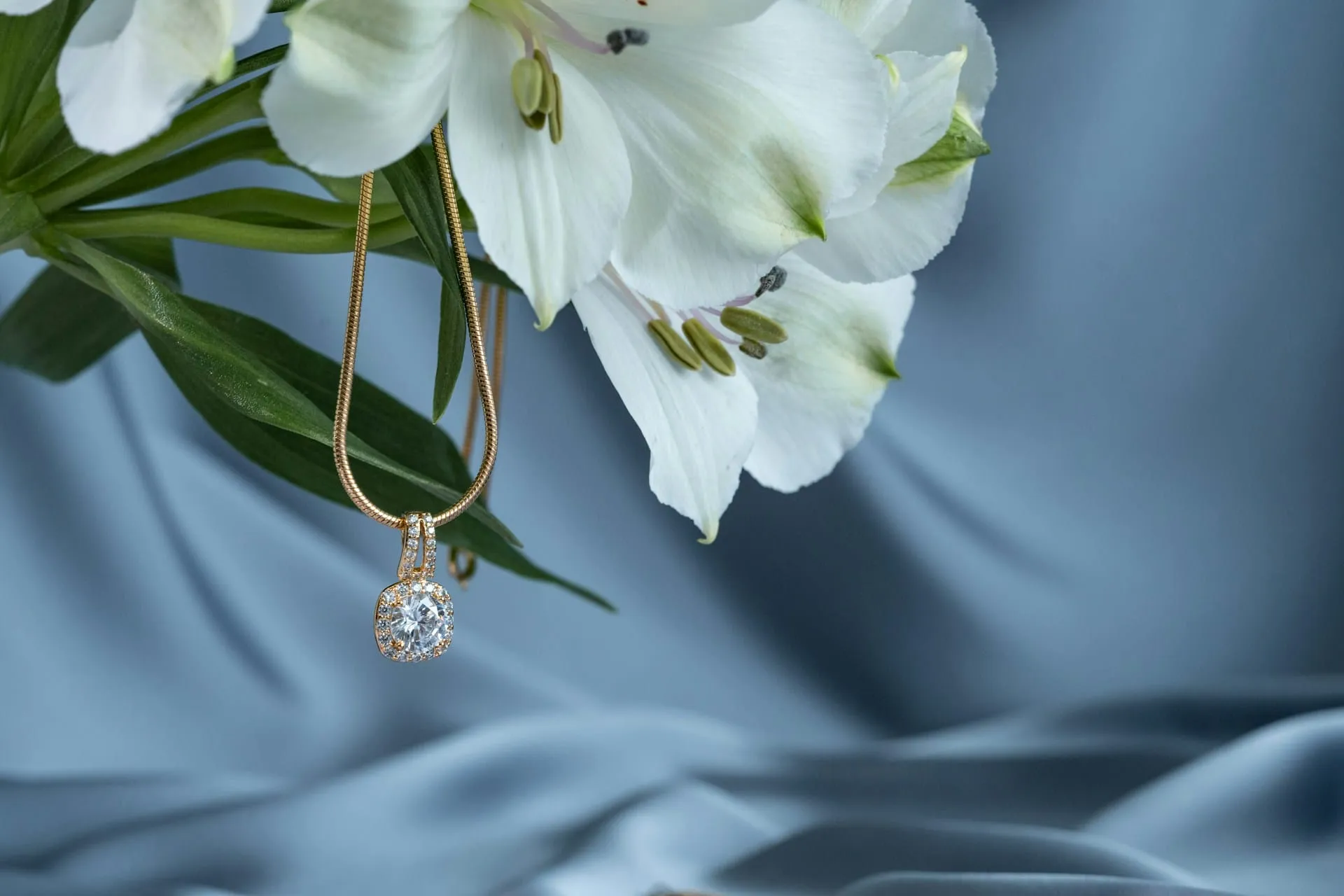
Pendants are the most common pick, because wearing the stone at your chest keeps your pet close through the day. Rings suit people who want a daily reminder on their hand, and some set the diamond into a band they already wear. Earrings offer a quieter option, and you can make a matched pair if you have enough material. You can also leave the diamond unset for now and store it safely until you know what you want, since there’s no deadline on this decision.
Cremation Jewelry and Urns From Love, Baxter
A diamond is one way to keep your pet close, and it isn’t the only one. If the cost or the wait feels like too much right now, or you want something to hold sooner, there are gentler keepsakes that carry the same intention. We make and carry a few of them ourselves, so you don’t have to piece the search together alone.
Our pet cremation jewelry holds a small amount of your pet’s ashes in a sealed pendant, so you can wear them on your chest like many people wear a memorial diamond, at a much lower cost. Designs come in silver, gold, and rose gold, and we also offer pawprint and noseprint keepsakes for pet parents who want a physical mark of their companion rather than ashes. You only need a little for these, so they pair naturally with a diamond or a scattering if you’d rather split the ashes across more than one tribute.
If you’d rather keep the ashes together at home, our pet urns range from small keepsake pieces to heirloom-quality wood and ceramic, in enough colors and sizes to suit any home and any pet. Some families choose an urn for most of the ashes and set aside a small portion for a diamond or a piece of jewelry, so nothing has to be an either-or. You can browse both alongside the rest of our keepsakes whenever you’re ready.
The Emotional Side of the Decision
Logistics are only half the story. Choosing this kind of memorial stirs up feelings, and it helps to expect them so they don’t catch you off guard.
Deciding can feel heavy, because it’s permanent and you’re doing it while raw. Sending the ashes away often hits harder than people expect, like handing over something you can’t replace. The months of waiting can drag, and when the diamond finally arrives, the moment can bring relief and a fresh wave of grief at the same time. All of that is normal. If the grief itself feels like too much to hold, it can help to remember that pet loss grief is a real and valid form of bereavement, and understanding why losing a pet cuts so deeply can make your own reactions feel less confusing.
Deciding If Pet Ashes to Diamonds Is Right for You
There’s no correct answer to whether pet ashes to diamonds is right for you, only what feels true to your bond and your budget. Some people love the permanence of carrying their companion as a stone they can hold. Others would rather scatter the ashes, plant something living, or keep a simpler keepsake. Every one of those is a real way to honor a life.
Whatever you choose, take the time you need and ask hard questions before you spend, so the memorial you land on is one you feel good about for years. If you’re still finding your footing in the loss itself, our guide to navigating pet loss is a steady place to keep going, and we’re here whenever you’re ready.
Frequently Asked Questions
Are pet memorial diamonds real diamonds?
Yes. A memorial diamond is a genuine diamond grown in a laboratory, not a crystal, cubic zirconia, or symbolic stone. Gemological experts treat lab-grown diamonds as diamonds because they share the same chemical makeup, hardness, and sparkle as mined ones. The only real difference is where they came from and what they mean to you. A finished memorial stone would pass as a diamond under a jeweler’s loupe, since that’s exactly what it is. Reputable companies back this up with a certificate identifying the stone. What the certificate can’t independently prove is the exact source of the carbon, which is a separate question to raise with your company.
How much of my pet’s ashes do I need for a diamond?
Usually only a small portion. Most companies ask for a modest scoop of cremated remains rather than the whole amount, which means you can keep the majority for other purposes. Because cremation leaves only a little carbon behind, some companies also take a small clipping of hair or fur, which carries more of it than ash. The exact amount depends on the company and the size of the stone you want, so confirm their requirement before you send anything. Keeping the rest of the ashes gives you room for a second keepsake, a scattering, or an urn at home. There’s no rule that a diamond has to be the only memorial you make.
How long does it take to turn ashes into a diamond?
Plan on several months from start to finish. Most companies quote six to ten months, though the exact timeline shifts with the size and color of the stone you choose. Larger diamonds take longer to grow, and certain colors need extra processing steps. The clock also depends on the company’s current production queue and how detailed your custom requests are. Many people find the wait emotionally hard, since you’re eager to hold something tangible while you grieve. Asking for a realistic timeline up front and periodic updates during the growth period can make the waiting easier to sit with.
How much do pet memorial diamonds cost?
Prices vary widely, so treat any single figure as a starting point, not a rule. Carat size is the biggest driver, followed by color, cut, and whatever setting you choose for the finished stone. Smaller stones often start in the low four figures, while larger or colorless diamonds can reach well into five figures before you add jewelry. It also helps to know that these stones often cost well above a comparable lab-grown diamond of the same size and quality, because you’re paying for the process and the meaning. Getting written quotes from a few companies and asking exactly what each price includes is the best way to avoid surprises. Some companies offer payment plans if the cost feels out of reach right now.
Can the diamond be made from my pet?
This is the honest limit of the technology, and it helps to understand before you buy. A lab can confirm that a stone is a genuine lab-grown diamond, but it can’t test which carbon source went into it. That means certification proves the diamond is real, not that its carbon came specifically from your pet. The best protection is choosing a transparent company with a clear chain of custody, a documented process, and a willingness to answer exactly where the carbon comes from. Ask how they track your pet’s material through each step and what paperwork you receive. None of this takes away from the meaning of the memorial. It simply helps you buy with your eyes open and trust the company you pick.
On this topic