







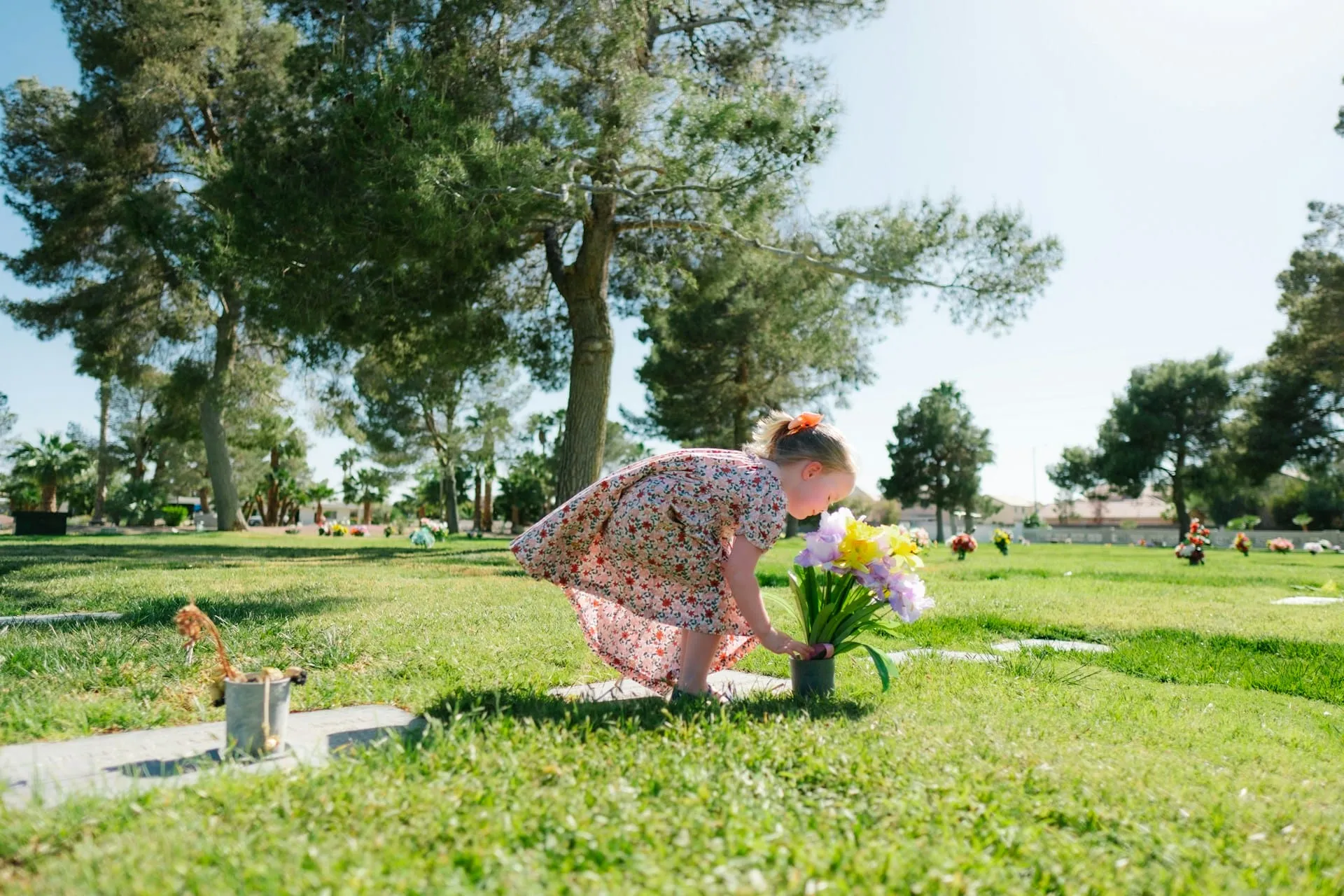
You can choose where your pet will rest weeks ahead or on the same day. Type “pet cemetery near me” into a search bar to see a mix of cemeteries, crematories, and funeral homes.
To find a real pet cemetery near you, start with the Love, Baxter pet burial directory, then search the International Association of Pet Cemeteries and Crematories member directory. Ask a vet or a local crematory which cemeteries they know, and check whether a human cemetery near you has a section for pets.
A pet cemetery offers grounds that someone else tends and a place you can return to. If you’re still weighing pet cremation vs. burial, the questions in this guide help you compare the two.
We think the most useful question to ask a pet cemetery is what protects its land after today, so that’s where this guide spends the most time. Whether your pet is a cat, a rabbit, a dog, or a horse, the questions are the same.
Key Takeaways
- Start with the Love, Baxter directory, then search the International Association of Pet Cemeteries and Crematories (IAOPCC) member directory by state and city. A vet or local crematory may know other nearby cemeteries.
- Perpetual care and protected land are different. A care fund pays for upkeep, while a deed restriction or dedication is what protects the land itself.
- Virginia and New York generally require pet cemetery land to be set aside by law, and California leaves it optional, so ask what protects the land at any cemetery you’re considering.
- Before you choose, ask whether burial is private or communal, what the casket and marker rules are, and whether you can see your pet or hold a short service.
- The price depends on private or communal burial, the plot, how you pay for care, any casket, and the marker. An itemized quote shows each one.
Table of Contents
- 1Where to Find a Pet Cemetery Near Me
- 2Is a Pet Cemetery Permanent? What “Perpetual Care” Really Covers
- 3Questions to Ask a Pet Cemetery Before You Choose
- 4What Pet Cemetery Burial Costs Depend On
- 5What Happens When You Arrange a Pet Cemetery Burial
- 6Other Burial Options If a Pet Cemetery Isn’t the Right Fit
- 7Choosing a Pet Cemetery Near You
- 8Frequently Asked Questions About Finding a Pet Cemetery
Where to Find a Pet Cemetery Near Me
To find a pet cemetery near you, use the Love, Baxter directory, the IAOPCC’s member search, a vet or local crematory, and a map search you confirm with a phone call. Some human cemeteries also have pet sections, so using two or three of these together gives you the fullest list.
If you’re still deciding between burial and other options, our pet aftercare and memorials hub brings everything together, from burial and cremation to keepsakes.
Start With the Love, Baxter Directory
We start with our pet cemetery listings, because every listing in the Love, Baxter directory is reviewed by a real person before it goes live. Reviews are checked before they’re published, and every profile includes a way to report a concern. Each listing shows where the provider is, whether they work from their own location or come to you, and a short description, with a link to the full profile.
For other burial providers, use our pet burial page. Enter your ZIP code, postal code, or city, and it shows burial providers who can reach you. The directory is still growing, so if no cemetery near you is listed yet, the places below can help fill the gap.
Other Places to Search for a Pet Cemetery
The International Association of Pet Cemeteries and Crematories (IAOPCC) has been around since 1971, and its member directory lets you search by country, state, and city. Its home page says: Use this search tool to locate a member in your area. The results include crematories as well as cemeteries, so call and ask whether a member has its own burial grounds.
Membership carries a shared standard you can ask about. PetMD notes that IAOPCC members are required to maintain a strict code of ethics and operating standards for pet aftercare, burial, and cremation services. A vet or local crematory may know which cemeteries nearby families use, and PetMD suggests asking a vet about the availability, requirements, and procedure for having your pet buried in a pet cemetery near you. Some crematories also run cemeteries or work with one.
Map searches help as well. Try “pet cemetery,” “pet memorial park,” and “animal cemetery” with your city or ZIP code. On the call, ask whether they have their own grounds, how long they’ve been operating, and whether you can visit before you decide.
Human Cemeteries With Pet Sections
Some human cemeteries have pet sections, and some allow pets and people in the same grounds. PetMD lists green burial in eco-friendly and pet-inclusive whole-family cemeteries among newer aftercare options, and the Green Pet-Burial Society keeps a list of U.S. cemeteries that allow for the interment of human and pet remains on the same grounds. If a human cemetery near you has a pet section, ask whether the pet section is covered by the same deed or dedication as the rest of the cemetery, and whether a pet can go in a family plot or only in the pet section.
In New York, it works the other way too. Hartsdale Pet Cemetery says: New York State officially sanctioned the practice of burying human cremated remains at pet cemeteries. More than 800 people rest at Hartsdale with their pets.
Is a Pet Cemetery Permanent? What “Perpetual Care” Really Covers
Not automatically. A pet cemetery lasts as long as two things hold: legal protection on the land, like a deed restriction or dedication, and a care fund large enough to pay for upkeep. A care fund on its own doesn’t keep the land a cemetery, so ask about both and ask to see each in writing.
Before you buy a plot at a pet cemetery, PetMD suggests you research that site to be sure that the land has been ‘deeded in perpetuity’ for that purpose. That protection is meant to keep the land a cemetery for good.
A care fund matters too, though on its own it isn’t the whole answer. Hartsdale Pet Cemetery in New York, founded in 1896, notes that having one does not ensure the continuation of the cemetery if that fund is not sufficient or isn’t well protected. If your pet is already resting at a cemetery, the questions below are yours to ask too.
Does Your State Protect Pet Cemetery Land?
Some states set pet cemetery land aside by law. Virginia and New York both do, while California leaves it to whoever holds the land. New York also sets rules for how care is paid for.
Virginia requires every pet cemetery to record a declaration restricting the use of the land to use as a pet cemetery. Before selling the first plot, the cemetery also needs an irrevocable trust fund in the amount of at least $12,000 for perpetual care.
California makes it optional: whoever holds the land may dedicate the property to pet cemetery purposes, and the dedication must state how long it lasts.
In New York, a pet cemetery generally has to file a dedication restricting the real property to cemetery use with the county. A pet cemetery there may also charge a one-time fee for permanent care or offer a yearly contract, and that contract has to state specifically the amount of the annual maintenance fee to be paid each year. It also has to say what happens if the yearly fee goes unpaid.
If you already have a yearly contract and the fee is hard to manage, ask the cemetery what options it has. If you’re choosing now, ask which options it offers.
Questions to Ask About a Pet Cemetery’s Permanence
A few short questions cover it, and you can ask them on the phone or at the office:
- Is the land deeded or dedicated as a cemetery, and for how long?
- Who holds the care fund?
- Do you charge for care once, or every year?
- What’s the plan for the grounds if the cemetery changes hands?
Members of the IAOPCC agree in its code of ethics to have and maintain a plan for the cemetery’s preservation, so ask a member cemetery to walk you through its plan. The Green Pet-Burial Society encourages families to tell the cemetery that they want the cemetery to be deeded in perpetuity if it isn’t already.
When the Green Pet-Burial Society last updated its list, it named Hartsdale and Los Angeles Pet Memorial Park among pet cemeteries that had successfully secured permanent status.
Questions to Ask a Pet Cemetery Before You Choose
Beyond the land and the care fund, ask whether burial is private or communal, what the plot, casket, and marker rules are, how burials are recorded, and whether you can see your pet or hold a short service. If each cemetery answers the same questions, it’s easy to compare them.
You can read these straight from your phone:
- “Do you offer private burial, communal burial, or both, and how do they differ here?”
- “[Pet’s name] weighs about [weight]. What plot sizes do you have for that?”
- “Do I need a casket or container, and can I use a biodegradable one?”
- “What kinds of markers are allowed, and can I order one from an outside company?”
- “How are burials recorded, and what paperwork will I get?”
- “Can I, or my family, see [Pet’s name] before the burial, hold a short service, or be there for it?”
- “Can you pick [Pet’s name] up, and from where?”
- “When are the grounds open, and what can families leave at a grave?”
Private and communal burial are the first things to settle. The IAOPCC notes that burial in a pet cemetery may include private or communal burial services, with varying options and pricing based on your preferences. If private burial isn’t available, PetMD notes that cemeteries may have a memorial wall on which you may place a plaque in remembrance of your companion, so ask whether the cemetery has one.
Records matter more than they sound. The IAOPCC’s code of ethics commits members to maintain adequate burial, cremation and financial records, so a member cemetery should be able to show you how it keeps them.
Ask about the casket rules and why they exist. If you’d like a biodegradable casket or shroud, a green burial ground may suit you better, and our green pet burial guide explains how those work. You can call two or three cemeteries before you decide.
What Pet Cemetery Burial Costs Depend On
Pet cemetery burial costs depend on whether burial is private or communal, the plot, how you pay for care, any casket or container, the marker, and extras like pickup or a service. Prices vary from one cemetery to the next, so an itemized quote is the most reliable way to compare them.
Here’s what shapes the price:
- Private and communal burial are priced differently, and the IAOPCC says pricing varies with the options you choose.
- The plot matters, since size and location both affect the price, and larger animals need larger plots.
- Care may be a one-time fee for permanent care or an annual bill, depending on the cemetery and the state.
- A casket or container adds to the cost if a cemetery sells one or requires it.
- The marker’s material, size, and style change the price, and installation may be charged separately.
- Pickup from a home, farm, or clinic, a viewing room, and a graveside service can each add to the total.
The IAOPCC says of mausoleum burial: It is a more expensive option and may not be available in all pet cemeteries. Care fees can also be set by law. In California, a cemetery that has dedicated its land shall charge an endowment maintenance fee at burial, and that money goes into a trust for the grounds.
Ask for every fee in writing, including what comes later: marker installation, yearly care if it applies, and any charge to hold a service. If cost matters, ask how private and communal burial compare there, and whether a payment plan is available. If there’s time to plan, our guide to a pet’s end-of-life plan can also help you set a budget ahead of time.
What Happens When You Arrange a Pet Cemetery Burial
Arranging a pet cemetery burial starts with a call: have your pet’s size and timing ready, then ask about plots and prices, pickup or drop-off, a burial date, whether you can see your pet first, and whether you can hold a short service or attend the burial.
Pickup depends on your pet’s size and the travel involved, and PetMD notes that some pet cemeteries may have pickup options available from your home, farm, or the veterinary clinic. If your pet has just died and you need a little time to decide, our guide to a pet’s body after death can help with caring for them in the meantime.
You can ask to see your pet before burial. The IAOPCC says that if you choose to use a pet cemetery, arrangements can be made for a viewing before cremation or burial. Hartsdale, for one, lists this among its services: Funerals and private viewing room. Some families hold a short graveside service, and our pet memorial service guide has ideas for words and readings if you want one.
Families differ on whether they want to be there. Some stay for the burial, and some say goodbye beforehand and leave the rest to the staff. Ask what the cemetery allows and do what feels right for you.
For the marker, ask when it will be placed, who will make it, and whether the grave will be marked in the meantime.
Other Burial Options If a Pet Cemetery Isn’t the Right Fit
If a pet cemetery isn’t available or doesn’t feel right, you can bury your pet at home where local rules allow it, choose a green burial ground, or choose cremation and keep, scatter or bury the ashes if they’re returned.
The IAOPCC lists the main choices as burial in a pet cemetery, cremation, home burial (where permitted by law), or a disposal service. Home burial depends on state and local rules, and our guide to pet burial laws by state covers what each state allows and where the rules come from.
If ashes are returned, you can bury them at home, place them in a cemetery, or keep them close. Our guides to finding pet cremation services near you and choosing a pet crematory you can trust walk you through it. Our look at pet burial across history and cultures shows how many ways people have honored their animals over time.
Choosing a Pet Cemetery Near You
When you search “pet cemetery near me,” the list that matters is short: a few cemeteries you can visit or call, each able to tell you what protects its land, how its care fund works, how it keeps records and what it charges.
The right place is one that fits your family and can show you, in writing, how it plans to look after the grounds. That holds whether you’re planning months ahead or making arrangements this week.
We’d trust a recorded deed over a brochure. Ask to see it, or the dedication, along with the care fund details, and keep copies with your own records. If you’d like help finding a provider near you, the Love, Baxter directory is a good place to start.
Frequently Asked Questions About Finding a Pet Cemetery
How do I find a pet cemetery near me if none show up in my area?
Widen the search. Search the IAOPCC member directory by state instead of city, and call the crematories it lists, since some run cemeteries or work with one. Ask a vet which cemeteries other families in your area have used. Try a map search for pet memorial park and animal cemetery as well as pet cemetery, and confirm each result with a phone call. Ask nearby human cemeteries whether they have a pet section or allow pet remains. If the nearest option is far away, ask about pickup, since some cemeteries may be able to collect a pet, depending on size and distance. If you choose cremation and have the ashes returned, you can ask a cemetery about burying them later.
How much does pet cemetery burial cost?
Pet cemetery burial costs vary by cemetery and by the options you choose, so there isn’t one reliable national price. Private burial, communal burial, and a mausoleum crypt are each priced differently, and the IAOPCC calls a crypt a more expensive option where it’s offered. Care may be charged separately. In New York, it can be a one-time fee or a yearly contract, and in California, a cemetery with dedicated land must charge a care fee at burial. A casket or container, the marker and its installation, and pickup or a service can each add to the total. Ask every cemetery you call for an itemized quote in writing, including any yearly fees. Comparing two or three quotes side by side shows you where the differences are. If money is tight, ask whether a lower-cost option or a payment plan is available.
Can a pet cemetery be closed or sold?
Protections on a cemetery’s land keep it in place, and they make a sale or closure much harder. In Virginia and New York, a pet cemetery generally must record a restriction or dedication on its land, and lifting it requires a court order. In California, dedicating the land is optional; a dedication states how long it lasts, and removing one also takes a court order. Where land isn’t protected, a sale or closure is easier. Land that’s deeded or dedicated for cemetery use, backed by a well-held care fund, gives a cemetery much firmer footing. You can ask any cemetery what protects its land and what would happen to the grounds if it changed hands. If your pet is already buried somewhere, you can ask those same questions and tell the cemetery you’d like its land protected for good.
Can I be buried with my pet?
In some places, yes. Some human cemeteries set aside space for pets, and whole-family cemeteries allow people and pets in the same grounds. The Green Pet-Burial Society tracks these cemeteries across the United States. Hartsdale Pet Cemetery says New York has allowed human cremated remains to be buried at pet cemeteries, and hundreds of people now rest beside their pets there. Rules depend on the state and on each cemetery’s own policies, so ask directly and get the answer in writing. If you’d like to be buried near your pet one day, a cemetery that allows it can make that possible. It also helps to put your wishes in your will or estate plan, so your family knows.
What is the difference between private and communal pet burial?
Private burial means your pet has their own grave you can visit, in a plot you choose, with room for a marker. Communal burial means pets are buried together in a shared area rather than in individual plots. Where private burial isn’t offered, some cemeteries have a memorial wall where families can place a plaque. Pricing differs between the two, so ask how they compare at the cemetery you’re considering. Some families want a specific grave to visit, and others prefer a shared resting place. Ask each cemetery exactly how its communal area works and whether it records names. If your pet is already there, the cemetery can tell you how pets in that area are remembered.
On this topic