







If your dog is with you now in hospice or comfort care and their breathing worries you, call that team, or any vet or emergency clinic if you can't reach them. If your dog is dying at home without hospice, some breathing changes can be part of dying, and a vet can help you tell what you're seeing.
We're so sorry if your dog has already died. The section called If Your Dog Has Died, near the bottom of this page, was written for you.
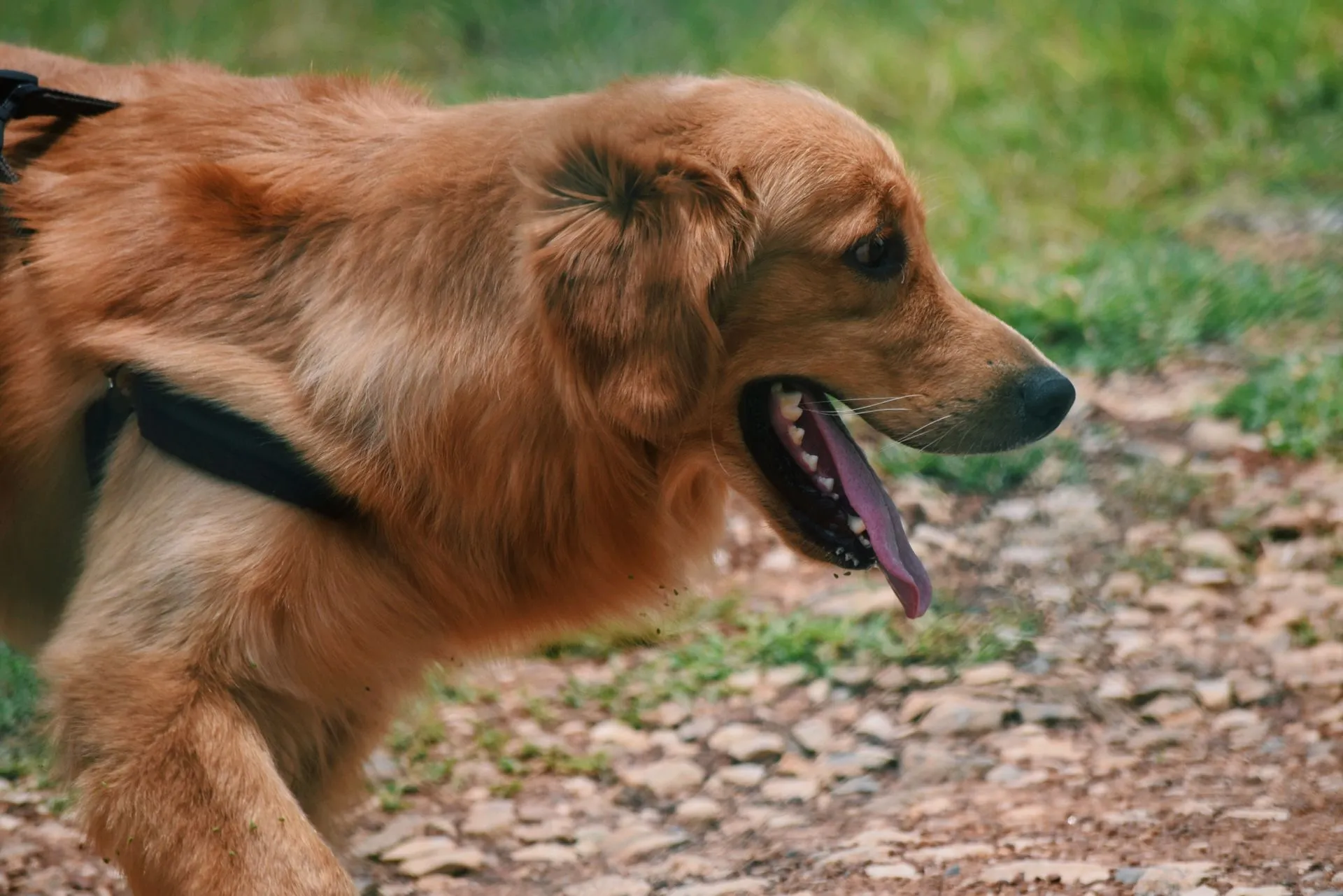
What does labored breathing look like in a dog? It looks like work. Patricia Smith, LVT, and Dr. Aly Cohen at Cornell write that signs of respiratory distress may include rapid breathing, often with an open mouth; effort in the belly while breathing; a head and neck stretched out; increased breathing sounds, like wheezing, snorting, or whistling; a bluish tinge to the gums; and weakness or collapse. For any other dog with you now, Smith and Cohen say to take your dog to the nearest emergency animal hospital if you notice any signs of respiratory distress, to call ahead when possible, and, if you're unsure, to always seek help.
If you can't tell whether your dog needs care right away, Smith and Cohen say a veterinary telehealth service is one option. If cost, travel, or a closed clinic is a concern, call the nearest open clinic and ask what they can do.
Key Takeaways
- Labored breathing is breathing you can see your dog working at. Cornell's list of signs includes belly effort with each breath and rapid breathing, often with an open mouth.
- Breathing can change as a dog dies, and some of those changes look like the signs on this page. If your dog has already died, there's a section near the end for you.
- If your dog is in hospice, call that team. For any other dog with you now, Cornell recommends going to the nearest emergency animal hospital for signs of respiratory distress, like belly effort, bluish gums, or collapse. Dr. Cohen's ER newsletter also treats breathing that's faster or harder than normal in a dog with you now, especially at rest, as a red flag.
- To count your dog's breathing rate, the University of Missouri's cardiology service, writing for pets with heart disease, suggests watching while they sleep or rest in a room that's not too hot or too cold: count the breaths in 15 seconds (one in and one out is one breath) and multiply by four.
- Heart disease, fluid in or around the lungs, air around the lungs, airway problems such as laryngeal paralysis or tracheal collapse, and cancer are among the causes of respiratory distress on Cornell's list. For a dog with you now, a vet can look at whether any of these is behind it.
Table of Contents
- 1What Are the Signs of Labored Breathing in a Dog?
- 2How to Count Your Dog's Breathing Rate at Rest
- 3Common Causes of Labored Breathing in Dogs
- 4How to Help a Dog Who's Working to Breathe
- 5Getting Help for a Dog With Breathing Trouble
- 6What Does Labored Breathing Look Like in a Dog Near the End of Life?
- 7If Your Dog Has Died
- 8Caring for a Dog Whose Breathing Looks Labored
- 9Frequently Asked Questions About Labored Breathing in Dogs
What Are the Signs of Labored Breathing in a Dog?
A dog with labored breathing is working to breathe, and you can often see it. Cornell's respiratory distress list includes a belly that works with each breath, rapid breathing that's often open-mouthed, a head and neck stretched out, increased breathing sounds, a bluish tinge to the gums, and weakness or collapse. Here's what each one looks like.
For a dog with you now, Tufts' Cummings School of Veterinary Medicine says that when looking for difficulty breathing, also called dyspnea, it's important to check both the breathing rate and the breathing effort, meaning how much the belly or chest wall moves with each breath. If it helps to see the difference, its cardiology page has short videos of a healthy dog breathing at rest, a healthy dog panting, and dogs with mild to marked difficulty breathing.
Is Your Dog Breathing From the Stomach?
Breathing from the stomach means the belly pushes in and out with each breath. Cornell's distress page calls it abdominal effort while breathing, and Dr. Cohen's ER newsletter for Cornell's Canine Health Center calls excessive belly movement when breathing a sign of breathing trouble.
For a dog with you now who has fluid around the lungs, VCA says that in some cases your dog's abdomen may move significantly with each effort to draw breath, and that these dogs often breathe fast and shallow and may breathe with their mouth open. In pets with heart disease, the University of Missouri's veterinary cardiology service lists the chest wall and ribs moving farther out with each breath, and the belly muscles working harder to breathe in and out, among the signs of increased effort.
Is Fast or Open-Mouth Breathing a Problem?
Not always. The Merck Veterinary Manual describes rapid breathing as not always a sign of disease, such as in healthy animals after exercise. Cornell's distress page notes that dogs breathe more slowly and deeply when resting, and may pant heavily during stress, excitement, or exertion.
For a dog with you now, Dr. Cohen's ER newsletter calls breathing that's faster or harder than normal, especially at rest, a red flag.
Is Your Dog Stretching Their Neck or Not Lying Down?
A dog may stretch their head and neck out to try to pull in more air, and Cornell's distress list includes an extended head and neck in an attempt to maximize airflow. Missouri's cardiology service also describes a wide stance in pets with heart disease.
With fluid in the lungs, the Merck Veterinary Manual says labored breathing, with an increased rate, and open-mouth breathing may occur, and that animals stand or sit rather than lie down, or lie only on their breastbone. Tufts says many dogs with severe breathing difficulty refuse to lie on their side because breathing is harder that way, and prefer to sit or stand. Both describe these postures alongside other signs, and a dog can have trouble settling for many reasons, like sore joints in an older dog, so it's one piece of a bigger picture.
What Do Wheezing, Whistling or Grunting Mean?
Wheezing, whistling, and snorting are on Cornell's distress list as increased breathing sounds, and Merck's list of signs of lung and airway disorders includes noise such as grunting.
Some dogs breathe noisily every day. The American College of Veterinary Surgeons (ACVS) says dogs with an elongated soft palate, a problem common in short-nosed breeds like pugs and bulldogs, generally have a history of noisy breathing, especially when breathing in. If your dog is with you now and someone can help, a short video of the breathing can let a vet see and hear it.
What Color Should Your Dog's Gums Be?
Healthy gums are pink, VCA's anemia page says. A bluish tinge to the gums and muzzle is a distress sign on Cornell's list, and Dr. Cohen's newsletter adds a blue-tinged tongue.
VCA says pale gums are a common sign of anemia, with gums that may look pale pink to white, and lists labored breathing as another possible sign.
Is It Reverse Sneezing?
Dr. Brian Collins of Cornell's Canine Health Center says reverse sneezing can look like labored breathing. He describes a series of loud, sudden, rapid breaths in, usually with the dog standing, neck extended, head tilted back, and elbows pointing out. He notes that the mouth is usually closed and the lips pulled back, and that episodes can last from a few seconds to minutes.
These episodes are usually sporadic and mild, Dr. Collins says, and dogs typically return to normal quickly on their own. Comforting and calming your dog can help. From the outside, reverse sneezing and labored breathing can be hard to tell apart. If your dog's episodes are frequent or more severe, a vet can take a look.
Is Your Dog Panting or Having Trouble Breathing?
Panting is one way dogs cool down. Cornell's respiratory distress list includes belly effort, a stretched-out neck, and bluish gums, and these can come along with panting. Our guide to why an old dog pants at night goes through panting in an older dog, what can cause it, and how to help them settle.
How to Count Your Dog's Breathing Rate at Rest
You can count your dog's breathing rate with a phone timer. While your dog sleeps or rests in a room that's not too hot or too cold, count the breaths in 15 seconds (one breath in and out counts as one) and multiply by four. The University of Missouri's veterinary cardiology service gives this method for pets with heart disease.
What's a Normal Breathing Rate for Your Dog?
For pets with heart disease, Missouri says the normal sleeping rate should stay below 30 to 35 breaths per minute, and that this can vary slightly from pet to pet.
VCA says that for a dog with you now who has heart disease, a vet may recommend you monitor your pet's resting respiratory rate, counting several times over a week to learn their average. If your dog has heart disease, the vet treating them can tell you what count to call about.
What Does Labored Breathing Look Like in a Dog Who's Asleep?
A count tells you speed, and effort is the other half. In a sleeping dog, the effort signs are the same ones described earlier in this guide: the belly and ribs working, the head and neck stretched out. For a dog with you now who has heart disease, Missouri's cardiology service notes that some dogs like this suddenly prefer to sleep on their chest instead of their side or back. Missouri describes this as a sudden change, not a dog who has always slept that way. ACVS notes that many dogs with an elongated soft palate prefer to sleep on their backs.
Dreaming can change breathing too. VCA explains that during REM sleep, the stage when dogs dream, a dog may whine, breathe rapidly, and move their legs.
For a dog still with you, a breath count once they've settled, written down with the date and what you saw, and a short video can give a vet something to compare.
Common Causes of Labored Breathing in Dogs
Many things can make a dog work harder to breathe, several can happen at once, and a vet who examines a dog is the one who can say what's behind it. This list covers many dogs, so it can't tell you what happened with any one dog. Cornell's distress page lists conditions that can cause respiratory distress and others that can mimic it, and here are some of them, with a few from other vet sources.
Heart, Lung and Airway Causes
These start in the heart, lungs, or airway, and each comes from Cornell's list or VCA.
- Heart disease and fluid in the lungs: VCA says the most common sign of congestive heart failure is persistent coughing with difficulty breathing, mainly from fluid building up in the lungs. Our guide to the signs of congestive heart failure in dogs covers it in depth.
- Fluid or air around the lungs, or fluid around the heart: VCA explains that with pleural effusion, fluid in the chest cavity means the lungs can't expand as fully as they should, and lists heart failure, cancer, severe infection, and bleeding among the causes. Cornell also lists air around the lungs and fluid around the heart.
- Airway problems: Laryngeal paralysis, tracheal collapse, and brachycephalic airway syndrome are all on Cornell's list.
- Lung disease and infection: Cornell lists asthma, bronchitis, and severe infections such as pneumonia. It also lists severe inflammation, parasites, and cancer.
Laryngeal Paralysis
Your dog's larynx, or voice box, opens to let air in. With laryngeal paralysis, Cornell explains, the larynx doesn't function correctly, so the airway narrows, making breathing more difficult. Cornell says it's most common in older, large-breed dogs and most commonly seen in Labrador Retrievers.
Cornell says signs may include noisy or raspy breathing, excess panting, coughing, gagging, a change in the sound of the bark, and trouble with exercise and heat. For a dog with you now, Cornell says the condition can become a medical emergency if breathing suddenly worsens from excitement, stress, exercise, or hot, humid weather. For a dog with you now who has mild laryngeal paralysis, Cornell's ways to manage it include reducing stress, limiting exercise and exposure to hot, humid weather, and replacing neck collars with harnesses.
Tracheal Collapse
VCA explains that the trachea is the windpipe, held open by cartilage rings and a thin membrane. If the rings lose strength and rigidity, or the membrane becomes slack and sags into the airway, the rings flatten when the dog breathes in, and the narrowed airway makes it hard for air to reach the lungs. VCA says it occurs most frequently in middle-aged to senior dogs and often affects Chihuahuas, Pomeranians, Shih Tzus, Lhasa Apsos, toy poodles, and Yorkshire terriers. However, it can occur in dogs of any size or breed.
The most common sign, VCA says, is a persistent, dry, harsh cough, sometimes called a goose honk. The cough may get worse at night, with excitement, in hot or humid weather, right after eating or drinking, or with pressure on the windpipe. VCA also notes that heart disease and tracheal collapse can be present at the same time.
Flat-Faced Breeds
Pugs, French and English bulldogs, Pekingese, and Boston terriers are among the short-nosed breeds ACVS names, and ACVS says their throat and breathing passages are frequently undersized or flattened. In dogs with an elongated soft palate, ACVS says exercise intolerance, blue tongue and gums, and occasional collapse are common, especially following over-activity, excitement, or excessive heat or humidity.
Other Causes, From Heat to Pain
Some causes start outside the heart and lungs, and each one here comes from Cornell's list or another vet source.
- Anemia or bleeding: Cornell's distress page lists a low number of red blood cells among the conditions that can mimic breathing disease, and Cornell's hemangiosarcoma page says that when this cancer grows on the spleen or heart, the tumor can rupture and bleed, with rapid or difficult breathing among the signs. Our guide to hemangiosarcoma in dogs covers that cancer.
- Heat: VCA lists elevated breathing rates as a sign of heat stroke. For a dog with you now, VCA says dogs with a restricted airway, such as flat-faced breeds, are at even greater risk, and Dr. Cohen's newsletter says excessive panting, drooling, weakness, vomiting, or collapse after time in the heat could signal heat stroke.
- Pain, anxiety, nerve or muscle disease, and blood pH: Cornell lists pain, anxiety, neuromuscular disease, and a disturbance in blood pH among the things that can mimic breathing disease. If your dog is with you now, a vet exam can help distinguish these from a breathing problem.
- Injury or something breathed in: The Merck Veterinary Manual says trauma, such as being hit by a car, may lead to the collapse of a lung or airway, and lists breathing in irritants or toxic substances as a cause of lung and airway disorders.
- Severe allergic reaction: If your dog is with you now and has facial swelling, hives, vomiting, or difficulty breathing after a sting, bite, or unknown exposure, Dr. Cohen's newsletter says to treat it as an emergency.
These lists are a starting point for a conversation with a vet, not a way to work out the cause at home.
How to Help a Dog Who's Working to Breathe
If your dog is in hospice, call that team. For any other dog with you now who's struggling to breathe, Smith and Cohen say to take them to the nearest emergency animal hospital and, when possible, call ahead. On the way, Smith and Cohen suggest keeping your dog cool and speaking softly to help keep them calm.
For a dog with you now who's weak or can't stand, Smith and Cohen suggest laying them on their stomach with a pillow under their chin and neck extended. If cost or travel is a worry, say so when you call ahead.
A Cool, Quiet Room
Heat and excitement can make several airway problems worse in a dog with you now. Cornell lists hot and humid weather among the things that can suddenly make laryngeal paralysis worse, and VCA lists heat and excitement among the things that may make a tracheal collapse cough worse. A cool, quiet room and a calm voice can help.
How to Help a Dog With a Collapsed Trachea
For a dog with you now who has tracheal collapse, VCA suggests preventing overexcitement and avoiding irritants such as tobacco smoke, and advises that you use a harness rather than a collar. VCA lists pressure on the windpipe as one factor that can worsen the cough.
VCA says treatment for tracheal collapse can be medical, surgical, or both, and that even with good control, most dogs will continue to have at least some coughing throughout their lives. A vet can tell you which medicines fit your dog.
Medicines From Home
For a dog with you now, the FDA advises calling your veterinarian before reaching for any pain reliever from home, since a medicine meant for people may not be right for a dog. A vet can tell you what's safe for what's going on.
If your dog is with you now and has already swallowed a medicine meant for people, Dr. Cohen's ER newsletter says the ASPCA Animal Poison Control Center or the Pet Poison Helpline can help determine if an emergency veterinary visit is necessary, and notes that fees may apply.
Getting Help for a Dog With Breathing Trouble
For the days and weeks around a breathing problem, our directory lists providers who come to your home or meet you online. We don't list emergency clinics, so if your dog needs emergency care now, call the nearest open clinic.
- Quality-of-life consultations: Our quality-of-life consultation listings include providers near you and providers who offer online consultations. A consultation is a place to talk through breathing, comfort, and what comes next.
- Hospice and palliative care: Our pet hospice care listings include providers near you and some who work with families online.
- In-home euthanasia: Our in-home pet euthanasia listings let you enter your ZIP code, postal code, or city to see who can reach you.
- Vet clinics that offer end-of-life care: Our veterinary clinic listings include clinics our team has personally reviewed, many offering senior care, quality-of-life consultations, and hospice care.
Our team reviews every provider in our directory before listing them, and you can message a provider through the directory with any questions.
What a Vet May Check and Do
If your dog is with you now, it may help to know what to expect at the clinic. The Merck Veterinary Manual says your dog's history and a physical exam help a vet find the possible cause, and lists chest X-rays among the tests for lower respiratory signs such as a cough, rapid shallow breathing, or labored breathing. Merck says blood gas analysis or pulse oximetry measures the amount of oxygen in the blood, ultrasound through the chest wall can help diagnose problems around the lungs, and a sample of chest fluid can be removed with a needle.
Treatment depends on what's causing the breathing issues, so it varies from dog to dog. For a dog with you now who has fluid around the lungs, VCA says it's removed with a needle in many cases, a procedure called thoracocentesis, and that longer-term treatment depends on the cause.
What Does Labored Breathing Look Like in a Dog Near the End of Life?
Near the end of life, breathing can change. The mouth may stay open, breathing may look different from usual, and a rattling sound can come from the airway. Some of these changes look like respiratory distress, so if your dog is with you now and you're unsure, a hospice team or any vet can help.
What Does a Dying Dog's Breathing Look Like?
Hospice guidelines from the International Association for Animal Hospice and Palliative Care (IAAHPC) list abnormal breathing, a build-up of airway secretions called a death rattle, and an open mouth among the signs of the final phase of active dying, in a table adapted from human hospice care. The guidelines say unpredictable and sometimes rapid changes in feeding, hydration, mentation, respiratory function, and pain levels are common during the last hours of life. For a dog with you now, the same guidelines say that as death nears, medicines should be pared back to the ones still needed for signs such as breathlessness and excess secretions.
End-of-life guidelines from AAHA and the IAAHPC, which draw on a study of people, describe the death rattle as often distressing to caregivers but not an indication that the patient is suffering, and say it's less common in animals than in people.
Help for a Dog's Breathing Near the End
If your dog is with you now, a hospice vet, or a vet doing a quality-of-life consultation, can talk through what may ease their breathing, and you can talk through every path, including euthanasia, whenever you want to. Our guide to letting a pet die naturally with hospice support goes through comfort care in more detail.
How Long Do Breathing Changes Last at the End?
The IAAHPC's hospice guidelines say death can't be predicted for any one animal. At the very end, Dr. Kathleen Cooney of CAETA, a group that trains vets in end-of-life care, writes that the body may take many agonal reflexive breaths, which happen on their own, or just one.
Hospice, comfort care at home, and euthanasia are all paths families take, and not every family gets to choose how their dog's life ends. Our dog end-of-life resources gather more on caring for a dog at this stage, from quality of life to saying goodbye.
If Your Dog Has Died
If your dog has died, we're so sorry. Breathing can change as a dog dies. An open mouth, different-looking breathing, and a rattling sound can all be part of the final phase of dying, and end-of-life guidelines from AAHA and the IAAHPC, drawing on a study of people, say that a rattle isn't a sign of suffering. Dr. Cooney writes that some dogs take many reflexive breaths at the very end, and some take one.
Not every death looks like this. If your dog died suddenly, what happened may not look like anything described here. Whatever you saw, and whatever was happening around you, the information on this page describes dogs in general, not your dog. If you need help with what comes next, our guide to the first 48 hours after your dog dies walks through it gently, one step at a time.
Caring for a Dog Whose Breathing Looks Labored
So what does labored breathing look like in a dog? It looks like work: a belly that pushes, breathing that's fast or takes effort, a stretched-out neck, louder breathing sounds, bluish gums.
If your dog is with you now, count their breaths a few times and write each count down. That gives you a number that's theirs and gives a vet something to compare. If a vet is treating your dog's airway or heart condition, they can tell you which changes to call about.
Frequently Asked Questions About Labored Breathing in Dogs
How can you tell if a dog's breathing is labored?
Labored breathing is when your dog has to work to breathe, and the effort usually shows. You may see the belly push with every breath, quick breaths through an open mouth, or the head and neck held out forward. Some dogs wheeze, whistle, or grunt. Cornell's Canine Health Center lists rapid breathing, belly effort, a stretched neck, louder breathing, bluish gums, and weakness or collapse as possible signs of respiratory distress. A resting dog normally breathes more slowly and deeply, Cornell adds, and the Merck Veterinary Manual notes that fast breathing after exercise isn't always a sign of disease in a healthy animal. If you're not sure what you're seeing in a dog who's still with you, a vet or emergency clinic can help, and Cornell says many telehealth services offer triage by phone or video.
Why is my dog breathing fast while sleeping?
For a dog with you now, fast breathing during sleep is worth counting, since dogs usually breathe more slowly at rest. Dreaming is one normal reason. VCA says a dreaming dog may breathe rapidly, whine, or move their legs. Missouri's veterinary cardiology service, writing about pets with heart disease, says the normal sleeping rate should stay below 30 to 35 breaths a minute, counted somewhere comfortable, neither hot nor cold. To count, watch for 15 seconds while your dog sleeps, count each breath in and out as one, and multiply by four. For dogs with heart disease, VCA describes counting a few times over a week to find a dog's own average. Since each dog has their own normal, a count you repeat means more than one number on its own. If your dog has heart disease, ask the vet treating them which number should prompt a call. If your dog is in hospice, that team can help.
What does labored breathing look like in a dog with heart failure?
VCA says congestive heart failure most often shows up as a persistent cough along with trouble breathing, mostly because fluid builds up in the lungs. VCA's other signs, for a dog with you now, include coughing at rest or in sleep, a higher resting breathing rate or heavy panting, a swollen belly, a persistent loss of appetite, and pale or bluish gums. In a dog with heart disease who's with you now, Missouri's cardiology service describes the ribs and belly working harder with each breath, and says some dogs suddenly switch to sleeping on their chest. If your dog has heart disease, ask the vet treating them which signs or changes should prompt a call. If your dog is in hospice or comfort care for heart disease, that team can talk with you about what may ease the breathing.
How long does labored breathing last before a dog dies?
Animal hospice guidelines say no one can predict this for a given dog. Those guidelines describe changes in breathing as common in the last hours. Right at the end, Dr. Kathleen Cooney of CAETA writes, the body may take many reflexive breaths or just one. A wet, rattling sound may come from the airway, and AAHA and IAAHPC guidance, drawing on research in people, says that sound doesn't mean the patient is suffering. For a dog still with you, a hospice vet or another vet can look at what's happening and talk with you about comfort, including medicine for breathlessness. They can also talk through every option you're weighing, at any point. This describes dogs in general, and if your dog has died, there's a section for you near the end of this guide.
How can I help a dog with a collapsed trachea breathe easier at home?
For a dog with you now who has a collapsed trachea, much of what helps happens in everyday life. VCA's list includes walking your dog on a harness instead of a collar, keeping the house smoke-free, and managing weight to ease symptoms. Calm helps too, since excitement is one of the triggers VCA names for the honking cough, along with heat, humidity, nighttime, and eating or drinking. A quiet greeting at the door and a cool room on warm days are small ways to reduce those triggers. Vet treatment can include medicine, surgery, or both, and VCA says most dogs have at least some cough throughout their lives. A vet may want to check the heart as well, since heart disease and tracheal collapse can happen together. If your dog is in hospice, call that team. For any other dog with you now who's struggling to breathe, Cornell's advice is to go to the nearest emergency animal hospital.

On this topic