







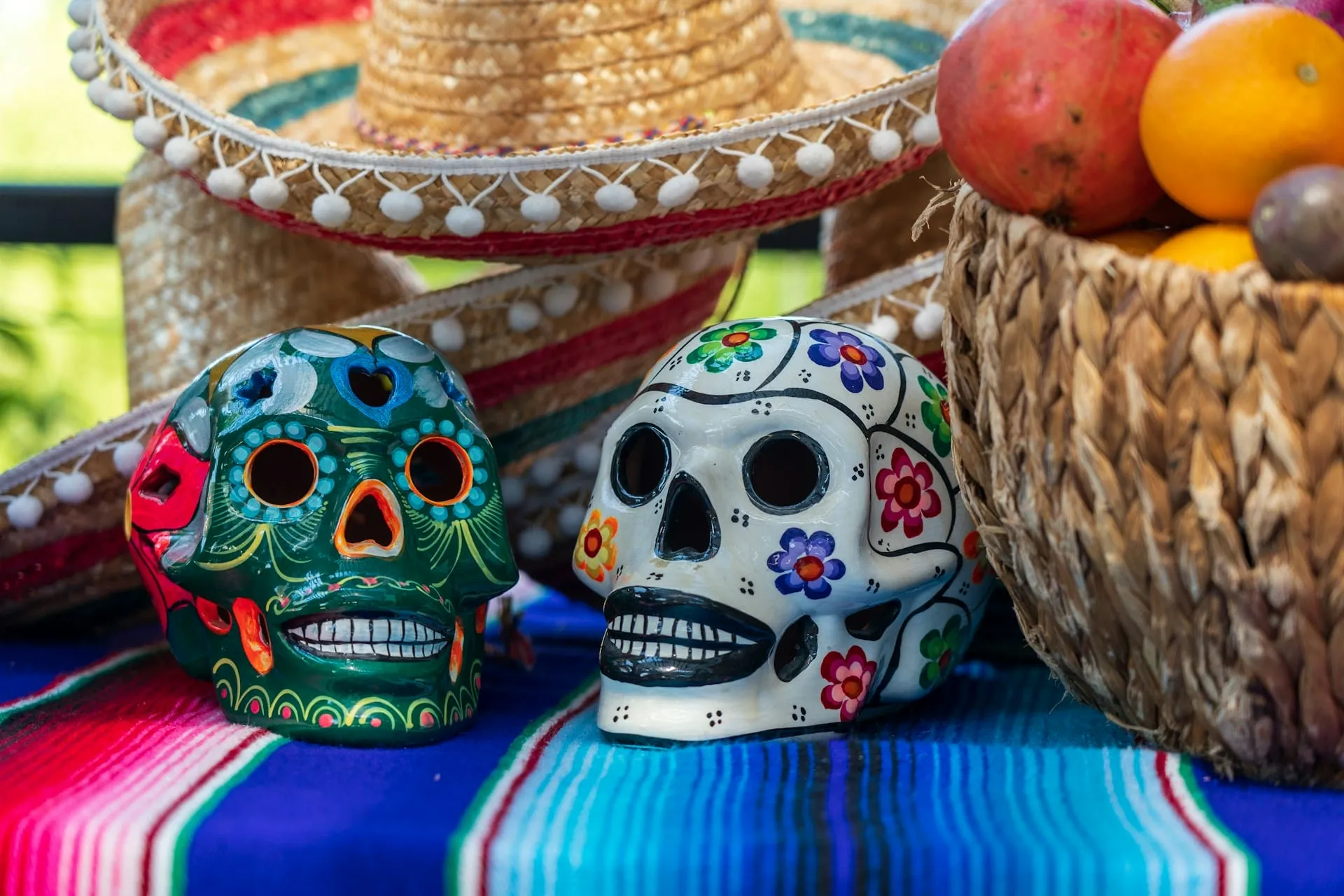
Día de los Muertos for pets falls on October 27. That night, families who keep it set out an ofrenda, a home altar, for the animals they’ve lost: a photo or their name, a bowl of water, marigolds, a candle, and something they loved to eat. Pets are said to be the first souls to come home for Día de Muertos, ahead of the people who follow over the next several nights.
The belief that a dog guides souls to the land of the dead goes back centuries in Mexico, and since 2019, families there and well beyond have set a night aside for the animals they’ve lost. The dead are welcomed home with their favorite food, flowers, and light, and on October 27 that welcome is for pets. You’ll see the holiday called both Día de Muertos and Día de los Muertos. It’s the same celebration.
If this is the first October without them, a photo and a bowl of water are a place to start.
Key Takeaways
- Día de los Muertos for pets falls on October 27, when pets are said to arrive for the night and into the early hours of the 28th. Some people give their pets a place on the family ofrenda, alongside the people they’re remembering.
- The pets’ night began in Mexico in 2019, when a pet funeral service proposed October 27. It isn’t an official date, but families adopted it, and it has spread to other parts of Latin America and to Hispanic communities in the US.
- In Mesoamerican belief, a dog, the xoloitzcuintle, helped souls cross a river at the start of their journey to Mictlán, the land of the dead.
- You can build a pet ofrenda from whatever you have: their photo or name, water, and, in the tradition, marigolds and a candle to guide them home.
- Whatever your tradition, a candle and their photo or name are a quiet way to take part, on the 27th or any night you choose to remember them.
Table of Contents
- 1What Is Día de los Muertos for Pets?
- 2Why Is October 27 the Day of the Dead for Pets?
- 3The Xoloitzcuintle: The Dog Who Guides Souls in Mexican Tradition
- 4The Día de Muertos Calendar and Who Comes Home Each Night
- 5How to Make an Ofrenda for Your Pet, Step by Step
- 6What Each Offering on a Pet Ofrenda Means
- 7When to Set Up and Take Down a Pet Ofrenda
- 8Keeping Living Pets Safe Around the Ofrenda
- 9Is Día de los Muertos for Pets Celebrated Outside Mexico?
- 10How to Take Part With Respect If It Isn’t Your Tradition
- 11Honoring Your Pet on October 27, Whatever Your Loss Looks Like
- 12Why Día de los Muertos for Pets Means So Much to the Families Who Keep It
- 13Frequently Asked Questions About Día de los Muertos for Pets
What Is Día de los Muertos for Pets?
Día de los Muertos for pets is the night of October 27, set aside for the animals families have lost. It’s the first night of the Día de Muertos season, when families who observe it welcome back the souls of their pets, and the nights that follow run through November 2.
All of this sits inside a much bigger tradition. As Mexico’s Indigenous communities practice it, Día de Muertos commemorates the transitory return to Earth of deceased relatives and loved ones. UNESCO lists it as part of the world’s intangible cultural heritage. The dead aren’t mourned from a distance. The house gets ready for them the way it would for anyone who’s been missed, with their favorite food, fresh flowers, and a light so they can find the way.
Animals have found their place in that welcome. You’ll see them on ofrendas in photos, beside a collar or a toy and a bowl of their food, and on October 27 they have a night of their own. It’s for any animal in the family: the dog, the cat, the hamster, the bird. Our collection of healing pet loss rituals has more ways to mark a loss at other times of year.
Why Is October 27 the Day of the Dead for Pets?
November 1 and 2 are the main days of Día de Muertos, and pets had no night of their own. In 2019, a pet funeral service called Funeral Pet proposed October 27 for people who were looking for a specific date for their pets (buscar una fecha específica).
It isn’t an official date, but families and associations have taken it up (ha sido adoptada por familias y asociaciones). The pets’ ofrenda is set for that night. Pets are said to arrive on the 27th and into la madrugada del 28 (the early hours of the next day), and the ofrenda is there to welcome them.
Some people give their pets a place on the family ofrenda. From the 27th, they add their pets’ portraits beside everyone else they’re remembering (agregando los retratos de las mascotas) and leave them up until November 3.
The Xoloitzcuintle: The Dog Who Guides Souls in Mexican Tradition
The bond between dogs and the dead in Mexico goes back centuries. The xoloitzcuintle, or xolo, was said to walk with souls toward Mictlán, the land of the dead, and help them across the river where their journey through the underworld began (en el que iniciaban su viaje por el Inframundo). The breed takes its name from Xólotl, god of dusk and night.
Dogs appear again and again in Mesoamerican burials, codices, and carvings, and scholars describe the dog as a keeper of life after death (guardián de la vida después de la muerte). At Tlatilco, in the State of Mexico, archaeologists found a burial of 24 dogs.
Today, the xolo’s image still appears around Día de Muertos, in art, in ritual, and at community events like a parade organized by the regional museum in Colima.
The old belief was about a dog guiding people’s souls. On October 27, the welcome is for every animal who was family. It’s one of many ways cultures picture what happens to animals after they die, and our guide to pet loss spirituality and beliefs brings others together, faith by faith. Whichever one speaks to you, the ofrenda has room for it.
The Día de Muertos Calendar and Who Comes Home Each Night
October 27 opens the season for pets. The rest of the calendar, which is older, gives each group of the dead its own night:
- October 28 is for people who died tragically, such as in accidents (se recuerda a las personas que fallecieron de manera trágica).
- Children who died before they were baptized are remembered on October 30 and 31.
- November 1, All Saints’ Day, belongs to children who died, the muertos chiquitos.
- Adults come last, on November 2, Día de Muertos itself.
Customs vary by region and family, and some people also keep their pets’ photos on the family ofrenda through these nights. Some animal protection groups propose November 3 instead, as the date for animals lost in accidents.
Where the Calendar Comes From
Before the Spanish arrived, the Mexica honored their dead in festivals called Miccailhuitontli and Huey Miccailhuitl. After the conquest in the 1500s, missionaries replaced them with Catholic feast days. Pope Gregory III moved All Saints’ Day to November 1, and Odilo of Cluny set November 2, a day of prayer for souls in purgatory, in 998.
Native peoples kept their rituals inside the new calendar. The friar Motolinía wrote that Indigenous communities made offerings to their dead on these dates (registró entre 1535 y 1540 que los pueblos originarios ofrecían maíz, cacao, comida, mantas y velas): corn, cacao, food, blankets and candles, between 1535 and 1540. The result is the tradition Mexico keeps today, a Mesoamerican belief in the temporary return of souls, set on the Catholic calendar.
How Día de Muertos Differs From Halloween
The two sit days apart and both involve spirits, but they come from different places. Halloween traces to Samhain, a Celtic festival at the end of the harvest, and today its costumes and trick-or-treating are mostly for fun. Where Halloween leans on the supernatural, Día de Muertos celebrates memory and family (la segunda celebra la memoria y a la familia). The marigolds and skulls on an ofrenda carry meanings that Halloween decorations don’t.
How to Make an Ofrenda for Your Pet, Step by Step
To make an ofrenda for your pet, choose a steady spot away from curtains and set their photo or name at the center. Then add fresh water, a little food, and anything else that feels right, like something of theirs, marigolds, or a light. It can fill a whole table or a corner of a shelf.
Setting Up the Space
Two decisions come first.
- Pick a table, dresser, or shelf where a flame can sit safely, away from anything that can catch and out of reach of any animals who share your home.
- Decide on levels, if you want them. Ofrendas are often built in tiers. Las ofrendas de dos niveles representan la separación entre el cielo y la tierra: two levels stand for the separation between heaven and earth. Three levels add the underworld, and seven stand for the steps a soul climbs to find peace.
What Goes on a Pet Ofrenda
Then come the offerings themselves.
- Their photo goes at the center. If there’s no photo, use their name on a card, a drawing, or their collar and tag.
- Water comes next, fresh, in a glass or their own bowl.
- For food, set out what they loved to eat: kibble, a favorite treat, a bit of plain chicken. A bird, rabbit, or reptile might get their favorite greens or seeds.
- Something of theirs, if you have it, makes it personal, like a toy, a collar, a leash, or the blanket they slept on. Some people place the urn with their ashes there too, and our pet aftercare and memorial resources cover other ways families keep them close.
- Marigold petals can be laid in a path leading to the ofrenda.
- A candle in a sturdy holder, or a battery light, can go on it too, if you’d like one.
- Papel picado, copal or incense, a small dish of salt, pan de muerto, and a sugar skull can round it out.
- You can also write to your pet and leave the letter on the ofrenda, and our guide to writing letters to a pet who has died can help you begin.
What Each Offering on a Pet Ofrenda Means
In the tradition, each offering has a meaning. The photo shows who the ofrenda is for, water eases the thirst of a long journey, marigolds guide souls to the altar, and a candle’s flame lights the way home. Most of these carry straight over to an altar for a pet.
Flowers lead souls to the altar in this tradition, marigolds most of all (guían a las almas al altar, especialmente el cempasúchil). Salt is said to purify and help the soul make its way from the other side.
Pan de muerto, the sweet bread of the season, is set out as a sign of affection and kinship toward the dead. Their favorite food is there to please them, which for a pet means their own food and treats.
Papel picado, the cut-paper banners, adds color and represents air. Copal and incense are said to cleanse the room and keep bad spirits away. Calaveritas, the little skulls, stand for death as Mesoamerican cultures understood it, and today they’re made of sugar, chocolate, or amaranth.
Cempasúchil, the Flower of Twenty Petals
The name is Nahuatl: cempohualli que significa 20 y xochitl que significa flor. Twenty and flower: the flower of twenty petals. The species on most altars is Tagetes erecta, domesticated in Mesoamerica, and some people lay its petals as a path that souls follow to the ofrenda, drawn by the color and scent.
When to Set Up and Take Down a Pet Ofrenda
A pet ofrenda is set for the night of October 27. Some people leave it up through the season, and ofrendas usually come down between the night of November 2 and the morning of the 3rd, though customs differ by region and family.
Those who wait until morning give souls who, in life, tended to run late one last chance to get some food.
What Happens to the Food Afterward
The dead are believed to take the food’s essence. Afterward, many families keep or share what’s still good, like bread, fruit, and candy, and let go of anything that has spoiled.
With a pet’s ofrenda, unopened food and treats can go to a shelter or rescue, and our guide to donating pet supplies after pet loss covers how to find one that needs them. Food that’s sat out for days is safest thrown away.
Keeping Living Pets Safe Around the Ofrenda
If other animals share your home, an ofrenda is full of things they’ll want to investigate: flowers, food, and flame.
Are Marigolds Safe Around Pets?
Marigolds (Tagetes species) may cause mild irritation to the gastrointestinal tract when ingested, and the sap may irritate skin. Cempasúchil is a Tagetes, so keep petals and bouquets out of reach of curious pets. Paper or silk marigolds provide the same color with nothing to chew. Calendula, also called pot marigold, is a different plant and is considered non-toxic if eaten.
Candle Safety Around Pets
Keep flames out of reach of tails, paws, and wings, and blow candles out when you leave the room or go to bed. Keep them at least 12 inches away from curtains, bedding, books, and other flammable items, including papel picado. If you want a light on overnight, a battery candle does it without the flame.
Copal, Incense and Birds
If you share your home with a bird, keep copal, incense, and candles away from them. Birds have unique respiratory tracts that are exquisitely sensitive to aerosolized toxins, and PetMD advises keeping incense and other airborne irritants away from them. When a bird is out of the cage, blow out any candles in the room.
Food on the Ofrenda
Some items on a family ofrenda are dangerous for animals. Chocolate, whether in hot chocolate, mole, or a chocolate skull, can cause vomiting and diarrhea and more serious problems. Grapes and raisins can damage a dog’s kidneys, onion and garlic in savory dishes can damage red blood cells, and a dish of salt can make an animal sick if they eat enough.
Keep people food up high, and if animals can reach your pet’s ofrenda, put only pet food on it. If one of your animals eats something from the altar and you’re worried, call a vet or the ASPCA Animal Poison Control Center. If you think your pet may have ingested a potentially poisonous substance, call (888) 426-4435, the ASPCA’s line. A consultation fee may apply.
Is Día de los Muertos for Pets Celebrated Outside Mexico?
Yes. It began in Mexico and has spread to other parts of Latin America. In the US, a community pet altar has gone up in Phoenix, and in Canada the Toronto Humane Society shares the night with its community, so families who’ve lost a pet can take part far from where the custom began.
In the US, Chicano artists and activists organized the first public exhibitions of Día de Muertos in 1972, at galleries in Los Angeles and San Francisco. As the format of altars expanded, people began to consider including their pets, and in 2023 the Arizona Pet Project in South Phoenix hosted a community pet altar for the second year.
To find a community altar near you, look to Mexican cultural centers, museums, Latino community organizations, and local humane societies in late October.
How to Take Part With Respect If It Isn’t Your Tradition
Take part like a good guest. Learn where Día de Muertos comes from, use the Spanish names, and keep the focus on remembering your pet. If you can, ask someone who keeps the tradition how their family does it, since customs change from town to town.
The tradition isn’t ours to change. Bring your pet, and follow the lead of the families who keep it. In the words of the Toronto Humane Society, Día de Muertos is a sacred celebration of remembrance. If your household mixes traditions, the ofrenda can sit alongside a prayer, a family story, or anything else you do to remember them.
If there’s a Mexican bakery or market near you, it’s a good place to find pan de muerto, marigolds, and papel picado in late October. And if a full ofrenda doesn’t feel like yours to build, our list of meaningful ways to honor a pet without religion has others that work with any tradition.
Honoring Your Pet on October 27, Whatever Your Loss Looks Like
A pet who died this year, one you lost as a child, every pet you’ve lost over the years, or a pet who went missing can each have a place on an ofrenda. Families shape the night around their own loss, from a full altar built over several evenings to a single candle beside a name.
If Your Pet Died This Year
The first October after a loss is its own thing. Setting out their things or choosing a photo can bring a lot to the surface at once.
Some people build the whole ofrenda. Others light one candle, or leave it this year and come back to it another October. If you do build one, it can help to do it with someone who’d understand, or to set it up in stages over a few evenings. A photo you’re not ready to look at can go face down, with their name on top.
If the week brings grief back harder than you expected, a counselor who works with pet loss can help. Our directory lists pet loss grief counselors near you and online, and you can reach out any time.
If It’s Been Years, or There’s More Than One
The same tradition welcomes back relatives who died long ago, and a childhood dog can sit beside a cat lost this spring. For some people, October 27 is the first time they’ve set a place for a pet they never really got to grieve.
One ofrenda can hold every animal you’ve loved. Some families give each pet their own corner of the same table.
If You Don’t Have a Photo or Ashes
A pet who went missing, if you’re ready to remember them this way. A pet you couldn’t bring home. An animal who lived with someone else at the end. Their name, a drawing, their collar, or a handful of the food they ate can stand in for a photo. If they went missing, our guide to grief when a pet is lost or missing can help with the parts an ofrenda can’t hold.
Día de los Muertos for Pets With Children
An ofrenda gives children a way to take part. Kids can choose the photo, fill the water bowl, or pick the toy. You can explain the ofrenda in the words of your own family’s beliefs, and if the skulls or the idea of spirits coming home unsettle them, you can leave the skulls off and describe it simply as a way of remembering. Our guide to comforting children after a pet’s death has more on what to say. How much they do is up to your family.
Why Día de los Muertos for Pets Means So Much to the Families Who Keep It
The loss of a pet often lacks social recognition (suele carecer de reconocimiento social), and it usually comes without the social rituals that follow a person’s death. Our guide to disenfranchised grief after pet loss covers why that can make grief harder to carry. October 27 puts it on the calendar.
For some people, ritual seems to help with loss. In experiments with people grieving other kinds of loss, those who reflected on or carried out a ritual reported lower levels of grief.
Día de los Muertos for pets asks for very little. Their photo or their name. A little water. Something they loved. A light.
Other dates in the year can be hard too, like the day they died or their birthday, and our guide to pet loss anniversaries and remembrance dates is there for those. On October 27, for one night, there’s a place set for them again.
Frequently Asked Questions About Día de los Muertos for Pets
Is October 27 an official day for pets in Mexico?
It isn’t an official holiday. A pet funeral service proposed it in 2019, and families and community groups have adopted it. Some people also add their pets’ photos to the family ofrenda from October 27 through November 3, beside the people they’re remembering. A few animal welfare groups have proposed a separate date, November 3, for pets who died in accidents. Families choose the night that fits their own tradition.
Can I make an ofrenda for my pet if I’m not Mexican?
Animal welfare groups in Phoenix and Toronto have invited their communities to take part. If someone in your life keeps the tradition, ask how their family builds its ofrenda, since the details change from region to region. A Mexican bakery or market near you is a good place to look for pan de muerto, cempasúchil, and papel picado each October, if you’d like any of them. Using the Spanish names is a small sign of respect. If a piece like copal doesn’t suit your household, leave it off and build with what you have.
Can I put my pet’s ashes on the ofrenda?
Yes. Some people place the urn holding their pet’s ashes on the family or pet ofrenda. Set the urn somewhere stable, well away from the candle, where other pets can’t knock it over. If your pet was buried or you don’t have ashes, their name, photo, collar, or a toy can take that place. During the season, some people also bring flowers to their pet’s grave. If you’d rather leave the urn where it usually sits, a photo of it or a card with their name can stand in on the ofrenda.
Is Día de Muertos the same as Halloween?
No, though the dates are close enough that people often confuse the two. Día de Muertos is a family remembrance with roots in Mesoamerican belief and the Catholic calendar, and its skulls and marigolds welcome the dead home. October 27 falls four days before Halloween, so one house can have a pet ofrenda and a candy bowl out in the same week. If that happens in yours, keep trick-or-treat candy, especially chocolate, sealed and up high, where a curious pet can’t reach it. Keep sugar skulls and pan de muerto on the ofrenda and out of the candy bowl, so children don’t mix up treats and offerings.
What should I do if my pet eats something from the ofrenda?
Take the rest of it away so they can’t eat more. The ASPCA suggests noting the amount ingested and contacting your veterinarian or poison control. Keep any wrapper or packaging, since it helps a vet know what was in it. The ASPCA lists chocolate, onion and garlic, and too much salt as dangerous for pets, along with grapes and raisins for dogs. All of them can turn up on a family ofrenda. Marigolds may cause mild stomach irritation if eaten. If you can’t reach a vet, the ASPCA Animal Poison Control Center takes calls at (888) 426-4435, and a consultation fee may apply.
On this topic