







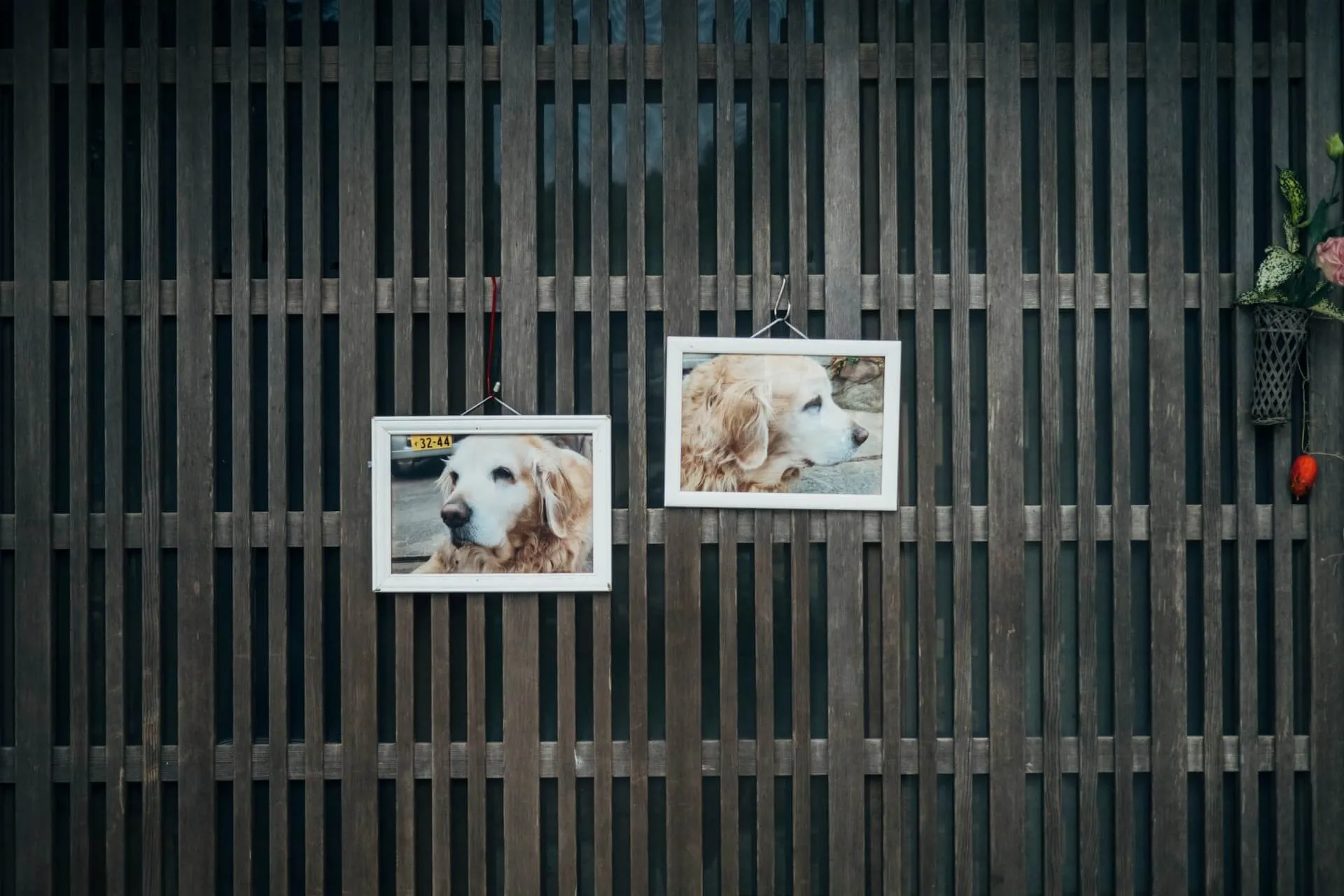
If you’ve caught yourself mid-sentence, about to mention your dog or cat, and then stopped because you weren’t sure the other person wanted to hear it again, you’re not alone. Talking about a deceased pet is something grieving people do constantly and then second-guess constantly. You wonder if you’re dwelling. You wonder if people are tired of it. You wonder whether bringing them up is making things harder for you rather than easier.
It isn’t. Talking about your pet is not a sign that you’re stuck. It’s not indulgent, and it’s not something you need to quietly phase out as the months pass. Grief researchers and clinicians have understood for decades that continuing to speak about, reference, and feel connected to a loved one after loss is one of the healthiest things a person can do. That includes pets.
This post is for anyone who has felt the pull to say their pet’s name out loud and then held back. It’s for the person who still brings up their cat in passing and feels a flicker of embarrassment. It’s for the long-term griever who worries that too much time has passed to still be talking about their dog. Talking about your deceased pet keeps their memory real, keeps your bond alive, and keeps you connected to a relationship that genuinely mattered. That is worth saying plainly and without apology.
Key Takeaways
- Talking about your deceased pet is psychologically healthy: Research on continuing bonds theory shows that maintaining a connection to a deceased loved one, including pets, supports healthier long-term grief outcomes rather than hindering recovery.
- You don’t have to apologize for bringing them up: The social pressure to stop mentioning a deceased pet is real, but it reflects other people’s discomfort with grief, not a signal that you should stop sharing.
- Specific stories and memories are what keep a pet’s personality alive: The quirks, the habits, the funny moments, these are what make memory vivid. Telling those stories is how their presence stays real over time.
- Writing and community can fill the gap when in-person conversation falls short: Journals, online memorial spaces, and pet loss communities offer places to speak freely about your pet when the people around you seem ready to move on before you are.
- Grief isolation worsens when people suppress talk of their pet: Staying silent about your loss to protect others from discomfort often increases your own pain and loneliness over time.
Table of Contents
- 1Why Talking About a Deceased Pet Is Healthy, Not Harmful
- 2The Continuing Bonds Model: What Grief Research Actually Shows
- 3What Happens When You Keep Telling Their Story
- 4The Social Pressure to Stop Talking About Your Pet
- 5How to Bring Your Pet Up Naturally, Without Apologizing
- 6When Someone Seems Uncomfortable With Your Grief
- 7Writing as a Way to Keep Talking When Words Feel Hard
- 8Telling Your Pet’s Story to People Who Never Knew Them
- 9Small Rituals That Keep the Conversation Going Over Time
- 10When Sharing Feels Impossible: Grief, Isolation, and Finding the Right People
- 11Talking About Your Pet Is How You Keep Loving Them
- 12Frequently Asked Questions About Keeping a Deceased Pet’s Memory Alive
Why Talking About a Deceased Pet Is Healthy, Not Harmful
Talking about your deceased pet does not keep you stuck in grief. This is one of the most persistent and damaging myths about pet loss, and it’s worth addressing directly before anything else. Speaking your pet’s name, recounting their habits, or simply mentioning them in passing does not reopen a wound. For most people, it eases one.
Narrative therapy, a well-established approach used by grief counselors and therapists, is built around the idea that telling the story of a loss is part of how people make sense of it. When you talk about your pet, you’re not just reminiscing. You’re doing the active work of integrating that loss into your life story. You’re placing them, anchoring who they were and what they meant to you, so that meaning doesn’t just evaporate.
There’s also something simpler at play. When we care about something or someone, we talk about them. We mention our kids when they do something funny. We bring up a friend who would have loved a particular restaurant. We reference a parent midway through a completely unrelated story. This is what humans do with the people and animals they love. Pets are no different.
Beatrix, 55, lost her cat Clover two years ago and still mentions her regularly in conversation. She described it once as a reflex: “I’ll be talking about my apartment, and I’ll say, ‘Clover used to sit in that exact spot,’ and then I’ll catch myself and wait to see if the other person is annoyed.” She’s not doing anything wrong. She’s keeping company with someone she loves.
The Continuing Bonds Model: What Grief Research Actually Shows
Grief was once widely understood as a linear process with an endpoint. The goal, the thinking went, was to detach, let go, and move forward. We now know that the model is incomplete at best and harmful at worst.
In the 1990s, grief researchers Klass, Silverman, and Nickman introduced what’s now called the continuing bonds model of grief. Their research, and the substantial body of work that followed, showed that maintaining an ongoing sense of connection to a deceased loved one is not a failure to grieve properly. It’s a normal, healthy, and often beneficial part of the grieving process.
Rather than severing the relationship with someone who has died, continuing bonds allows that relationship to evolve. The person or pet is no longer physically present, but they remain part of your inner world. You carry them with you. You reference them. You think about what they would have thought, or how they would have reacted, or what you still owe them in terms of how you live.
This is not the same as denial. It’s not refusing to accept that your pet is gone. It’s integrating the reality of their absence while also honoring what they gave you.
The grief counselors we work with consistently see this in practice: the pet parents who fare best in long-term grief are often the ones who find healthy, active ways to stay in relationship with their pet’s memory. Talking is one of the most direct ways to do that.
What “Continuing Bonds” Looks Like in Real Life
Continuing bonds aren’t an abstract concept. It shows up in small, everyday moments. It’s the person who still says “we” when talking about their home, even though their dog is gone. It’s the person who mentions their cat when explaining why they have a particular blanket on the couch. It’s leaving a photo up. It’s choosing a charity donation in their name. It’s all of it.
These aren’t signs that someone hasn’t accepted the loss. There are signs that the relationship mattered enough to carry forward. Research consistently supports this. According to findings aligned with the American Psychological Association’s frameworks on grief and bereavement, maintaining symbolic connections to the deceased is associated with lower levels of complicated grief and better overall adjustment over time.
What Happens When You Keep Telling Their Story
Memory is not a fixed archive. It’s active, and talking is one of the things that keeps it alive. When you tell a story about your pet, you’re not just retrieving a memory. You’re reinforcing it, adding detail to it, and keeping it accessible in a way that silence can’t.
Emilio, 33, lost his dog Sable about eighteen months ago. He said he stopped bringing her up at work after a colleague, well-meaning but clumsy, responded to one of his stories with, “You’ll love a new dog just as much, I promise.” He went quiet. He stopped sharing. And over the following months, he noticed something: the specific memories he hadn’t talked about were becoming harder to access. The ones he’d repeated out loud, to his partner, to close friends, to his sister, those stayed sharp.
That’s not coincidental. Oral storytelling strengthens memory consolidation. When you put a memory into words and share it, you’re encoding it more deeply. You’re also creating shared memories with the people you tell, which means your pet exists not just in your mind but in theirs as well.
The Details That Make a Pet Irreplaceable
What keeps a pet vivid in memory isn’t general statements like “she was so loving.” It’s the specifics. The way your dog insisted on sleeping with one paw touching you. The sound your cat made when they spotted a bird through the window. The particular route your dog always wanted to take on a walk, even when you tried to go a different way.
These details are what make a pet irreplaceable. And they’re exactly what talking preserves. When you tell the story of how your cat would knock exactly one thing off the counter per day, and only if you were watching, you’re not just entertaining someone. You’re keeping that personality alive in language. You’re saying: this was a real individual, and here’s the evidence.
If you’re looking for concrete ways to honor your pet’s memory, those specific details are the raw material you need. The stories are where everything else starts.
The Social Pressure to Stop Talking About Your Pet
Here’s something that gets in the way of healthy grieving, and it’s worth naming plainly: there is a real social pressure on pet parents to stop talking about their deceased pet before they’re ready.
It doesn’t usually come from cruelty. It comes from other people’s discomfort with grief, combined with our culture’s tendency to treat pet loss as a smaller, more manageable sadness than human loss. People around you may genuinely believe they’re helping when they redirect the conversation, or when they suggest it’s time to think about getting another pet, or when their responses get shorter and less engaged every time you bring up your cat.
What they’re actually doing, without meaning to, is teaching you that your grief is an inconvenience. And many grieving pet parents internalize that lesson. They start self-editing. They save their stories for themselves. They apologize before bringing up their pet. They gauge the room before saying a name.
This is one of the reasons insensitive comments about pet loss do more damage than the person making them usually realizes. It’s not just the single comment. It’s the cumulative message that you should be done by now.
What we hear consistently from pet parents months and years after a loss is that what they want most is simply to be able to say their pet’s name and have someone respond with warmth rather than discomfort. That’s a low bar. And it’s remarkable how often it goes unmet.
How to Bring Your Pet Up Naturally, Without Apologizing
You don’t need permission to mention your pet. But if you’ve been trained by enough awkward reactions to second-guess yourself, it can help to think about how to bring them up in ways that feel natural rather than fraught.
The simplest approach is to mention your pet the same way you’d mention any important relationship. Not with a preamble, not with an apology, not with a disclaimer that you know it’s been a while. Just naturally, in context. “My dog Sable used to do the same thing.” “Clover was obsessed with that kind of toy.” “This reminds me of something Copper always did.”
You don’t have to frame it as grief. You can just reference them as a fact of your life, the way you would reference a sibling who lives in another city or a friend you haven’t seen in years. They existed. They mattered. Mentioning them is not dramatic.
Talking About Your Deceased Pet With New People in Your Life
One of the specific challenges of long-term grief is meeting new people who never knew your pet. You want to mention them, but you’re not sure how to introduce someone who isn’t physically present.
You can simply say: “I had a dog named Sable for twelve years. She passed about a year and a half ago. She was this incredibly stubborn, incredibly devoted animal.” And then let it breathe. You don’t need to apologize for sharing that. Most people, when given the opportunity, respond with genuine warmth. They might share a pet of their own. They might ask a follow-up question. The connection you’re afraid of shutting down is more often the thing that opens one up.
Nora, 68, made a point of telling her dog Copper’s story to every new person who came into her life after his death. She described it as an act of introduction: “Copper was part of who I am. If you’re going to know me, you should know about him.” Not everyone responded the way she hoped. But enough was enough that she stopped waiting to bring him up.
When Someone Seems Uncomfortable With Your Grief
You will encounter people who don’t know what to do when you talk about your deceased pet. Some will change the subject. Some will offer the wrong kind of comfort. Some will stay quiet in a way that feels like a door closing.
You don’t have to manage their discomfort. That’s not your job while you’re grieving.
If you notice someone pulling back, you can let the conversation move on without internalizing it as a signal to stop talking about your pet altogether. One person’s awkwardness is not a verdict. Pet loss is one of those experiences where it can genuinely strain relationships, not because your grief is wrong, but because people are often under-equipped to witness it.
Finding even one or two people who respond well, ask follow-up questions, and remember your pet’s name can significantly change the experience. You don’t need everyone. You need enough.
Writing as a Way to Keep Talking When Words Feel Hard
Speaking out loud isn’t always possible or comfortable. Some people don’t have relationships that support open conversations about grief. Others find that writing reaches a place that talking doesn’t.
Grief journaling after pet loss is a well-documented support practice. Writing about your pet, their personality, your memories together, the things you miss, the things that still make you smile, creates a record that talking can’t always provide. It also gives you a private space to say everything without monitoring the other person’s reaction.
Some people write letters to their pets. Some keep a running document of stories they want to preserve. Some write monthly entries on the anniversary of their pet’s death. Nora started writing monthly entries addressed directly to Copper, telling him what had changed since she lost him. “It started as grief,” she said, “and it turned into something that felt more like keeping in touch.” Whatever the format, grief journaling can be one of the most effective tools for processing and preserving.
Sharing in Online Spaces and Pet Loss Communities
If the people physically around you aren’t the right audience, other spaces exist. Online pet loss communities, memorial pages, and support groups for pet loss are full of people who genuinely want to hear about your pet. Not out of obligation. Because they understand what it means to miss one.
These communities normalize talking about a deceased pet in a way that everyday social environments often don’t. You can share a photo and a story and receive responses from people who get it without needing it explained. That kind of reception matters. It makes it easier to keep talking, in all the spaces in your life, when you know at least one space will hold it.
Creating an online pet memorial is another way to give your pet’s story a home. It’s a place you can return to, add to, and share with others who loved them.
Telling Your Pet’s Story to People Who Never Knew Them
There’s something particular about telling your pet’s story to someone who never met them. It’s not just remembering. It’s introducing. You’re bringing someone into existence for a new listener, which requires you to summon the most essential things: who they were, what they were like, what made them theirs.
This is one of the more powerful things talking about your deceased pet can do. It forces you to articulate what mattered. It gives you language for things you might have only felt. And it creates a moment where your pet becomes real to someone who never knew them.
If you do this enough, across enough conversations, your pet accumulates witnesses. People who didn’t know Copper, Clover, or Sable now carry a version of each. That’s nothing. That’s a kind of living on.
If you’re looking for ways to memorialize your pet more formally, or explore personalized keepsakes that hold their story in a tangible way, both can complement the ongoing work of talking and sharing.
Small Rituals That Keep the Conversation Going Over Time
Rituals don’t have to be formal to work. Some of the most effective ones are small, quiet, and woven into ordinary time.
Holiday mentions are one example. Many pet parents find it meaningful to acknowledge their pet during holidays that were significant to them, or simply to say, out loud or in writing, “I miss Sable especially today.” This isn’t morbid. It’s honest. It’s also a way to keep them present in the seasons of your life rather than letting their absence grow into silence.
Anniversary conversations are another. Some people use the date their pet died, or their birthday, or the anniversary of their adoption, as a day to tell a specific story, look at photos, or reach out to someone who knew them. It marks the day rather than avoiding it.
There’s also the simpler habit of just including them in everyday references. Not ceremonially, not with weight, just naturally. The way you would mention anyone you love who isn’t in the room.
When Sharing Feels Impossible: Grief, Isolation, and Finding the Right People
Not everyone has a social environment that supports open grief over the loss of a pet. Some people are surrounded by others who genuinely don’t understand the depth of the loss. Some are trying to navigate grief that looks different from their partner’s or their family’s. Some have simply been shut down one too many times and have stopped trying.
Grief isolation, the experience of feeling alone in your loss, is one of the more painful dimensions of pet bereavement. And it’s worsened when people suppress talk of their pet to protect others from discomfort. The silence compounds the loss.
If that’s where you are, the first step is finding even one person who will actually listen. Not someone who tolerates your grief politely. Someone who asks questions. Someone who says your pet’s name back to you. That person might be a friend, a family member, or a grief counselor specializing in pet loss.
The broader experience of navigating pet loss is one we write about extensively at Love, Baxter, and it includes the very real dimension of figuring out who in your life can hold this with you. You deserve at least one person who can. And if you’re not finding them in person, they exist in community spaces built specifically for this.
Self-Care and Grief Are Not Separate Things
Talking about your deceased pet is a form of self-care. It’s easy to think of self-care as bubble baths and early nights, but in the context of grief, taking care of yourself means actively tending to the loss rather than burying it. Self-care while grieving a pet includes giving yourself permission to speak about them, seek community, and resist the pressure to perform a recovery you haven’t actually reached.
The full range of emotions that come with pet loss, including the longing to keep talking about your pet long after others expect you to stop, is all part of a grief process that doesn’t follow a schedule. Honor where you are in it.
Talking About Your Pet Is How You Keep Loving Them
Talking about your deceased pet is not the same as being unable to let go. It’s a different thing entirely. It’s choosing to keep loving someone after they’re gone, which is what love actually requires of us when the physical part of a relationship ends.
Every time you say their name, you’re affirming that they existed, that they mattered, and that the relationship you shared was real and worth honoring. That’s not indulgence. That’s integrity.
You don’t have to earn the right to keep talking about them by proving how much you’ve “moved on.” You don’t have to measure your grief against anyone else’s timeline or anyone else’s expectations. If keeping pet memory alive means mentioning your dog’s name in a story about your week, do it. If it means writing them a letter on their birthday, write it. If it means finding a community of people who will hear you without checking the clock, find them.
They were real. They loved you back. Say so.
Frequently Asked Questions About Keeping a Deceased Pet’s Memory Alive
Is it unhealthy to keep talking about my deceased pet months or years after their death?
No. Research on continuing bonds theory has consistently shown that maintaining a sense of connection to a deceased loved one, including pets, supports healthier long-term grief outcomes. Talking about your pet months or years after their death is not a sign that you’re stuck or that something is wrong with your grief. It’s a sign that the relationship was meaningful and that you’re processing the loss in a way that keeps that meaning alive. The old model of grief that encouraged emotional detachment as a goal has largely been replaced by a more nuanced understanding: that integrating loss, rather than severing it, tends to produce better outcomes for most people. If talking about your pet brings you comfort, connection, or a sense of continuity, that’s not something to move away from. It’s something to support.
How do I bring up my deceased pet in conversation without making it awkward?
The simplest way is to mention them the way you’d mention any important relationship, without a preamble or apology. Saying “My cat Clover used to do the same thing” in the middle of a relevant conversation is no different from mentioning a family member or friend. You don’t need to flag it as a grief moment or brace the other person for something heavy. Just say it naturally and let the conversation follow from there. Most people, when given the chance to respond with warmth, will do so. Some won’t, and that’s information about them, not a reason to stop mentioning your pet. If you’re telling a new person about your pet for the first time, a brief introduction works well: “I had a dog named Sable for twelve years. She passed about a year ago. She was remarkable.” Then let it breathe and see where the conversation goes.
What should I do when someone responds to my grief with a comment about getting a new pet?
This is one of the most common and most frustrating responses people receive after pet loss, and it’s worth knowing that it almost never comes from cruelty. Most people who say it genuinely believe they’re being helpful, offering a path toward feeling better. The problem is that it sidesteps the specific grief you’re in, and it implies that pets are replaceable in ways they aren’t. You don’t have to address it in the moment if you don’t want to. You can redirect simply: “I’m not there yet. I’m still really missing Sable.” Or you can say nothing and simply choose not to share with that person going forward. If someone regularly responds to your grief in ways that feel dismissive, it’s reasonable to look for other people who are better equipped to hear you. You don’t have to keep offering your grief to people who can’t hold it.
How can I keep my pet’s memory alive for people who never knew them?
Tell their story. This sounds obvious, but it’s the most direct and effective way to give someone a sense of who your pet was. Focus on specifics: their personality, their habits, the things that were uniquely theirs. “He was obsessed with one particular toy and would ignore every other one.” “She had this whole process she went through before she’d finally settle down to sleep.” The details are what make a pet real to someone who has never met them. You can also share photos, create or point to a memorial page, or mention them the way you’d mention any important relationship in your life. Over time, the people close to you will build a picture of who your pet was, even without having known them, and that shared understanding becomes a form of living on.
What do I do when I feel like I can’t talk about my pet with anyone around me?
That feeling, of having no one who will really hear you, is one of the hardest parts of pet loss for many people, and it’s more common than it should be. The first thing to know is that the problem isn’t your grief. It’s that you haven’t found the right audience yet. Pet loss support groups and online communities exist specifically because everyday social environments often fail grieving pet parents. In those spaces, you can say your pet’s name, share their photo, tell a story from ten years ago, and be met with genuine recognition rather than polite tolerance. A pet loss grief counselor can also provide a consistent, non-judgmental space to talk openly. Grief journaling is another option when talking out loud feels too hard: writing to or about your pet gives the same psychological benefits as speaking and doesn’t require another person to receive it.
On this topic