







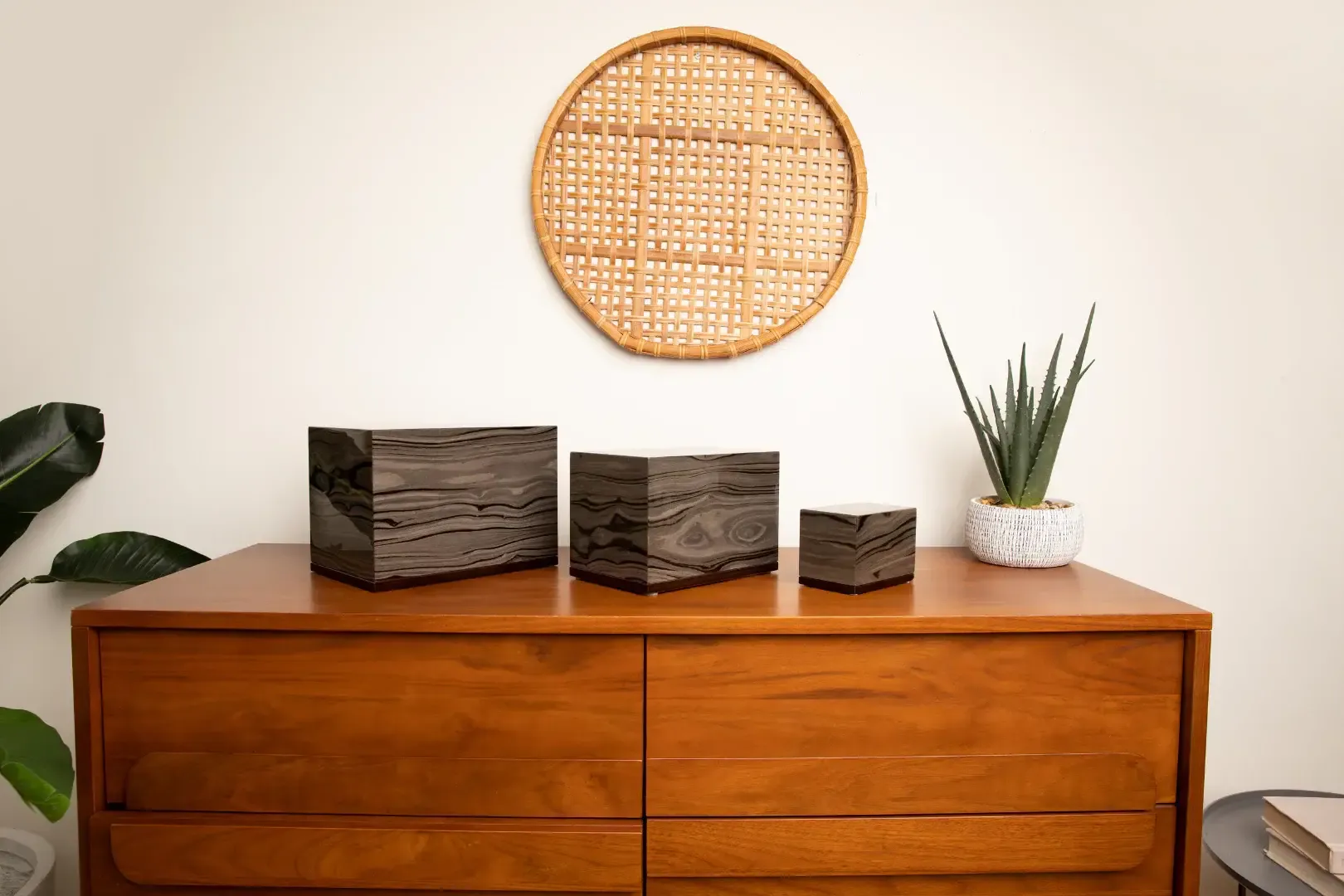
We understand that choosing a cat urn is one of the most emotionally challenging decisions you’ll face after losing your beloved feline companion. At Love, Baxter, we’ve walked this difficult path ourselves, and we know that finding the perfect resting place for your cat’s ashes feels overwhelming when your heart is breaking. The last thing you want to worry about is whether you’ve chosen the right size urn, only to discover it doesn’t fit properly when your cat’s ashes are returned to you.
That’s why we’ve created this comprehensive cat urn size guide based on your cat’s weight. While every cat cremation results in different amounts of ashes, weight provides the most reliable guideline for selecting an appropriately sized urn. Our goal is to help you make this important decision with confidence, knowing you’ve chosen a beautiful, meaningful resting place that honors your cat’s memory perfectly.
The process of selecting the right cat urn size can feel daunting, especially when you’re grieving. We’ve designed this guide to walk you through every consideration, from basic sizing principles to special circumstances that might affect your choice. By the end of this post, you’ll have all the information needed to select an urn that provides comfort and serves as a worthy tribute to your cherished feline friend.
Table of Contents
- 1Understanding Cat Urn Sizing Based on Your Cat’s Weight
- 2Complete Cat Urn Size Guidelines for Every Weight Range
- 3Critical Factors Beyond Weight That Affect Cat Urn Size Selection
- 4How Different Cat Urn Types Affect Your Size Requirements
- 5Essential Questions About Cat Urn Sizing We Hear Most Often
- 6Creating Your Cat’s Perfect Memorial Display Space
- 7Moving Forward with Confidence in Your Cat Urn Selection
- 8Frequently Asked Questions about Cat Urn Sizing
Understanding Cat Urn Sizing Based on Your Cat’s Weight
When selecting a cat urn size, the most crucial factor to consider is your cat’s body weight at the time of passing. Cremation reduces your cat’s physical form to approximately one cubic inch of ashes per pound of body weight. This means a 10-pound cat will typically produce about 10 cubic inches of cremated remains, though this can vary slightly based on bone density and cremation methods.
Cat urn sizing isn’t just about cubic inches, though. You’ll also want to consider the opening size, overall dimensions, and whether you plan to include any keepsakes alongside your cat’s ashes. Many cat parents choose to include a favorite toy, collar, or small photo, which requires additional space within the urn.
At Love, Baxter, we always recommend choosing an urn that’s slightly larger than the minimum requirement to ensure a comfortable fit and provide space for any meaningful items you’d like to include. Most quality cat urns will clearly display their capacity in cubic inches, making it easier to match your needs with the correct size. When Maria from Portland selected an urn for her 12-pound tabby, Oliver, she chose a 25-cubic-inch capacity urn even though the minimum requirement was 12 cubic inches, allowing her to include his favorite feather toy and collar.
Complete Cat Urn Size Guidelines for Every Weight Range
Here’s our detailed cat urn size by weight guide to help you select the perfect memorial for your feline friend:
Small Cats weighing 4-8 pounds typically require urns with 10-15 cubic inches of capacity, though we recommend selecting urns with 20 cubic inches to provide comfortable space. Breeds like Singapura, Devon Rex, and smaller mixed breeds fall into this category. Even small cats deserve beautiful, substantial urns that reflect their big personalities. When Jennifer from Seattle chose an urn for her 6-pound calico, Luna, she selected a ceramic urn with 22 cubic inches of space, which perfectly accommodated Luna’s ashes along with a small photo and her tiny bell collar.
Medium Cats weighing 8-12 pounds need urns with 12-20 cubic inches of capacity, with our recommended size being 25-30 cubic inches. This represents the most common size range for household cats, including breeds like Siamese, Russian Blue, American Shorthair, and most domestic cats. The additional space ensures you won’t face the heartbreak of an urn that’s too small when your cat’s ashes are returned.
Large Cats weighing 12-16 pounds require urns with 20-25 cubic inches of capacity, though we suggest 30-35 cubic inches for optimal fit. Breeds such as Persian, Ragdoll, and British Shorthair typically fall into this weight range. Larger cats often have more substantial bone structure, potentially requiring slightly more space than the standard one-cubic-inch-per-pound guideline.
Extra Large Cats weighing 16+ pounds need urns with 25+ cubic inches of capacity, with our recommendation being 35-50 cubic inches. Magnificent breeds like Maine Coon, Norwegian Forest Cat, and Savannah cats deserve equally impressive memorial urns. David from Austin chose a beautiful wooden urn with 45 cubic inches of capacity for his 18-pound Maine Coon, Maximilian, which provided ample space for the ashes plus Max’s favorite catnip mouse.
These recommendations include extra space for comfort and any keepsakes you might want to include. It’s always better to choose a slightly larger urn than to risk one that’s too small.
Critical Factors Beyond Weight That Affect Cat Urn Size Selection
While weight is the primary factor in choosing the right cat urn size, several other considerations can influence your decision and ensure you select the perfect memorial.
Bone density and build variations mean some cats have denser bone structure than others, even at the same weight. Long-haired breeds often appear larger but may actually weigh less than their short-haired counterparts due to their coat. Conversely, muscular cats may produce slightly more ashes than cats of the same weight with different body compositions. Sarah from Denver learned this when her fluffy 11-pound Persian, Duchess, produced more ashes than expected due to her surprisingly dense bone structure.
Cremation method differences can affect the volume of returned ashes. Individual cremation typically results in more complete ash collection compared to communal cremation. If you’ve chosen individual cremation for your cat, you may want to size up slightly to accommodate the full volume of returned ashes. The cremation temperature and duration can also influence the final volume, though reputable crematories maintain consistent standards.
Keepsakes and memorial items require additional space within your chosen urn. Many cat parents find comfort in including special items with their cat’s ashes. Consider whether you’d like to include a favorite small toy or catnip mouse, your cat’s collar or ID tag, a small photo or written letter, a lock of fur if you saved some, or dried flowers from the memorial service. When planning for these additions, add 2-5 cubic inches to your calculated urn size requirement.
Display location and aesthetic preferences should influence your size choice. Think about where you plan to display your cat’s urn. A larger, more prominent urn might be perfect for a mantle or bookshelf, while a smaller, more discrete option might work better in a bedroom or private space. The proportions should feel right for the intended location.
How Different Cat Urn Types Affect Your Size Requirements
Different types of cat urns have varying size requirements and display characteristics that can influence your selection process.
Traditional ceramic and metal urns typically have wide openings, making them suitable for cats of all sizes. The sturdy construction means you can confidently choose based on cubic inch capacity alone. These classic options often feature beautiful glazes, engravings, or artistic details that create lasting tributes. The smooth surfaces make them easy to clean and maintain over time.
Wooden memorial urns often have more rectangular shapes, which can actually accommodate ashes more efficiently than round urns. They’re excellent choices for cats of all sizes and offer beautiful, natural aesthetics that blend well with home décor. Many wooden urns can be personalized with engraving, making them significant memorials.
Biodegradable urns for natural burial come in various sizes and are perfect for environmentally conscious cat parents who want to return their companion to nature. These urns are designed to break down naturally over time, allowing your cat’s ashes to become part of the earth. Size selection remains important even with biodegradable options to ensure proper fit during transport and burial.
Keepsake and sharing urns are smaller urns designed to hold portions of ashes, typically ranging from 3-10 cubic inches. These are wonderful for families who want to share their cat’s remains or keep some ashes while scattering others. Multiple family members can each have a keepsake urn with a small portion of their beloved cat’s ashes.
Custom and artistic urns can be made to any size specification, allowing you to create something truly unique for your special cat. These often cost more but provide unmatched personalization. Working with artisans ensures your urn perfectly fits both your size requirements and aesthetic preferences.
Essential Questions About Cat Urn Sizing We Hear Most Often
When you’re unsure of your cat’s exact weight, think about their size relative to other cats you’ve known. Most veterinarians can provide weight records if you call their office, and many keep detailed records from regular check-ups. When in doubt, it’s always better to size up rather than risk choosing an urn that’s too small. Rebecca from Miami estimated her cat Whiskers was around 9 pounds but chose a 30-cubic-inch urn to be safe, which proved perfect when Whiskers’ ashes arrived.
Using dog urns for large cats is absolutely acceptable. Pet urns are often labeled by animal type for marketing purposes, but functionally, a small dog urn works perfectly for a large cat of similar weight. Focus on the cubic inch capacity rather than the animal designation. The most important factor is size, not the label on the product description.
If your chosen urn proves too small, you have several options that can help resolve this heartbreaking situation. You can exchange it for a larger size if the retailer offers exchanges, transfer some ashes to a keepsake urn for other family members, contact the crematory about dividing the ashes between multiple containers, or purchase a second small urn to hold the excess ashes. At Love, Baxter, we never want any cat parent to experience this situation, which is why we always recommend sizing up.
The timing of your urn purchase can affect your options and stress levels. We recommend selecting and purchasing your urn before cremation when possible. This gives you time to make a thoughtful decision without the pressure of immediate need and ensures the urn is ready when your cat’s ashes are returned. However, we understand this isn’t always possible during the emotional turmoil of loss.
Sharing ashes among family members is becoming increasingly common. If multiple family members want to keep a portion of your cat’s ashes, calculate the total space needed across all containers. You might choose one primary urn plus several smaller keepsake urns, or multiple medium-sized urns of equal size. Consider who will receive what portions when planning your urn purchases.
Creating Your Cat’s Perfect Memorial Display Space
Choosing the right cat urn size is just the beginning of creating a beautiful memorial for your feline friend. Consider how the urn will fit into a dedicated memorial space that honors your cat’s unique personality and the joy they brought to your life.
Memorial display planning involves considering both the urn size and surrounding elements. Create a small shelf with your cat’s urn, photos, and favorite toys to build a comprehensive tribute. Design a garden memorial area if you have outdoor space where your cat enjoyed spending time. Establish a quiet corner in your home dedicated to your cat’s memory, incorporating elements that reflect their personality and preferences. The urn size should complement these other memorial elements rather than overwhelming them.
Seasonal memorial updates provide ongoing ways to honor your cat’s memory. Many cat parents find comfort in changing their memorial display seasonally, adding flowers, candles, or decorations that reflect the time of year or special occasions like their cat’s birthday or adoption anniversary. Plan your urn size to accommodate these seasonal additions without appearing crowded.
Long-term memorial considerations help ensure your tribute remains meaningful over time. Think about how your memorial space might evolve and whether your chosen urn size will continue to feel appropriate. Some families start with elaborate displays that gradually simplify over time, while others begin modestly and expand their memorial as healing progresses.
Moving Forward with Confidence in Your Cat Urn Selection
Selecting a cat urn is an act of love, a final gift to the companion who brought so much joy to your life. While the process feels overwhelming now, trust that you’ll know the right choice when you see it. The perfect urn will feel like a fitting tribute to your cat’s unique spirit and the profound bond you shared.
At Love, Baxter, we understand that every detail matters when you’re honoring a beloved pet’s memory. We’ve created this guide because we know that having clear, reliable information helps during one of life’s most difficult times. Your cat deserves a beautiful, properly sized resting place, and you deserve peace of mind knowing you’ve made the right choice.
Remember, there’s no rush in this decision. Take the time you need to find an urn that speaks to your heart and appropriately honors your cat’s memory. Whether you choose something simple and elegant or elaborate and artistic, what matters most is that it feels right for you and your beloved feline companion. The love you shared with your cat will live on forever, far beyond any physical memorial. But having a beautiful, properly sized urn provides a tangible place to focus that love and remember all the wonderful moments you shared together.
The end looks quieter in cats, which makes it harder to read. Our cat end-of-life resources help you see it clearly.
Frequently Asked Questions about Cat Urn Sizing
How do I know what size urn to get if I’m not sure of my cat’s exact weight?
If you’re unsure of your cat’s exact weight, contact your veterinarian’s office for records from recent check-ups. Most vets keep detailed weight information from regular visits. You can also estimate based on your cat’s size relative to other cats you’ve known or use breed averages as a starting point. However, when in doubt, always size up rather than risk choosing an urn that’s too small. The general rule is one cubic inch per pound of body weight, but we recommend adding 5-10 cubic inches for comfort and to accommodate any keepsakes you may want to include. It’s much better to have slightly more space than to face the heartbreak of an urn that doesn’t fit your cat’s ashes properly.
Can I use a dog urn for my large cat?
Absolutely. Pet urns are often labeled by animal type for marketing purposes, but functionally, a small dog urn works perfectly for a large cat of similar weight. Focus on the cubic inch capacity rather than the animal designation on the product description. What matters is that the urn has adequate space for your cat’s ashes, not whether it’s marketed explicitly for cats or dogs. Many cat parents successfully use small dog urns for their larger feline companions, especially cats over 15 pounds, who require urns with a capacity of 35+ cubic inches. The most important factors are size, quality, and whether the urn feels like a fitting tribute to your beloved companion.
What happens if the urn I bought is too small for my cat’s ashes?
If your urn proves too small, you have several options to resolve this situation. Many retailers offer exchanges for larger sizes, especially if you provide a clear explanation of the circumstances. You can also transfer some ashes to keepsake urns for other family members, contact the crematory about dividing the ashes between multiple containers, or purchase a second small urn to hold excess ashes. Some families choose to scatter a portion of the ashes in a meaningful location while keeping the remainder in the original urn. While this situation is heartbreaking, there are always solutions. This is exactly why we recommend choosing urns with slightly more capacity than the minimum requirement. It’s much better to have extra space than to face this difficult situation.
Should I include extra space in my urn for keepsakes and personal items?
Yes, many cat parents find great comfort in including meaningful items with their cat’s ashes, so planning for extra space is wise. Common keepsakes include favorite small toys, collars or ID tags, small photos, written letters, or dried flowers from memorial services. These items typically require an additional 2-5 cubic inches beyond the space needed for ashes alone. Consider what might be meaningful to include when selecting your urn size. Remember that once the urn is sealed with these items, you typically won’t be able to add or remove anything later, so think carefully about what would provide lasting comfort. The extra space also ensures a comfortable fit for the ashes themselves, reducing stress during an already difficult time.
On this topic